

Why Do Gardeners Use Baking Soda On Tomato Plants?
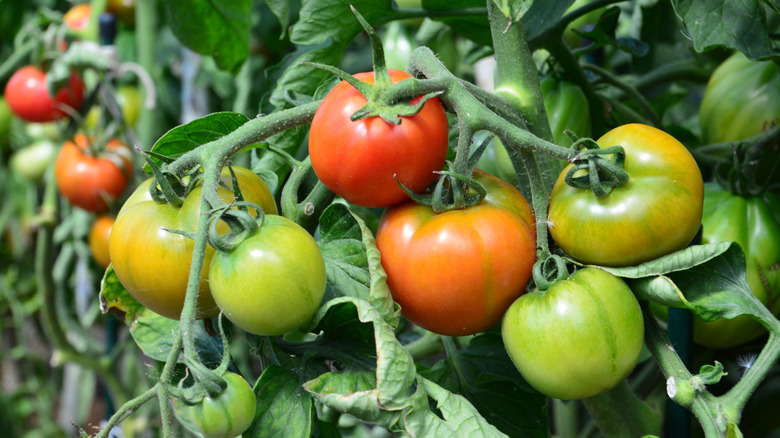
Tomatoes are the most popular crop grown in home gardens, but getting a healthy, flavorful harvest is not always easy. That's why some gardeners turn to a surprising pantry staple: baking soda. But what is the rationale for this amendment? It turns out there are two main reasons behind its use. The first is to deal with powdery mildew and other fungal issues, and the other is to grow sweeter tomatoes.
Gardeners who try this technique typically apply it in a couple of different ways. To treat or prevent fungal diseases on tomatoes, plants are doused weekly in a mixture of 1 teaspoon of baking soda to 1 quart of water. Some gardeners also sprinkle baking soda on the soil around the tomato plants as an additional fungal-preventing step.
The approach changes if the goal is sweeter tomatoes. The amount of baking soda varies quite a bit, with some gardeners using just 1 tablespoon per 9 square feet of soil. The Arm and Hammer web page suggests using about ¼ of a cup around each young tomato plant and then adding a bit more once the plants are partially mature. It's worth noting that Arm and Hammer does not state this will guarantee sweet tomatoes, but instead suggests it as a fun experiment.
Why baking soda is thought to help tomatoes and alternatives to use instead
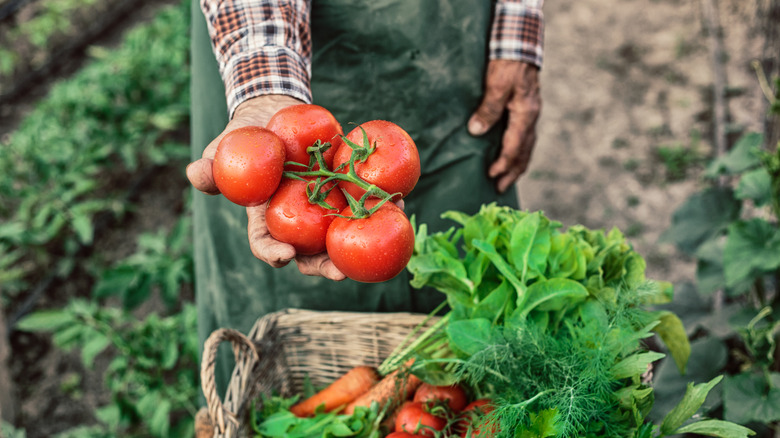
The big question, though, is whether the amendment actually works to deliver healthier and sweeter tomatoes. The thought process behind using baking soda to treat or prevent fungal problems is that it can neutralize the soil's pH. Because many fungi prefer acidic environments, some gardeners believe changing the pH around tomato plants could make the area less favorable for disease development. Similarly, some believe that reducing acidity in tomatoes could create a sweeter flavor. However, this is a hack you might not want to try in your garden, as baking soda contains salts which can damage or even kill plants. Additionally, according to Aaron Steil, a horticulture specialist at Iowa State University who spoke with The Spruce, there is no evidence that it makes tomatoes sweeter.
If you want healthier vines or sweeter fruit, there are more reliable methods to try. Instead of using baking soda to prevent fungal disease on your tomatoes, you can opt for hybrid cultivars that are known for having powdery mildew resistance. Some good options include 'Granadero', 'Climstar', and 'Rebelski'. Of course, how you care for your tomatoes matters, as well. Giving your plant enough airflow makes a huge difference in fungal disease prevention, as can having a good trellis or staking system for your tomato plants.
Similarly, growing sweeter tomatoes largely requires going with the right cultivars. 'Super Sweet 100', 'Sun Gold', and 'Bronze Torch' are all good options for sweet, non-acidic tomatoes to plant. Providing plants with healthy, well-draining soil, consistent watering, and allowing fruit to fully ripen on the vine can also help maximize flavor.