

Why Do Pine Cones Close When It Rains?
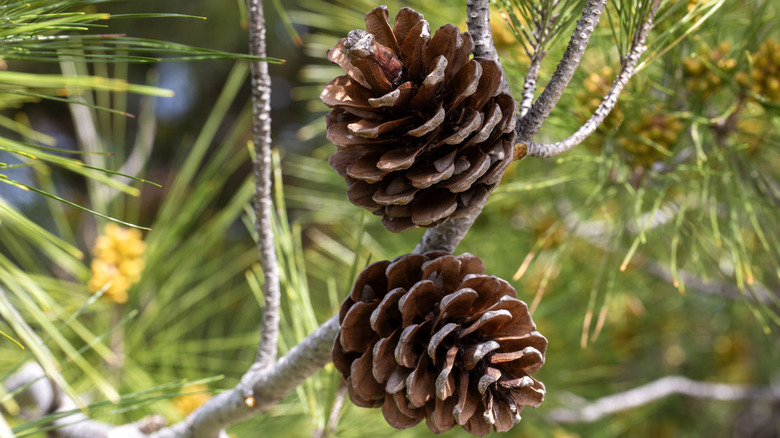
Have you ever heard of using pine cones to predict the weather? If so, you may have heard that an open cone indicates dry weather, while a closed one foretells rain. While this may sound like an old wives' tale, it's actually more or less true! You see, pine cones are protective casings for the seeds of conifer trees (there are actually different kinds of tree cones, including non-pine conifers). As humidity rises ahead of rain, the cone's scales absorb moisture and fold inward, protecting the offspring until they can be dispersed by the wind in drier conditions. This behavior is common among pine species — including eastern white, ponderosa, lodgepole, and Scots pine — though scale sensitivity can vary somewhat depending on the species and where it grows.
The term for objects like pine cones that change shape in response to environmental humidity is hygromorph. Another example of a hygromorph is Selaginella lepidophylla, or the resurrection plant, which curls up and goes dormant during dry times but then uncurls again when exposed to moisture. If you want to see hygromorphic action, or if you're trying to teach your kids some fun pine tree facts, you can try setting up a pine cone weather station. Collect some fallen cones from the ground, then set them on a windowsill, bench, or other outdoor surface. Or, try tying one to a string and hanging it somewhere easy to see. Then, you can observe these little scaled natural barometers from your window as they respond to atmospheric humidity.
How pine cones open and close
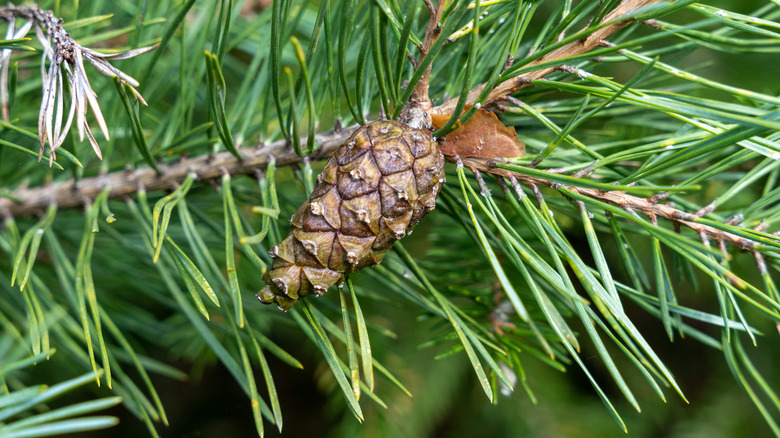
But how do these seed casings "know" when it's time to close? They don't. Pine cones are actually dead cells, so they aren't changing in reaction to a signal from the tree. The change in shape is actually purely mechanical, built into its structure. The cells in the outer layer of the scales are stretchy and loose, while the inner layer's are stiff and tight. When the outer layer absorbs moisture, it expands, while the rigid inner layer changes very little. And this reaction isn't just triggered by rain, but by humidity as low as 20%. This passive movement doesn't harm the cone or signal that the tree is unhealthy — it's simply a built-in adaptation that responds to changing temperature and humidity. Pine trees are generally hardy and can thrive in a range of moisture and temperature conditions, depending on the type.
Not all pine cones open and close simply in response to mild to moderate changes in temperature and humidity, though. In some species, including lodgepole, jack, and knobcone pines, cones stay sealed closed until they're exposed to extremely high temperatures, like those of a wildfire. This adaptation, known as serotiny, protects the seeds until fire creates ideal growing conditions by clearing competing vegetation and exposing fertile soil.
Believe it or not, a pine cone's seed protection goes beyond weather. A non-humidity- or temperature-related feature of these little strobiles is that by closing, access is limited to seed-eating animals. Certain birds can pick the seeds from closed cones, though, while some mammals enjoy eating the entire cone.