

Why Do Gardeners Add Peat Moss To Soil?
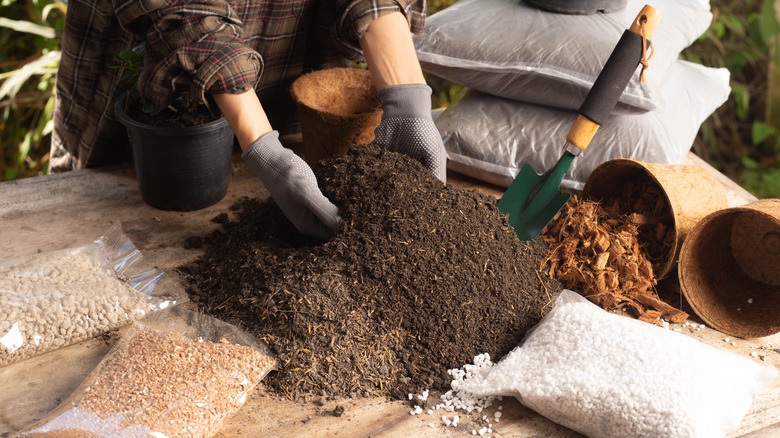
So many classic garden and raised bed soil recipes recommend using significant amounts of peat moss, and you likely know plenty of gardeners who swear by it. But what is it, and why do gardeners seem to love it so much? Simply put, peat moss is a type of Sphagnum moss that is harvested from bogs and dried, and can then be used as a garden amendment. Gardeners add it to their beds for several reasons, including its ability to improve moisture retention, loosen the soil, and lower its pH.
Peat moss is a popular soil amendment because it boosts drainage while simultaneously helping to retain some of the water. This unusual combination is what makes it so valuable in potting mixes — it can help prevent roots from drying out without leaving them soggy. It's great for improving compacted soil as well. If you use soil-free potting mix for your container gardens and houseplants, you might be surprised to learn that the primary ingredient in these products is often peat. It helps provide the potting mix the light, fluffy structure that makes it ideal for containers when actual garden soil would be too dense. Its low pH also makes it perfect for helping acid-loving plants and shrubs like blueberries to thrive.
Peat moss is a remarkable product, but it's not without its problems. Not only are there serious environmental downsides to its harvesting, but it's also not the right product for every garden use. Luckily, there are other soil amendments that offer similar benefits.
The advantages and disadvantages of peat moss — and the alternative soil amendments you can use instead
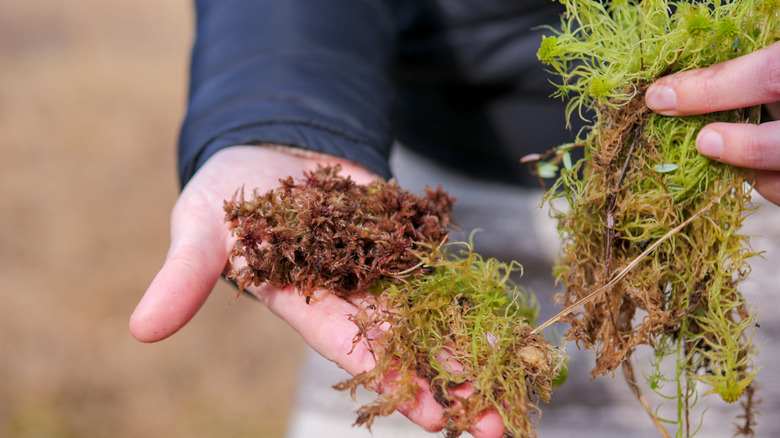
As mentioned, peat can work great not just for acid-loving plants like blueberries and azaleas, but also for loosening up growing media for plants that can't handle compacted soil. The best time to add an amendment like peat moss tends to be in autumn, as this will give the soil's pH time to lower before planting in spring. Spreading just 3 inches of peat over the top of your garden and then mixing it in can make a big difference in your soil's structure.
For all of its benefits in the garden, peat moss has downsides. The bogs for peat grow and develop quite slowly, so overharvesting them can devastate the ecosystem. The popular soil amendment is also not the right choice in every gardening situation. Plants can struggle with calcium uptake in soil where the pH is too low, so adding an acidic amendment like peat could exacerbate this issue. Additionally, peat isn't recommended for clay-heavy soil and is surprisingly nutrient-poor.
Fortunately, there are peat moss alternatives. Compost, for example, offers many of the advantages of peat moss but without the drawbacks. It improves soil structure and drainage while also adding nutrients and healthy microorganisms. Another option that's been increasing in popularity is coconut coir, a byproduct of coconut processing, which is both renewable and versatile. Unlike peat moss, coconut coir is pH neutral. It also holds water well and can improve soil structure. The Master Gardener Program of Washington State University Extension recommends using a mix of compost, coconut coir, and builder's sand to create peat-free potting mixes.