

The Beautiful Blue Flower That's Almost Impossible To Kill
Blue isn't a common color to find in flowers, so it's always going to attract attention. And while there are flowers that can add blues to your garden, many, like poppies and lupines, aren't always the easiest to grow. There's nothing wrong with high-maintenance flowers that require constant attention to survive, much less thrive, in your garden. But sometimes you need something that adds stunning color without all the fuss. One of the most amazing and easiest-to-grow flowers for adding brilliant blue shades is the durable and darling cornflower (Centaurea cyanus).
Annual cornflowers, also sometimes called bachelor's buttons, are perfect for adding pops of a unique color to your gardens. These flowers also reseed themselves easily, so planting once could provide you with charming blue flowers for years and years. Not only are cornflowers willing to grow in a wide range of soil types, including those with little fertility, but they're also quite drought-tolerant. This makes them a great option for anyone trying to minimize water usage while still having a thriving garden. They are also less likely to be damaged by deer than many other flowers. In fact, cornflowers are so resilient, they often begin popping up where they aren't wanted and can become annoying weeds in many regions. So you may want to deadhead your cornflowers to keep them from spreading too aggressively.
How to care for resilient cornflowers in your own garden
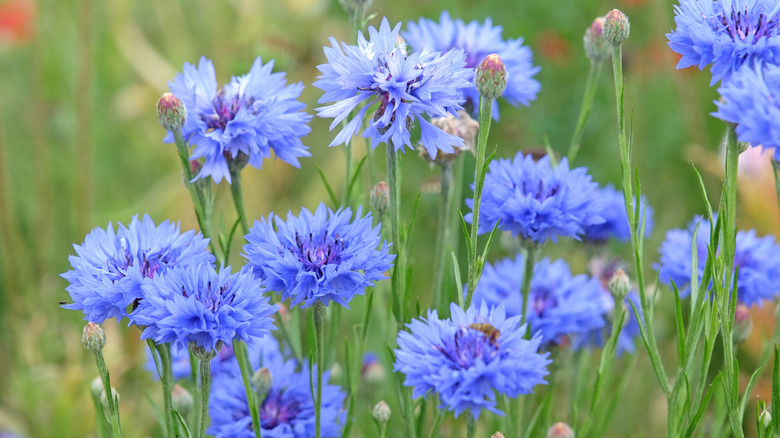
If you're looking to add brilliant blues to your own landscape, you can grow cornflowers easily from seeds, though you may want to start them indoors and transplant them out. Make sure to plant them in a spot with at least part, if not full, sun. And despite their drought tolerance and ability to grow in poor soil, cornflowers are happiest if they have well-drained fertile soil and regular watering. They can vary from 1 to 3 feet tall depending on the cultivar you opt for. And while they are best known for their blue color, you can also find pink and white varieties.
As cool season plants, cornflowers grow best when temperatures aren't too high. And some gardeners, including Dustin W. Blakely, who writes for The University of California Agriculture and Natural Resources, have reported struggles with getting flowers to look nice and not immediately dry out in hot, dry climates. You can try growing your cornflowers in a slightly shadier part of your landscape if you live in an area prone to extremely hot summers. Shade cloth can also be useful for giving your plants a bit more protection from the brutal sun. Just be aware that cornflowers can become a bit floppy in too much shade and may need stakes to help keep them upright.