

Forget Vinegar: An Overlooked Way To Destroy Garden Weeds Naturally

There's been quite a lot of discussion about the safety of herbicides, or weed-killing chemicals, of late; for instance, commonly used herbicides like Roundup, touted as having low toxicity for mammals, have recently come under scrutiny for their potential to cause health issues, including cancer. If you have concerns about the possible toxicity of chemical weed control agents but are still tired of battling unwanted plants in your garden by hand, it may be worth exploring some less harmful, more eco-friendly (and human-friendly) alternatives. You may have heard that vinegar is a good option for weed control—and it is, as long as you use herbicidal vinegar, which is stronger than household vinegar. But there are other natural weed killers you may not have heard of. One such product is the essential oil-based herbicide, Weed Zap.
The active ingredients for Weed Zap are simple and straightforward: 45% cinnamon oil and 45% clove oil. These essential oils work as contact-type herbicides, killing plant tissue with which they come into immediate contact. Cinnamon oil and clove oil's weed-killing abilities come from a chemical compound called eugenol, which is, interestingly, also used as a dental antiseptic. Simply put, eugenol causes leaf cuticle and cell damage, causing the leaves it contacts to dry out and die. As a bonus, thanks to its essential oil ingredients, Weed Zap has a nice clove fragrance!
Weed Zap is best for short-term weed control
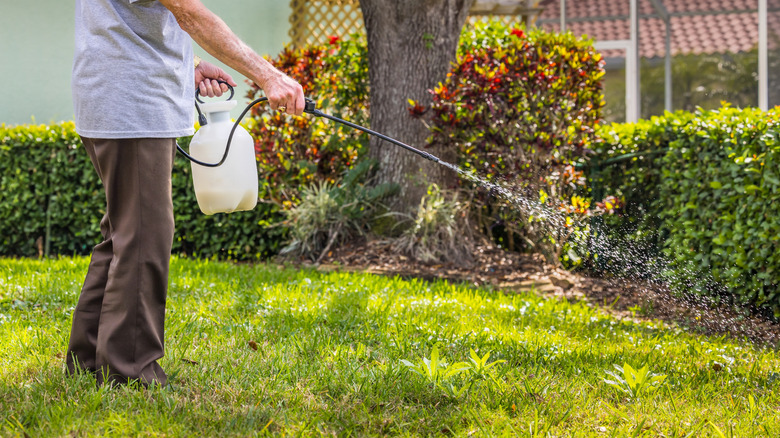
According to JH Biotech, the company that produces Weed Zap, this all-natural herbicide is especially useful when you're trying to control weeds of 6 inches or less. Eugenol tends to be particularly effective when used on young broadleaf weeds (e.g., dandelions and clover, rather than sedges or grasses). Because its weed-killing effectiveness depends on surface contact, make sure you get good coverage when spraying weeds — you may be better served by spraying a lot of a lower concentration of an organic weed killer, as opposed to a little bit of a stronger concentration. It may even drip off the plant.
But will it work for your specific weed problem? When weighing the advantages and disadvantages of this herbicide, keep in mind that the very properties of the essential oils that make this product effective also mean that it is probably not the best choice for long-term control of weed problems or of weeds with particularly extensive root systems. It only kills plant tissue on contact; it doesn't soak into the roots or persist in the soil, so some stubborn weeds may return after being killed back to the ground. In particular, Weed Zap won't be super effective on large perennial weeds and grasses, which house the majority of their growing parts underground. It also will not kill seeds that germinate after you've applied the chemical to existing plants.