

5 Best Ways To Prevent Ants From Invading The Roots Of Your Plants
We may receive a commission on purchases made from links.
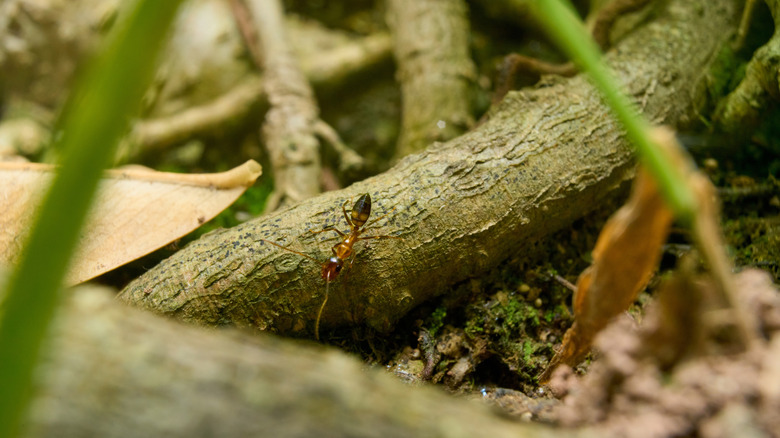
Ants crawling around your garden plant roots can actually be quite beneficial: they can help aerate soil with their tunneling activities and may also prey on fleas and other pests. Although ants themselves may not necessarily pose a huge risk to your garden, if you've noticed a large number of them marching around your plants, this invasion may go hand-in-hand with the presence of other, potentially more harmful plant-munching pests, so it might be in the best interests of your garden to reduce its ant population. Some species may also sting or bite, while others — like carpenter ants and pavement ants — may chew on plants. Plus, if there are ants outside near your home, they may be tempted to venture indoors. Luckily, if it seems like your ant population is on the rise this year, there are home remedies you can try to control invasions in your garden, ranging from planting herbs that might drive them away to creating homemade ant baits.
There are a few caveats to ant control. One of the main rules to remember: you will never, ever manage to get rid of all of the ants outdoors, so make sure to focus only on problem areas and keep your expectations within reason. Also, just because you're using a pest-control substance that is harmless to your pets and family, that doesn't mean it won't harm your local pollinators, so be mindful about where and how you apply it!
Eliminate honeydew-producing pests
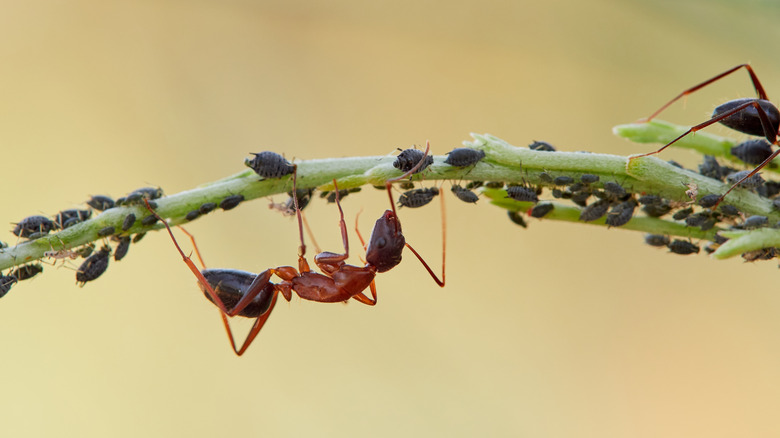
Ants are drawn to honeydew, a sugary excretion produced by aphids (whiteflies, mealybugs, and soft scale may also produce honeydew). If you observe the ants closely, you may even see them acting as ranchers to the aphids in your garden, "herding" and "milking" them like cattle! The ants also protect the aphids from their natural predators, so the presence of ants may lead to an aphid population explosion. If you want to encourage these tiny cowboys to ride off into the sunset, you can start by eliminating their herds.
Before you reach for the insecticides, try manual removal first, as chemical controls can also harm more beneficial insects. Getting rid of aphids manually can be as easy as knocking them off your plants with a strong stream of water from the hose or pruning off heavily infested parts of a plant. If that doesn't seem to be doing the trick, you can try an insecticidal soap, neem, or canola oil instead. Because most of these substances work by smothering the aphids, you'll need to make sure you fully cover the affected area; try combining a small percentage of the soap or oil with water in a spray bottle.
Add ant-repelling plants to your garden
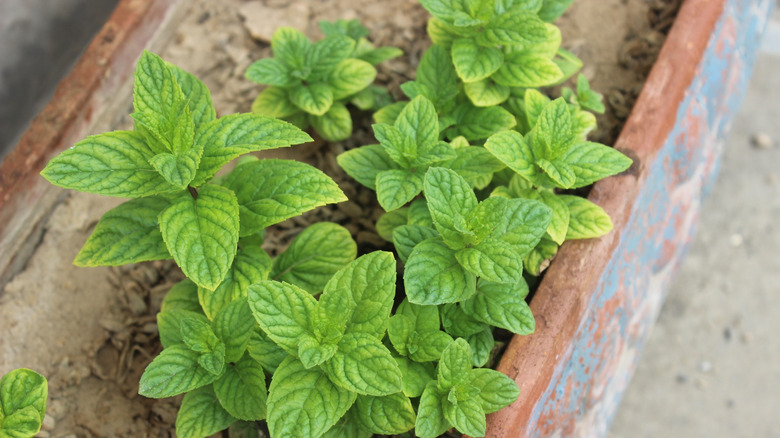
Many species of ants common in the U.S. find their way around using pheromone-based trails. Some strongly scented plants can disrupt these trails and may encourage the ants to find their way elsewhere. With its high concentration of aromatic oils, mint (Mentha spp.) is a particularly annoying plant to ants. Just keep in mind that mint can be an aggressive spreader and will happily take over large swathes of your garden, so you may want to grow it in a container if you want it to behave. A mint family member, catmint (Nepeta spp.), can be an aphid repellent, so that's another option if you've had issues with ants herding aphids — plus, it has pretty purple flowers and can make an excellent, attractive ground cover for sunny areas. Other herb selections with ant-repelling qualities include thyme (Thymus vulgaris), sage (Salvia officinalis), and rosemary (S. rosmarinus).
Your favorite flower for fall color can actually also be an excellent ant deterrent: chrysanthemums are a natural source of pyrethrum, an ingredient often found in pesticides that attacks ants' central nervous systems. A colorful bed of mums may also help keep fleas, ticks, bedbugs, and other undesirables at bay. You can even try drying chrysanthemum leaves and grinding them into an insect-repellent powder. Another colorful flower, marigolds (Tagetes spp.), can also drive off aphids with their strong scent.
Sprinkle a strong-smelling barrier
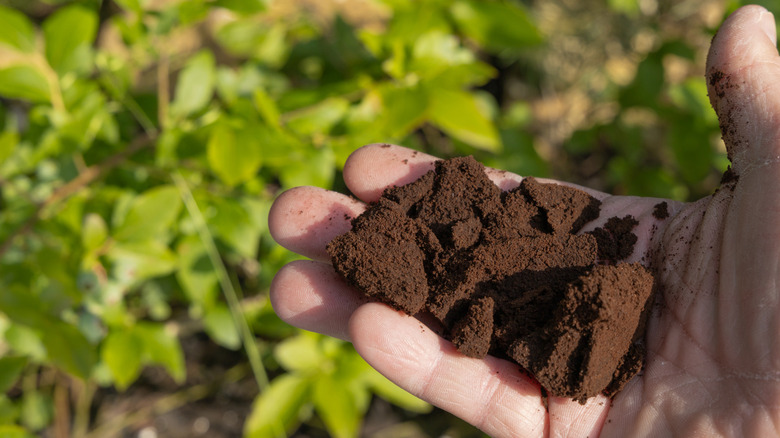
Wait, don't throw away the grounds from this morning's cup of joe! Much like the plants mentioned in the previous section, the strong aroma of coffee grounds can mess with scent trails. After you've finished enjoying the pot of coffee, run the machine one more time with water to filter the grounds twice, then cook them in a pan until they're dry or even burnt (wet grounds may grow mold!). After the grounds have cooled, you can sprinkle them around the affected areas of your garden. Note that while trails may be disrupted, this likely won't do the colony serious harm and may only provide temporary relief. You'll probably need to reapply every two or three days as well, as they may re-establish trails once the scents fade.
Another potential smelly ant-annoyance that you can probably find in your kitchen is cinnamon, which contains the pheromone-trail-disrupting substance cinnamaldehyde. Try sprinkling powdered cinnamon at sites where you've noticed ant trails, or even mix it with water and apply it. Cloves may also work for this purpose.
Use diatomaceous earth
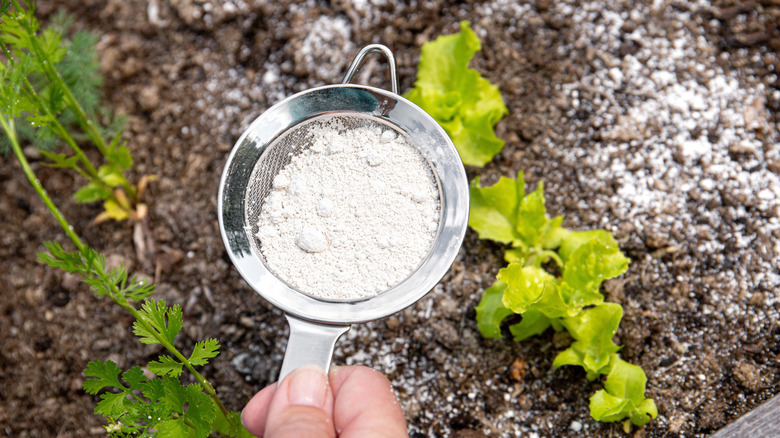
What substance can kill ants despite being non-toxic? Diatomaceous earth! Though its name makes it sound like a type of fancy potting soil, diatomaceous earth is actually a silica-rich natural powder made from the fossilized remains of aquatic organisms called diatoms. Basically, when ants walk through diatomaceous earth, the tiny particulate fossils are sharp enough to damage the insects' protective exoskeletons, and the drying effect of the silica dust draws out the moisture inside and desiccates their bodies. Because diatomaceous earth has no smell, it may be a particularly useful solution if you, like ants, are sensitive to strong smells and would prefer not to introduce olfactory chaos to your outdoor spaces. Plus, it's generally safe for use around pets and kids (though you still should exercise caution when using it around your little ones and furry friends, as it may cause irritation).
Using diatomaceous earth to control ants is simple: just sprinkle it lightly in areas where you've observed a lot of ant traffic. One thing to be mindful of when using this substance for pest control is that there are actually two kinds: food-grade and industrial. Always buy food-grade diatomaceous earth; industrial-grade is not effective when used for pest control and can be harmful if you inhale it. Also, diatomaceous earth isn't as effective when it gets wet and doesn't work well in moist soil, so if you live in a very humid place like Florida, it probably won't be the best choice for ant control.
Make boric acid baits
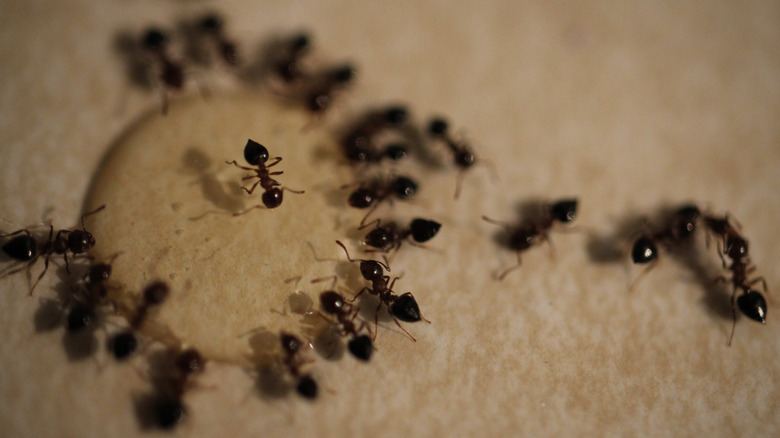
Though you can buy ant traps or poison baits at the store, you can also make your own using boric acid and a tempting treat. A naturally occurring mineral, boric acid is toxic to ants when ingested, and its powdered form can actually be abrasive like diatomaceous earth. You can easily buy powdered boric acid on Amazon, like this Exocall bulk product. What sort of bait is best to kill ants in plant roots depends on what species of ants you're dealing with. Some species, like odorous house ants and Argentine ants, prefer sweet, sugary baits; others, like pavement ants and thief ants, favor greasy, fatty baits. Jelly is a good choice for sugar-loving ants, while grease-loving ants may prefer peanut butter (maybe just put a bit of each aside after you finish making a sandwich!). You can also experiment by putting out different foods to observe what your specific invaders like best.
To make the baits, mix one part boric acid with 10-20 parts food, then place them near ant paths you've observed. It's a good idea to cover the baits with straw to prevent pets or kids from getting into them (though boric acid, while not completely harmless to non-insects, is one of the safer, less-toxic options). Worker ants will gather the food and pass it along to other members of their colony, and because boric acid acts slowly, the poison will likely be passed to many ants before it has a chance to act.