

The Beautiful Flowering Bush That Could Be Luring Garden Snakes To Your Yard
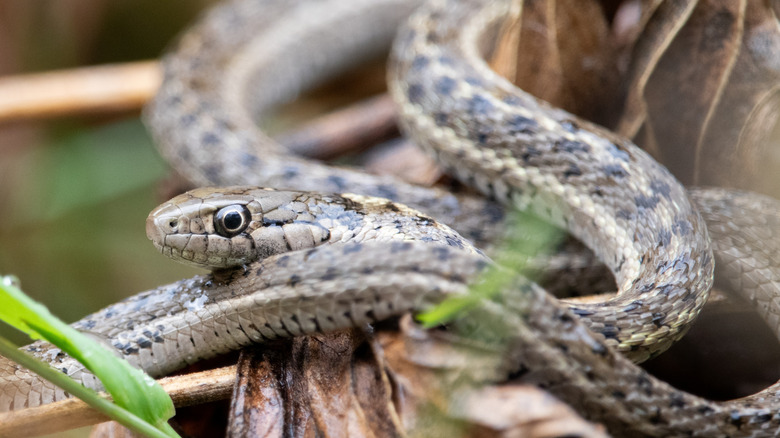
A landscape of gorgeous flowering shrubs is sure to fill your yard with beauty and pollinators. But what if butterflies aren't the only things your bushes are drawing to your yard? In the case of azaleas, they could also be encouraging visits from snakes.
Azaleas are stunning flowering shrubs, and with many azalea plant varieties native to the Southeastern United States, they're understandably popular landscaping choices. They're an especially good option if you need a plant that likes acidic soil. A type of rhododendron, azaleas tend to be relatively small, coming in at under 5 feet, and often have relatively dense branches. This creates a compact plant that can be completely covered with blooms during spring and is perfect for creating low hedges. Unfortunately, their relatively low-growing nature and tightly branching habit also make them appealing to snakes. Not only can snakes easily climb into azaleas because their branches are so low, but they can also comfortably stretch out across them and sun themselves. The shrub's dense inner branches could even be a good spot for them to hide and sleep.
It's not just one kind of snake that loves azalea bushes, either. People report finding everything from milk snakes to rat snakes to Dekay's brown snakes to black racers in and around their azaleas. Fortunately, none of these snakes are venomous.
How to deal with snakes in your azalea bushes

Snakes aren't necessarily bad to have in your garden. They help to control rodent populations and are an essential part of a healthy environment. However, if your area is known for having venomous snakes, then you'll likely want to take steps to discourage them from visiting your azalea shrubs, especially if they are close to your house. One common piece of advice for making shrubs less appealing to snakes is to trim off any branches within about 2 or 3 feet of the ground. This limits hiding spots for snakes and makes the shrub more difficult to climb into. Unfortunately, given how small many azaleas are, this may not be a realistic option, though even removing branches within 6 inches of the ground should help. (Make sure to wear gloves while pruning if you think there may be snakes nearby.) If your azalea is near your lawn, keeping your grass mowed short should also help discourage snakes from visiting.
For concerns about possible venomous snakes or if you can't identify your backyard snake, you can also call a local wildlife removal expert for assistance. They should be able to assist with their humane removal. It's important to keep in mind that many snakes are legally protected.
If you're at your wit's end dealing with snakes in your azaleas, you could always opt to replace them with shrubs that are less likely to attract reptiles. Plants that don't have dense branches or any branches close to the ground are best. This could include options like yucca or even growing taller rhododendron species like rosebay (Rhododendron maximum), which can have lower branches removed.