

Not Eggshells: There's An Easier Way To Help Your Garden Thrive With Eggs

There are a lot of popular home recommendations and tips for ways to use eggs in the garden. From grinding the eggshells into plant fertilizer to using larger pieces of shells to ward off slugs and other pests, egg-related garden hacks are extremely popular. A study from the Alabama Cooperative Extension actually found that finely ground eggshells work as well as pure calcium and are even more effective than lime for raising calcium levels in soil. The shells themselves aren't the only egg-related treat you can give your plants, though. Consider offering your leafy friends the water you cook your hard-boiled eggs in, as well.
While egg shells are rich in calcium, it's not likely that much of that calcium leaches into the cooking water, so this strategy can't take the place of using a proper calcium amendment. However, that doesn't mean there's no benefit to using this water for your plants. After all, otherwise it would just be dumped down the drain and wasted. Giving your plants water left over after cooking or washing produce is a great way to avoid wasting water, especially if your region is facing water restrictions or drought.
How to use cooking water from eggs in your garden
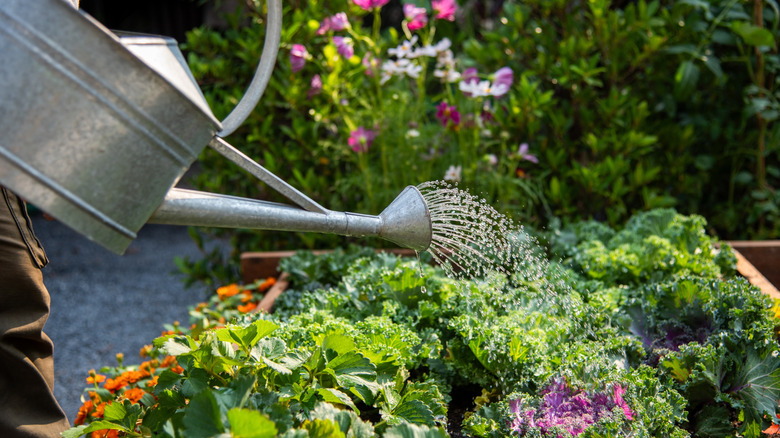
While there are many different recipes for making hard- or soft-boiled eggs, they generally involve putting your unshelled egg into a saucepan or pot of water and heating it for several minutes. You then remove your eggs and put them in a bath of cold or ice water. Both the water you cook the eggs in and the water you use to cool them can be given to plants. Just be sure to wait for the cooking water to cool first. You don't want to accidentally cook your plants.
Since there is likely little calcium in your egg-cooking water, you'll need to use other strategies if you believe your garden and plants are calcium-deficient. Often, a calcium deficiency in a tomato plant or other crop isn't caused by a lack of calcium in the soil, but instead by an inconsistent watering schedule that is preventing the plant from properly taking up nutrients. Calcium deficiencies are also more common in overly acidic soils. So you may want to test your soil and, if necessary, amend with lime to raise your soil pH and improve calcium levels.