

Is It Possible To Contract Cyclosporiasis From Your Homegrown Garden?
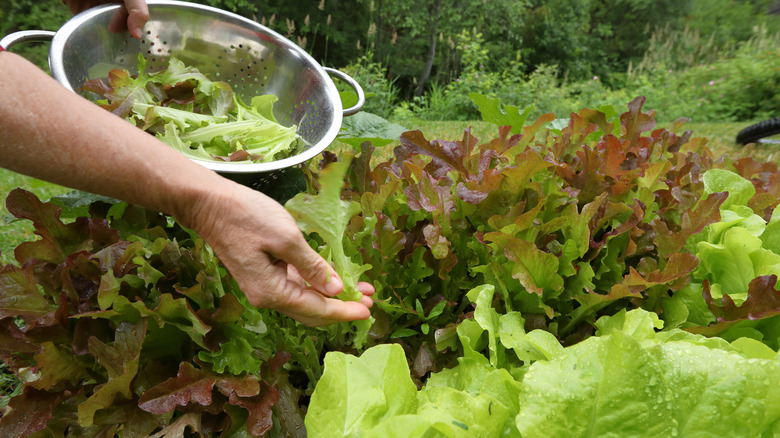
Fresh produce is amazing, but no one likes being sick. So news of an outbreak of cyclosporiasis, often described as an "explosive diarrhea bug", that's likely connected to fresh produce is understandably alarming. And while it is possible to contract cyclosporiasis from homegrown produce, it's less likely than catching it from certain types of store-bought produce, especially if you take some basic precautions.
Cyclosporiasis is caused by a parasite that is inadvertently ingested in contaminated food or water. It only infects humans and is shed (and spread) through human feces. Frustratingly, it can often take two weeks or more between exposure and symptoms, potentially making it difficult to know where and how a person was exposed. It is not generally passed directly from person to person.
There have been multiple cyclosporiasis outbreaks in the United States over the years, including the recent one in summer 2026. Other outbreaks in the past decade have been linked to store-bought produce such as fresh basil, bagged salads, and raspberries, and these cases are generally highest during the summer months. But the good news is that as long as your homegrown produce hasn't been exposed to contaminated soil or water, you are not likely to contract cyclosporiasis from it.
How to decrease your risk of contracting cyclosporiasis
Because you have more control over and information on exactly what your homegrown produce is exposed to, you should be less likely to contract cyclosporiasis from it. Factors like excess stormwater in your yard due to heavy flooding, growing produce over your septic leach field, and leaks or damage to sewer lines could increase the risk of your garden being contaminated with raw sewage containing microbes, including the parasite that causes cyclosporiasis. Growing your berries, herbs, and vegetables in thriving raised garden beds is a good way to decrease this risk. And don't forget to clean your garden tools, as this can help prevent infection, as well.
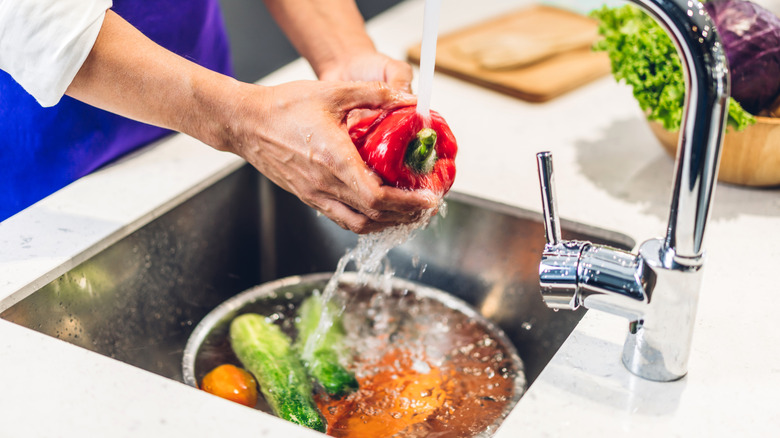
Regardless of whether you grow your produce yourself or purchase it at a store, you'll want to wash it thoroughly before eating. And, of course, wash your hands before eating or preparing food. You can also remove and compost the outer leaves on heads of lettuce or cabbage, and opt to peel root vegetables.
If you or anyone else in your household is immunocompromised, you may want to take additional precautions, like cooking all produce. Thankfully, cyclosporiasis is rarely fatal, but people who are experiencing possible symptoms should talk with their doctor. Antibiotics can be prescribed to reduce the severity and duration of the illness.