

5 Beautiful Annual Flowers That Are Almost Impossible To Kill
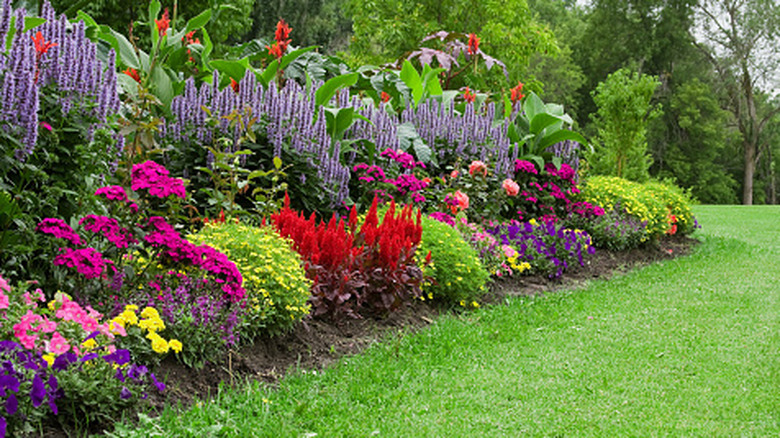
Annual flowers are a great way to add color and life to garden beds and borders. However, how well these plants thrive can vary wildly. While some, like lisianthus, are surprisingly challenging to grow and keep alive long enough to enjoy, others are a breeze and should sail through the summer without giving you any trouble. Some of the most common summer struggles for annuals are heat and humidity. Water restrictions due to drought can also take a toll on summer gardens. While there are steps you can take, like applying mulch, to help your garden through this, one of the most important things to do is to pick the right plants, like sunflowers and celosia.
Just remember, even if you're filling your garden with gorgeous drought- and heat-tolerant plants, they're still going to grow their best if they have access to some water. So as long as you don't have restrictions in place, try to water your garden deeply, providing at least an inch per week. Fortunately, if you opt for sufficiently tough annual flowers, they should survive even when the summer weather does its worst.
Sunflowers thrive and bloom in the dry heat of summer
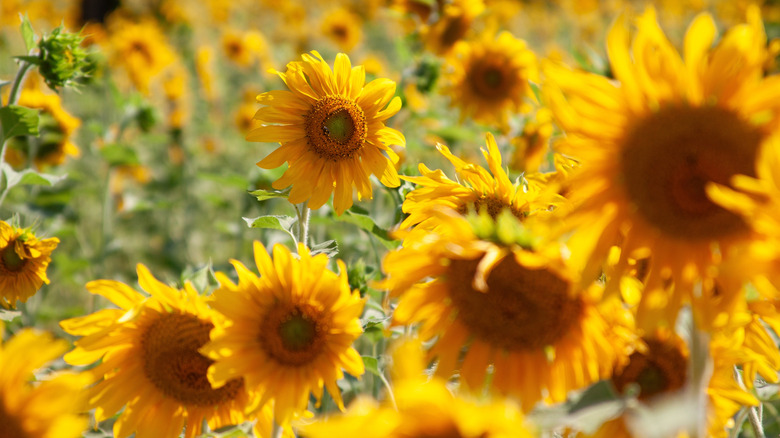
What is summer without the beautiful and resilient sunflower (Helianthus annuus)? As long as you give these beauties the full sun location they need, they'll tolerate a range of soil conditions and hold up to heat and drought. Sunflowers also offer an impressive range of colors, heights, and growth patterns, so you're sure to find some that work perfectly for your full-sun garden.
While sunflowers are extremely tough all summer long, they can only handle very light frost. So be sure to wait for your weather and soil to warm before planting. While they can be started indoors and transplanted if you're careful with their roots, sunflowers grow well when direct-sowed. Once your sunnies are well established, their long tap roots should ensure they can stand up to periods of dry weather. Impressively, they can also handle slightly waterlogged soil. Whether you prefer petite branching sunflowers or giant single-stemmed varieties, sunflowers' tolerance of poor soil and ability to grow even in clay and sand-heavy media make them perfect for adding beauty and attracting pollinators to your garden. Just don't forget to keep sowing new successions of seeds for your single-stemmed varieties, if you want to enjoy them all summer.
Annual phlox thrives and flowers through the heat and drought
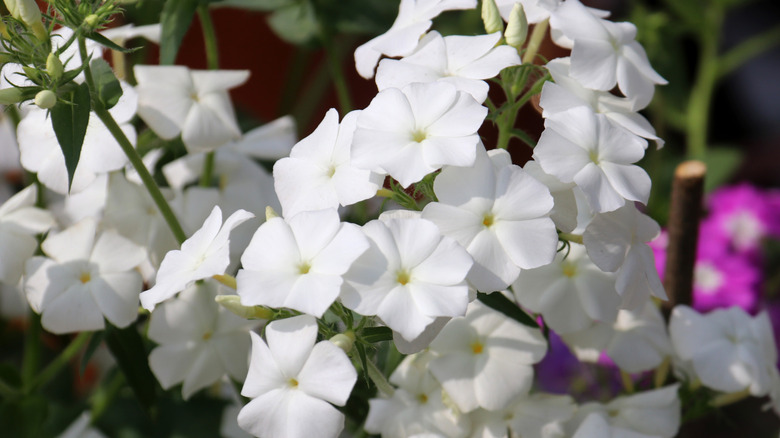
There are a lot of gorgeous phlox species to consider for your garden, but one that might get overlooked is the beautiful and drought-tolerant annual phlox (Phlox drummondii). Native to the southern United States, annual phlox grows best in sandy soil, but can handle other soil types too, as long as they drain well. While some cultivars of annual phlox take a bit of a break during the hottest parts of the summer, other cultivars like 'INTENSIA Red Hot' can handle heat and humidity with no problem.
While phlox can sometimes struggle with powdery mildew, it's unlikely to be killed by it. And improving airflow around your plant should limit issues. Happily, annual phlox are less prone to this than their perennial relatives. With just a bit of care, your annual phlox should flower not just all summer, but also well into fall, only dying once a hard frost arrives.
Semi-succulent moss roses bloom profusely in dry heat
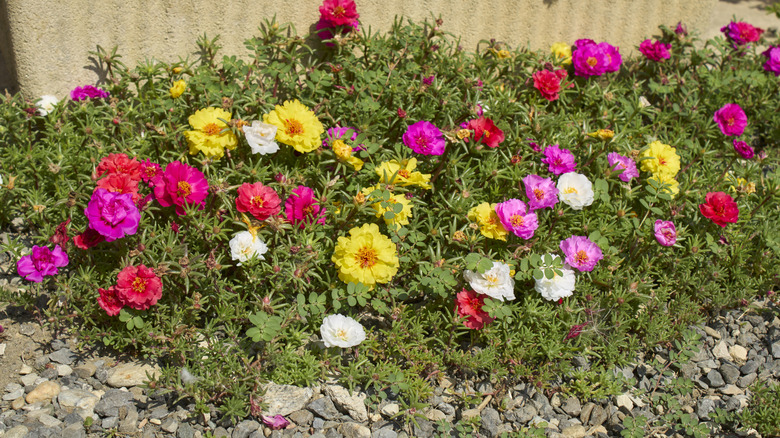
Despite their delicate appearance, moss roses (Portulaca grandiflora) are impressively tough annuals. Native to South America, these beauties are more than capable of standing up to heat and drought. Considered semi-succulents, moss roses, also called portulacas, are easy to look after. They're perfect for adding to hanging baskets or the front of dry flower beds and borders, as they generally grow only about 6 inches tall. This also makes them an ideal annual ground cover. Available in almost every color, from reds and purples to whites and yellows, moss roses are little flowers that make a big impact.
Be sure to wait until after your last frost to plant out your moss roses, and stay on top of deadheading if you don't want them to self-seed. As long as you grow them in full sun and provide them with well-draining soil, they should thrive for you all summer long.
Celosia is a tough annual that adds unique shapes and textures to your garden
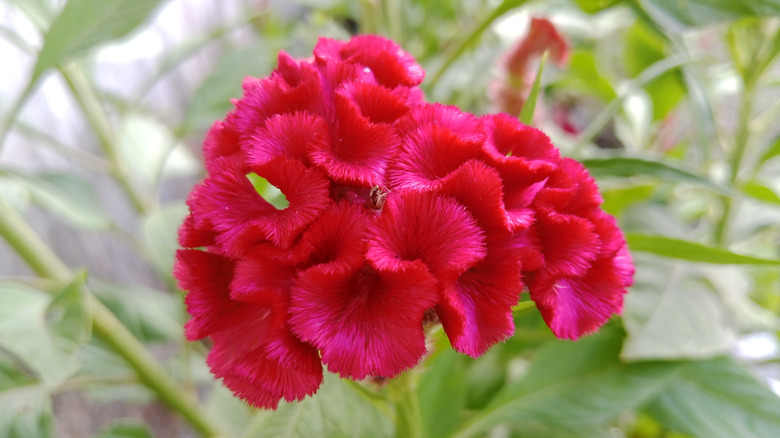
Another gorgeous annual flower with unique blooms even in the heat of summer is celosia. These amaranth relatives come in a few different forms, including the plume type (Celosia plumosa), crested type (Celosia cristata), and wheat type (Celosia spicata), each with their own unique flower shapes. What they all have in common is an amazing tolerance for heat and drought. They can handle humidity without a problem, as well.
While you can buy a variety of celosia cultivars as young plants, they can also be easily grown from seed. Just make sure to grow your celosia in full sun and well-draining soil if you want them to thrive. Despite their drought tolerance, you'll still want to provide them with regular watering, if possible, to get the best flowers. With heights ranging from 6 inches to a few feet, depending on the cultivar, there's likely a celosia that's perfect for your garden or planter. Best of all, they're deer-resistant, so you won't have to worry about them getting nibbled away before you can enjoy them.
Zinnias are summer garden classics for a reason
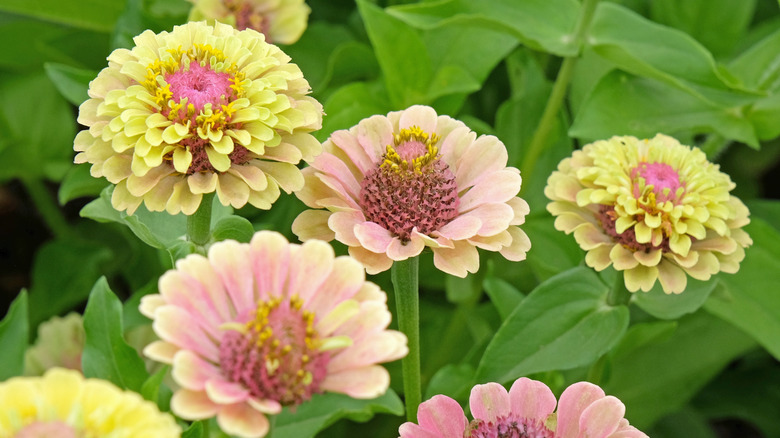
Zinnias (Zinnia elegans) are such classics in the garden that it can be easy to overlook them in favor of more unusual flowers. But if you need something that can stand up to the heat of summer and keep flowering, look no further than this beloved favorite. Zinnias aren't just heat-tolerant; they can also handle drought without issue. (Though for the best flowers you'll still want to provide them regular moisture.) They are available in a range of flower sizes, colors, and shapes. The plants also range in height, with some as small as 6 inches, while others can reach 3 feet.
You have many options for growing zinnias. You can start the seeds indoors or direct sow them into the garden once the soil is warm. You can even just pick up plants from your local garden center. Make sure to plant your zinnias in well-draining soil, though they aren't particular about the pH. They also like full sun. And since they're prone to powdery mildew, you'll also want to avoid crowding them so they have enough airflow. With many zinnia cultivars flowering within about six weeks of planting, they're a great way to get a colorful garden quickly. Regular deadheading should ensure near-constant blooms.