

Save Your Eggshells — These 5 Potted Plants Will Thank You
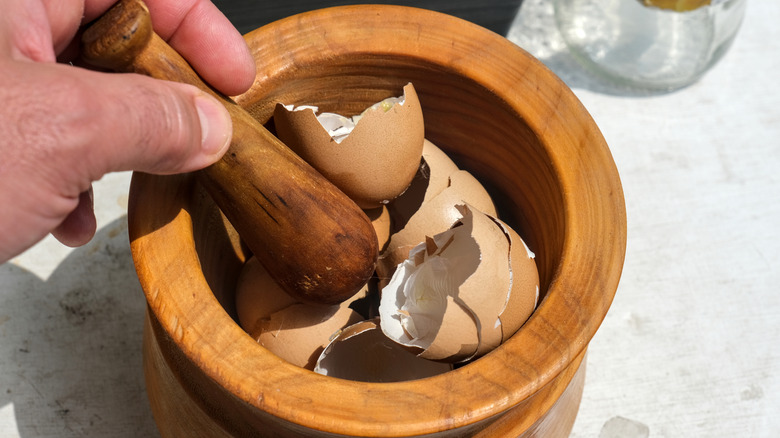
If you're a big fan of omelets and frittatas, then you likely find yourself tossing out plenty of eggshells. But the shells don't have to be garbage; you can use them in the garden or with your houseplants. You might be surprised how many of your leafy green friends would enjoy your leftover bits of shell — monstera, potted roses, and spider plants, to name a few.
While it would be easiest to just crack an egg and toss the shells into the nearest potted plant, that's not the best way to ensure your plants get the minerals and nutrients from the eggshells. (They will also probably smell.) Instead, your best bet is to bake or dry the eggshells. If you're concerned about the possibility of salmonella on the shells, heat them to at least 160 degrees Fahrenheit. Then finely grind them using a blender or mortar and pestle. This will make the calcium in the shells more easily available to your plants. Calcium is a great amendment for many plants because it helps strengthen their cell walls and improves resilience. Even though many of the crops eggshells are most commonly recommended for, like calcium-hungry tomato plants, live in your veggie garden, that doesn't mean some of your beloved potted plants won't also benefit from crushed eggshells.
While plants struggling with calcium uptake often simply can't access calcium available in their soil due to the pH being too low, this is not always the case. If you've done a soil test and confirmed that the pH is fine, then it's possible that your plants' growing medium is nutrient-deficient and would benefit from the calcium of eggshells.
Egg shells are a popular amendment for monstera plants
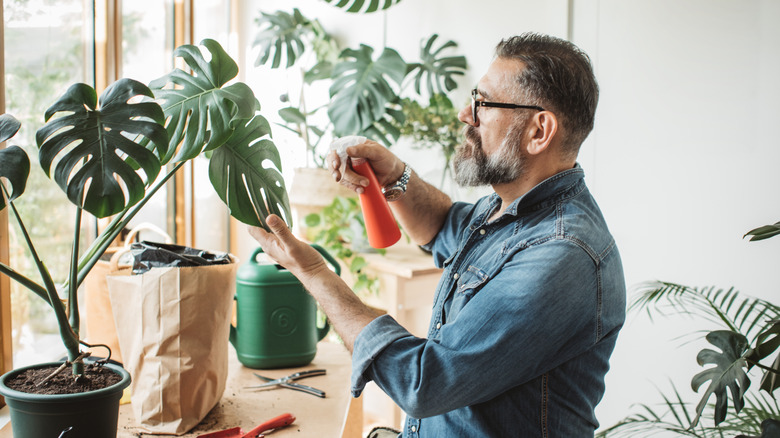
One of the most popular plants to share your egg leftovers with is the iconic monstera (Monstera deliciosa). Monsteras are known for their gorgeous leaves with large holes called fenestrations. And those stunning leaves can also be a great way to check on your plant's health. If you start to notice the veins of the leaves staying green while the rest of the leaves begin to yellow, this could be a sign your monstera is struggling and would benefit from some added nutrients. And adding ground eggshells in addition to diluted fertilizer to your plant could be the boost it needs.
Monsteras are often considered heavy feeders, especially during their growing season. So providing them with some crushed eggshells as a little extra calcium boost can be a great idea. Just be realistic and understand that this can't take the place of a balanced fertilizer when it comes to meeting all their needs.
Potted roses can enjoy a boost from crushed eggshells
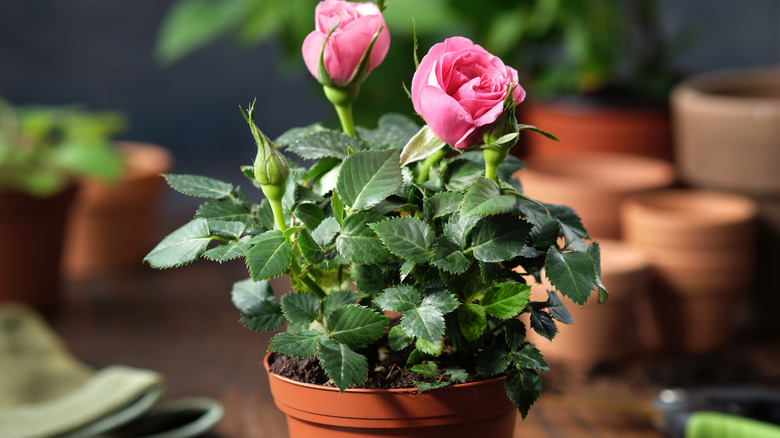
There are so many ways you can grow roses, from climbing ones creeping up trellises, to a bed or border full of the thorny but beautiful plants. Roses can also thrive in pots and planters. This is an especially good option if some of your favorite roses aren't winter hardy in your region. Just bring them indoors for the cold season! But remember that plants that aren't grown in the ground sometimes need to be fertilized more often. So don't neglect feeding your potted roses. And one of the most important nutrients roses need to flourish and bloom is calcium.
Since finely ground eggshells are just as beneficial for plants as pure calcium, your eggshells could be a great way to give your roses the boost they need to stay healthy and happy. Just remember you'll still want to give them a fertilizer designed for roses to ensure they also get enough nitrogen and other nutrients.
Access to calcium like eggshells contain can prevent leaf burn on spider plants
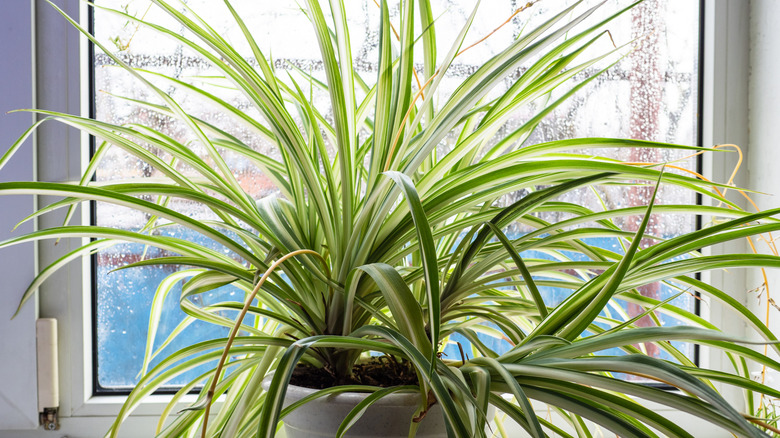
Spider plants (Chlorophytum comosum) are often considered some of the easiest houseplants to care for, but that doesn't mean they don't have some struggles on occasion. One of their most common issues is leaves with crispy and burnt tips. While there are a few possible causes for this, including using water containing fluoride, lack of access to calcium is also a potential cause for burnt leaves.
It could be that your plant is simply unable to access calcium due to the soil pH being too low, but it's also possible that added calcium could be beneficial. Providing your spider plants with eggshells mixed into their potting soil could be the extra push they need to not just have healthier leaves but also increased growth. And don't forget that in spring it's best to fertilize your spider plant to help it thrive.
The beautiful and unique peperomia plant needs calcium to thrive
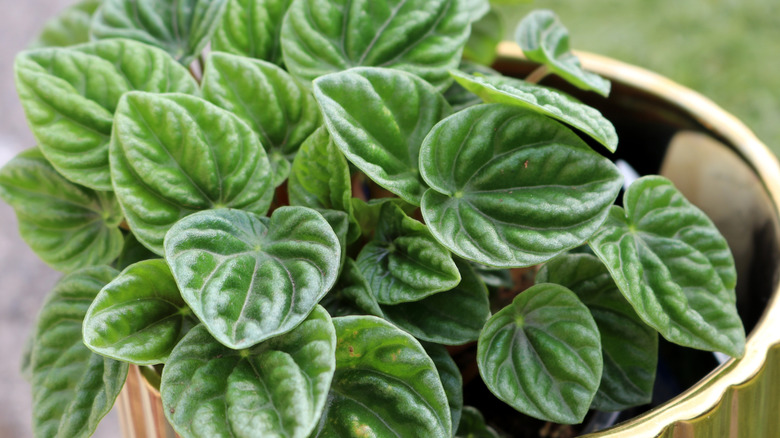
Another gorgeous potted plant that is sometimes prone to calcium deficiencies is the peperomia. If your peperomia's leaves begin to curl or look deformed, this is often a sign that your eggshells could be a beneficial addition. 'Hope' and Watermelon (Peperomia argyraea) peperomias are especially known for struggling due to a lack of calcium.
Crushed eggshells are a great way of getting your peperomia the calcium it needs to have healthy and lush leaf growth. In addition to simply adding eggshells to your plant's potting mix, you could also try dissolving them in water to create a foliar spray to spritz directly onto the leaves. You'll likely still want to provide your plant with a diluted liquid fertilizer on occasion, too. And don't forget to let its growing medium dry between waterings, as overwatering is another common cause of leaves curling on peperomia plants.
Eggshells can provide a great calcium boost for orchids
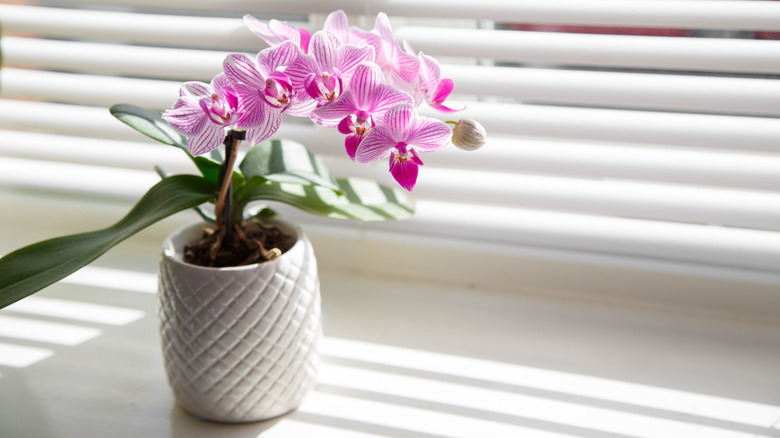
Orchids are stunning additions to your houseplant collection, especially when they're in full bloom. And while your old eggshells may not get your orchids blooming more frequently, they will help provide the plants with the calcium they need. If you use reverse osmosis water for your orchids, adding additional calcium to their growing medium is especially important.
One of the biggest signs of a calcium deficiency in orchids is damage, and even death, of new leaves, even as older leaves seem fine and healthy. Luckily, your ground eggshells can come to the rescue again. Just be sure to use them in moderation so you aren't raising the pH of the orchid's growing medium by too much. And since damage caused by excessive calcium can look similar to problems from calcium deficiency, it's never a bad idea to do a full soil test before adding anything if your orchid is struggling.