

5 Succulents That Can Live Longer Than You
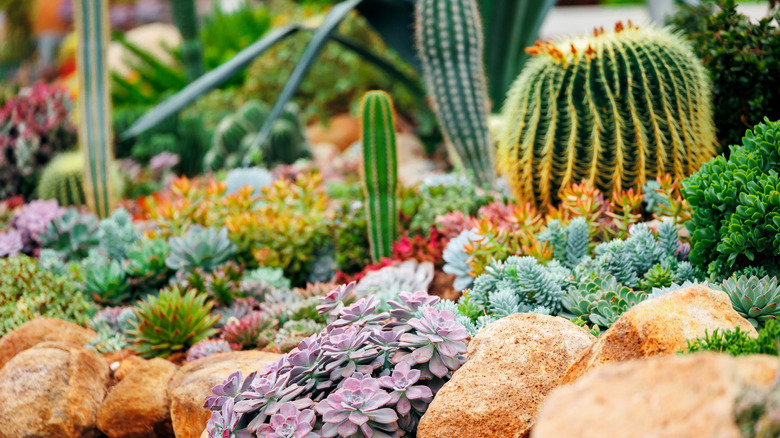
Is there anything more tempting to a plant enthusiast than a grocery store display of cute little potted succulents? They're popular for good reason: in addition to their fascinating forms and adaptability to either container or outdoor applications, they're generally low-lift plants that require little from their keepers, especially when it comes to water. In fact, the ability to store water in their specially adapted thick leaves and stems to survive low-moisture conditions is what sets succulents apart from other plants (yes, cacti are succulents, though not all succulents are cacti). Although some, like hens and chicks, live for only a few years, others can outlive their gardener! If you want to take on the challenge of a plant that may last you into your golden years, take a look at selections like the barrel cactus or the jade plant, among others
Of course, the longevity of your succulents and cacti depends in large part upon whether they receive adequate care. Across the board, most succulent species have similar care needs. Whether you're raising succulents indoors or in your garden, they typically require bright light and, possibly above all, soil that drains extremely well. Soggy soil and standing water can lead to rotting quite quickly, so try using a combination of sand and potting soil, and make sure your container has drainage holes, if you're using one. If your succulents are happy in their growing conditions, some may even reward you with lovely flowers!
Living stones
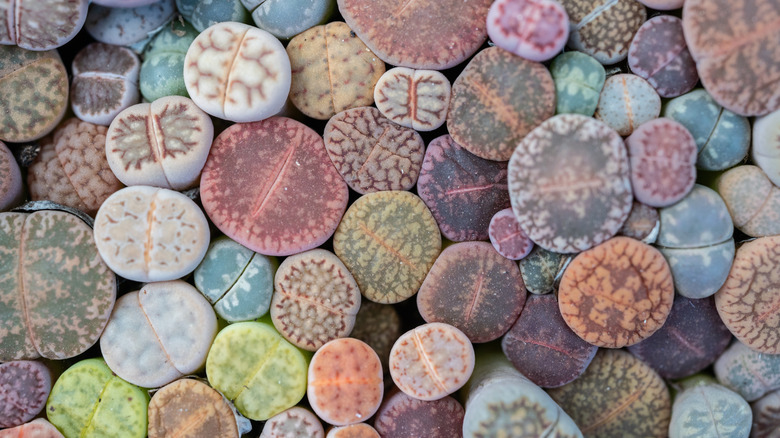
With a lifespan topping out at 40 to 50 years, living stones are visually intriguing novelty plants that may outlive their gardener, depending on care. Living stones, also known by the Latin name Lithops, translating to "stone-like," look exactly as their common and scientific names might suggest. Most of the roughly 37 species of living stones originate from an area between Namibia and South Africa that typically receives less than 4 inches of rain over an entire year. These little succulents are able to survive in such conditions due to their squat stature, which protects them from the intense heat and sunlight, as well as their incredible water-storing capabilities. Interestingly, much like the proverbial iceberg, the majority of the plant is actually underground in the form of a large root system, and during times of pronounced drought, even the leaves will shrivel beneath the soil.
As you may expect from plants that come from an arid environment, living stones do not respond well to overwatering; they'll probably become mushy and may rot. They are hardy in USDA Zones 10 through 11 and look their best with a good dose of sunlight in the earlier part of the day and a bit of shade later on. The flowers emerge from the center of their two leaves during the fall or winter, and they open in the sun and close when the light is absent.
Holiday cactus
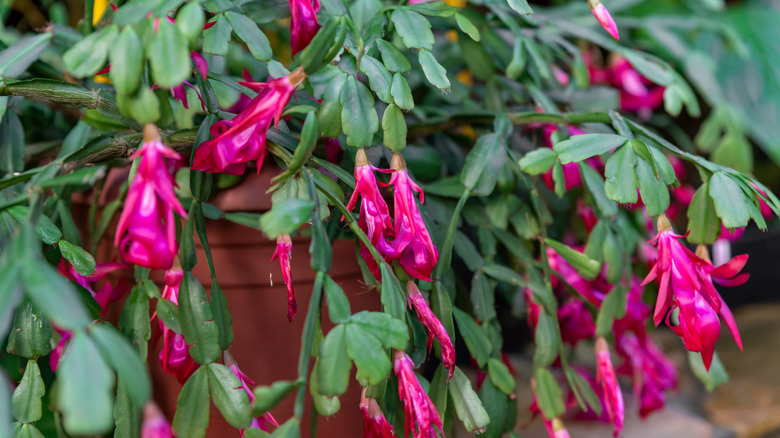
Not all succulents and cacti are from the desert! Holiday cacti (Schlumbergera spp.) actually grow in the high-altitude rainforests on the southeast coast of Brazil as epiphytes, rooting on cliffs or tree branches instead of the soil on the ground. These unique succulents can live for a century in their ideal conditions, so you may need to include them in your will! The Schlumbergera genus flowers in response to shortening daylight hours and includes the Thanksgiving cactus (S. truncata), so called because it flowers in late November, and the Christmas cactus (S. russelliana), which flowers in late December. Myriad colorfully blooming varieties and hybrids are available in hues ranging from pink and red to gold and white. Although young plants grow upright, older plants trail and dangle as they would from their lofty perches in the wild.
To keep your Christmas cactus thriving year-round, think about how and where they grow: they receive frequent showers in their humid rainforest homes, but their cliffside or treetop growing locations mean that the water runs off easily, meaning they are never left soggy. So ideally, you'll want to grow these cacti in extremely well-draining soil with frequent waterings — less frequent, though, in heavier media. You can provide additional moisture by misting your cactus or placing it on a saucer full of water and pebbles, so the water will evaporate and create a more humid environment. Keep them away from dry, hot air sources like heating vents to avoid bud drop.
Echeveria
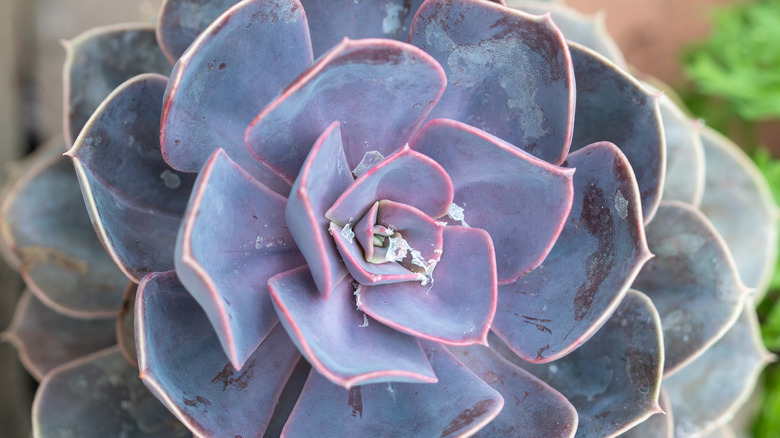
Echeveria are some of the most popular succulents for home gardeners — you've probably seen members of this large family of desert-dwelling succulents at garden centers, farmer's markets, and grocery stores many times. Believe it or not, with proper care, they can live for 30 years (which, okay, may not be longer than you, per se, depending on your age). Many striking varieties are available, including the reddish-black 'Black Prince', which would look right at home in a goth garden.
These hardy, rosette-shaped plants thrive in full sun and drought-prone environments. If you live in a warm environment like those found in zones 9-11, you may be able to keep them outdoors, but you'll probably need to bring them inside if you live anywhere that experiences frosts. Make sure you don't leave them sitting in water, especially during the winter, as this could lead to fungal issues, or leave water in the center of their rosettes, which could cause rot.
Jade plant
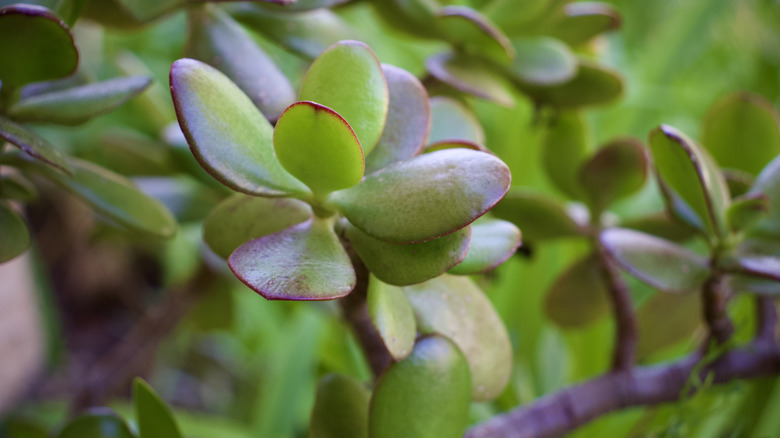
Another succulent with a potentially 100-year lifespan, the jade plant (Crassula ovata) can be grown as a hedge outdoors in zones 11 and 12 or as a houseplant. A shrubby native of South Africa, the jade plant's chubby leaves ("Crassula" is actually derived from the Latin word for "fat") and fleshy stems enable it to store water and tolerate poor soil and drought conditions. Part of its longevity is due to how difficult it is to kill; it's a great choice for neglectful houseplant keepers, isn't fussy about suboptimal temperature and light conditions, isn't troubled by many pests or diseases, and is very tolerant of being root-bound. Though it does favor four or more hours of direct sun, it will still grow well in indirect light, albeit with some coloration differences.
One of the keys to keeping a jade plant happy is knowing when to water and how much: too much water can lead to a rotted stem and dropped leaves, while too little can also negatively impact its growth. During the seasons when it's actively growing, which is typically spring and summer, you can give it a deep watering fairly often; just make sure to let the soil dry out a bit in between. During the winter, err on the side of under-watering, letting the soil stay a bit dry.
Barrel cactus
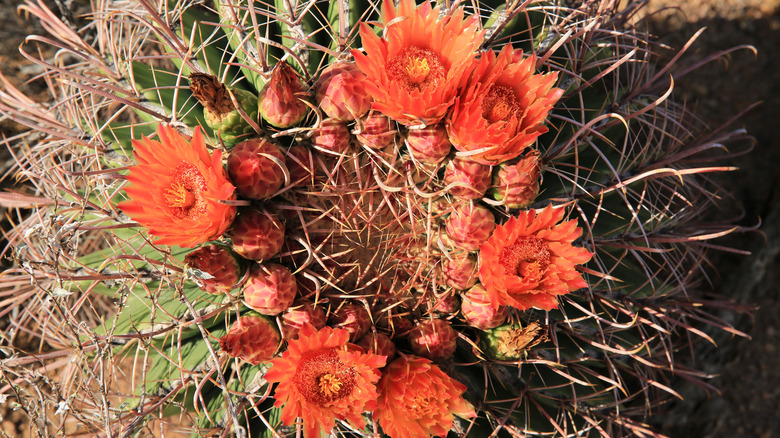
A genus of cacti found in the American Southwest and Mexico, barrel cacti (Ferocactus spp.) are named for their rounded, ribbed shape. There are around 30 species in the barrel cactus family with lifespans ranging from 30 to 50 years. Some are even longer-lived: 130-year-old candy barrel cactus (F. wislizeni) individuals have been reported. Beyond their appealing spiny, wild west aesthetic, they also flower beautifully in late spring or early summer, in hues ranging from yellow to orange to purple. The spiny little fruits that succeed the blooms are actually edible for humans (try them in a cocktail or as preserves, if you're of a culinary bent!), though it's likely your neighborhood wildlife will enjoy them more.
Hardy in zones 9 through 11, these desert-dwellers love the sun and are right at home in dry or drought-stricken settings. You can grow them as landscape plants or in pots; either way, like other succulents, good drainage is a must. If you're planning to grow a barrel cactus in a container, opt for a terra cotta pot, as terra cotta's porous structure can prevent too much moisture from accumulating. Be careful and make sure to wear gloves when tending to barrel cacti or nearby plants, as their spines can give you a nasty jab.