

Why Do Gardeners Hang Pine Cones In The Garden?
We may receive a commission on purchases made from links.
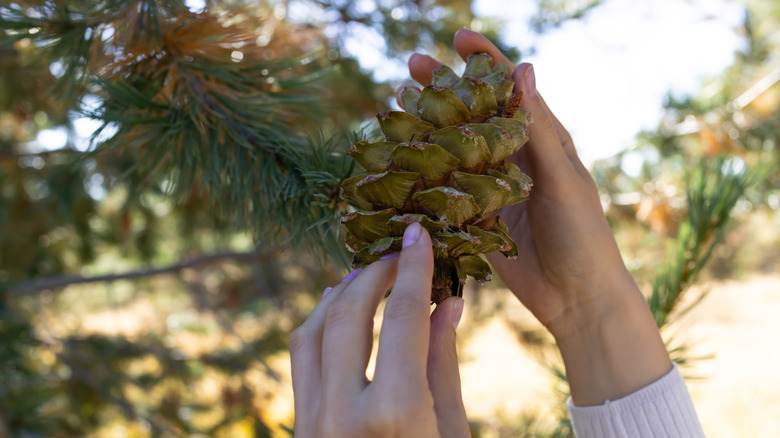
You may primarily think of pine cones as something that adds beauty to your landscape as they hang from your stately pine trees, or as an annoyance once they begin to fall and cover your lawn. There are also different kinds of tree cones from the various coniferous trees. While these aren't technically pine cones if they aren't from pine trees, they behave similarly. If you have them, you don't have to just leave these gorgeous cones on the trees or strewn across the ground. They're great for tracking the relative humidity in your garden, which is why you may have noticed gardeners sometimes hanging them here and there. Because of how they are made, pine cones can open and close their scales depending on temperature and weather. When it's cold, they shelter their seeds, which are found on the scales, by closing. They then reopen in the presence of warm, humid air, allowing the seeds to escape. This makes them good humidity-tracking tools.
The opening and closing process doesn't end after they dry and fall from the tree, either. The cones will continue to open when they are dry and close when the humidity is high or when they are wet. This means that by checking the pine cones they have suspended on strings, gardeners can find out the relative humidity. The reason tracking humidity is so important in gardening is that when conditions get too humid, plants struggle with reduced water evaporation and become susceptible to rot.
How to enjoy your pine cone humidity-tracker in the garden
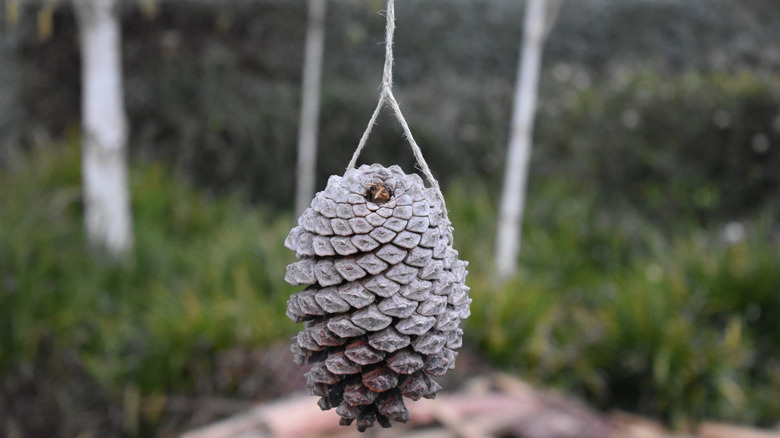
Pine cones are most useful for tracking humidity when you need it most — during the growing season. To hang one in your garden, you simply tie some twine to it and suspend it from something. It should be placed out of direct sunlight and somewhere where it's shielded from rain. The pine cone in your garden may be able to detect changes in humidity for years. If you notice, though, that it's no longer opening and closing in response to temperature and moisture, or if it's been damaged by the weather and has lost scales, it may be time to replace it.
Pine cone hygrometers are a lot of fun and add an interesting and ever-changing element to your garden. You could also use them inside to make sure your basement is staying relatively dry or to check if a terrarium is remaining humid enough. Of course, helping to tell the weather is far from the only thing pine cones are useful for. Filling planters partway with pine cones can make them lighter and easier to move. And you can even use them as convenient kindling for bonfires.
As fun as using a pine cone to track your relative humidity is, if you need precise data, it may not be the best hygrometer. While you can try calibrating your pine cone by carefully tracking relative humidity on weather reports and correlating that with how tightly open or closed your pine cones are, it may never be quite as precise as store-bought hydrometers like the JEDEW hygrometer digital humidity meter. You can always save your fallen pine cones and try growing a pine tree from the seeds.