

Don't Toss Corn Cob Husks: The Smart Way To Use Them In The Garden Instead
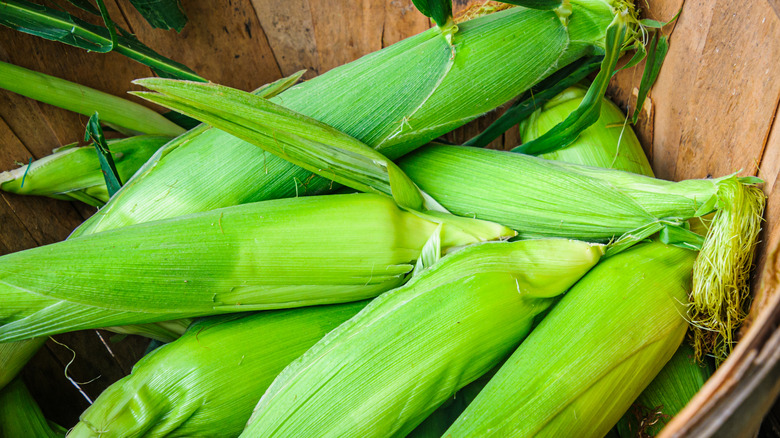
Corn on the cob is a classic and delicious summer food. Whether you grow it yourself or pick some up from your local farmer's market, there are few vegetables as tasty as fresh corn. Of course, as amazing as this summer favorite can be, you generally only eat the kernels, leaving you with husks and cobs to fill up your garbage cans. This doesn't have to be the case, though. Those husks aren't actually trash — they're amazing additions to your compost bin!
While corn is growing, the husk acts as a useful protective covering, but once you're ready to eat, they're quickly shucked and tossed aside. In a compost bin, however, they're a useful green element, helping to balance out browns like dried leaves and shredded cardboard. Greens like corn husks add necessary nitrogen to your pile, while browns add carbon. It's not just the husks that can go in the compost either. The cobs, while slow to break down if you don't cut them up first, are a great brown element to add.
How to use discarded corn husks in your compost bin
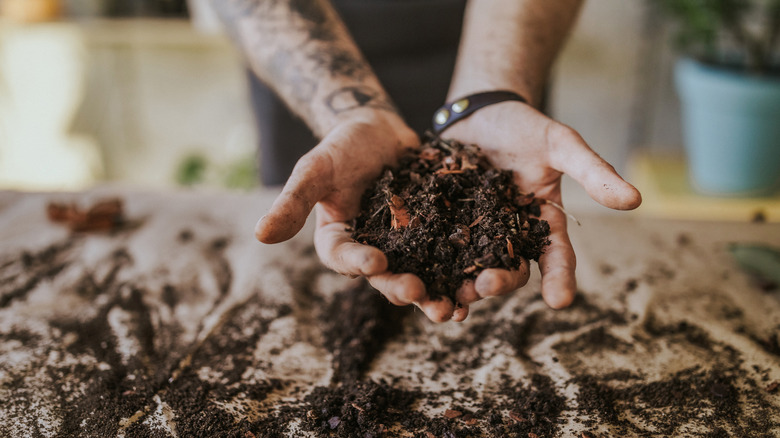
While a large and well-managed compost bin will often produce perfect compost in as little as a few weeks, corn cobs and husks can take some time to break down. Cobs generally break down in a year or less, and husks can break down in just 3 months as long as they're shredded first. There are many different parts of the corn plant you can use in your compost. If you grow your own corn, you can also chop up and add the stalks to your compost pile. If they are dried and dead when added, the stalks will count as a brown material.
Since corn is a notoriously heavy feeder in the garden, you can even use your compost to help support the growth of your next season's corn crop. You'll still likely need to add additional nitrogen-heavy fertilizer to help your plants grow, though. Even if you have to add additional fertilizer, creating and using your own compost is still worth it. The purpose of compost isn't just to add nutrients to the garden; it also improves soil structure and drainage.