

5 Beautiful Flowers That Can Grow In Your Backyard For Over 20 Years
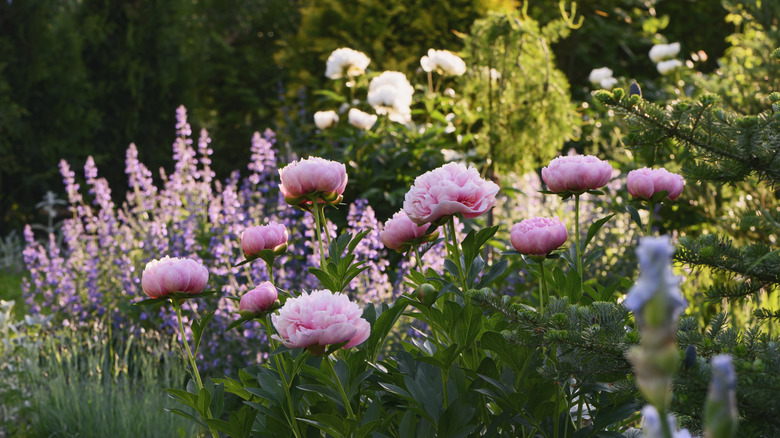
While some gardeners may look forward to their yearly ritual of visiting the garden center to purchase new annual flowers to plant in the spring, others may dread the impact on their knees, back, and wallet. Opting to plant perennial flowers for a colorful garden that returns yearly instead may seem like a good solution, but this does come with some caveats. "Perennial" does not necessarily mean "forever"; the term applies to plants that live two or more years, and sometimes you'll barely get more than a few blooming seasons out of the shorter-lived species before they call it quits. However, there are some that can persist for twenty or more years, perhaps even longer than the life of the gardener, given the right care and growing conditions. Some flowers, including baptisia and blazing star, can look lovely for a few decades, and peonies may even thrive in the same place for a century or more.
By wisely selecting long-lived perennials for your climate and growing conditions, you can create a good, solid "backbone" for your garden, especially since many are interesting to look at year-round. Since perennial bloom times can be comparatively short-lived, you can supplement your recurring perennials with different types of annual blooms so there's never a lull in color. Plus, changing out your supplemental annuals can let you try out different designs and vibes, so you won't risk getting bored with the same old perennials year after year.
Baptisia
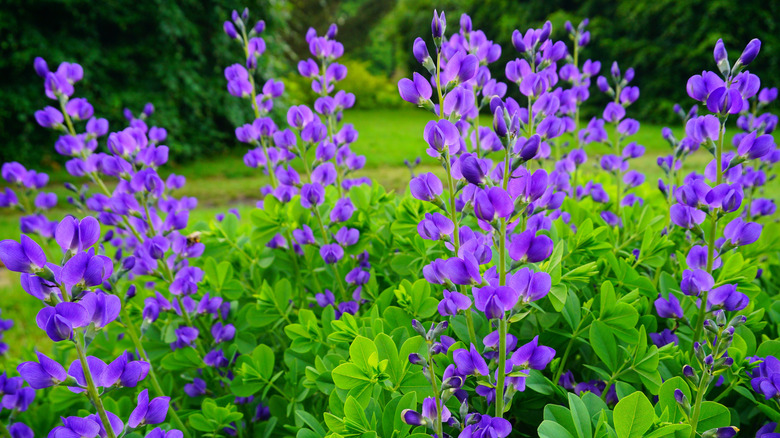
Reported to thrive in gardens for thirty years or more, baptisia (Baptisia spp.), also known as false or wild indigo, is a hardy, gorgeous genus of plants native to the eastern and midwestern U.S. Highly neglect-tolerant plants, their toughness is due in part to their deep taproots, which enable them to survive drought conditions and can extend as deep as seven feet into the earth. (This same taproot, it should be noted, makes baptisia fussy about being transplanted.) Additionally, they are members of the legume family, and like other legumes, they fix nitrogen and can manage to thrive in poor soils. They do need at least eight to 10 hours of sunlight per day, though, so choose your planting location wisely.
You can find several species and cultivars of baptisia available in a variety of colors, from the bright blue of B. australis to the sunny yellow of B. cinerea, as well as white species like B. alba and a veritable rainbow of hybrid shades. Hardiness zones vary a bit by species and variety; for example, B. australis thrives in USDA Zones 3 through 9, while B. cinerea is restricted to 8 and 9. In general, this genus flowers in late spring or early summer, producing upright spikes with showy clusters of blooms.
Peonies
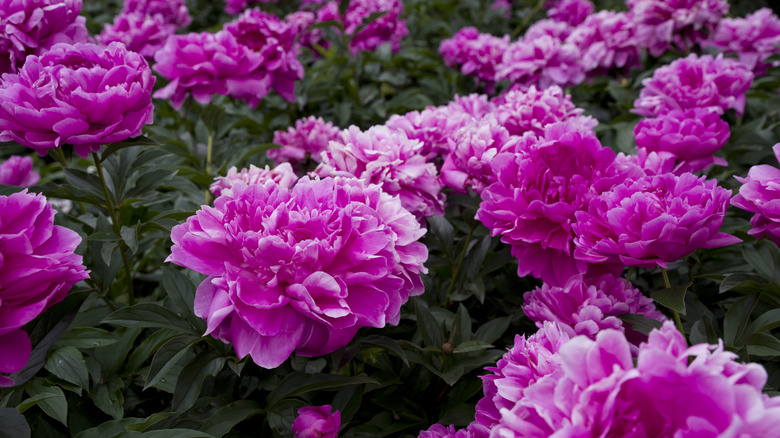
Have you ever heard stories of a parrot, tortoise, or some other excruciatingly long-lived pet that ends up inadvertently becoming a sort of family heirloom when it outlives its original owner? Well, peonies — especially those descended from the Chinese species (Paeonia lactiflora) — may just be the botanical equivalent of that, with a lifespan that can exceed 100 years. That's potentially a century of beautiful blooms, year after year, as long as you can wait patiently for the first couple of years, since it can take them a while to get established. After that, deer won't bother peonies, and they are troubled by few pests.
Peonies are hardy in zones 3 through 8, blooming in late spring and early summer and then dying back to the ground during the winter. They prefer full sun and soil rich with loam that drains well, as they do not like to be left in standing water. Avoid planting them in an area troubled by high winds, as they can get top-heavy when they're in full bloom, and they may need a little support from a tomato cage or other structure. Other than that, they just want you to leave them well enough alone: only divide them if you're hoping to create a new patch of peonies somewhere.
Blazing star
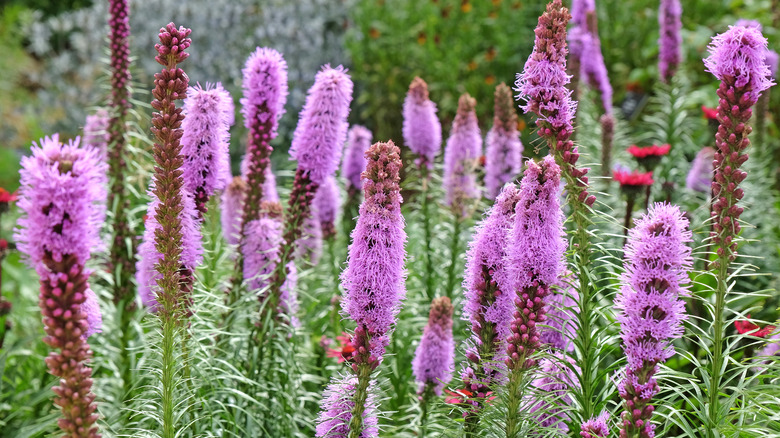
A genus of North America-native stunners, blazing stars (Liatris spp.) are generally long-lived perennials; in particular, dense blazing star (L. spicata) is known for its long lifespan, and 20 to 30-year-old wild patches of tall or rough blazing star (L. aspera) have been found. The bottle brush-like blooms of blazing stars can be found in colors ranging from purple to pink to white and are extremely attractive to butterflies and other insect pollinators. Interestingly, unlike other similar-looking blooms, the fuzzy little "stars" open from the top down instead of the other way around. The foliage itself is grass-like and quite pretty, and is still nice to look at once the flowers have faded, even showing a bit of fall color.
Although care needs can vary by species, blazing stars generally like either full or partial sun. Dense blazing star is hardy in zones 5 through 10, while rough blazing star favors zones 3 through 8. Poor soil is usually better for blooming, as soil that is too rich can cause the blooms of certain species to flop over. While a blazing star plant is still getting started, watering it regularly during the growing season can help it develop a robust root system. Once it's established, it can weather drought quite well.
Lenten roses
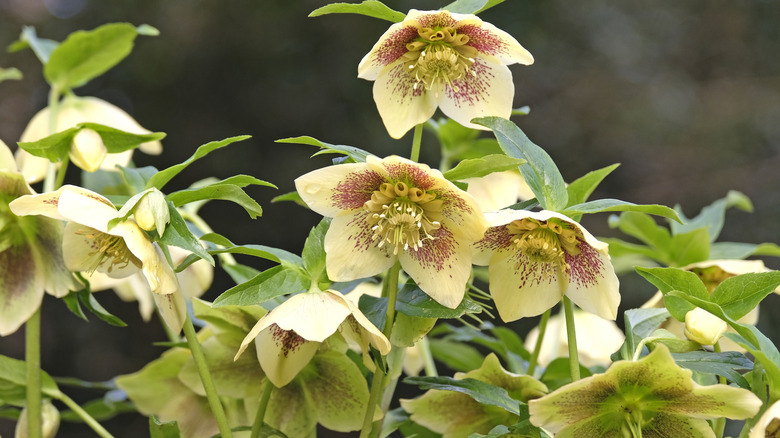
Growing Lenten roses (otherwise known as hybrid hellebores, or Helleborus x hybridus) is an exercise in patience. When first propagated from seed, it can take a new Lenten rose plant four or five years to grow big enough to begin flowering. But if you can wait that long and provide proper care, you can expect to enjoy beautiful blooms, evergreen foliage, and intriguing seed pods for two decades or longer. Once established, they are very early bloomers, popping out flowers in late winter just before spring.
Suited to hardiness zones 4 through 9, Lenten roses prefer to be planted in full or part sun and like their soil to be well-draining and organically rich. If you live in a warm southern location, they may thank you for a bit of afternoon shade. Of note: these flowers, despite their common name, are not actually roses but part of the buttercup family— and, like most other members of their extended family, they are poisonous if ingested. On the bright side, this means deer and rabbits won't be tempted to snack on them either.
Stonecrop
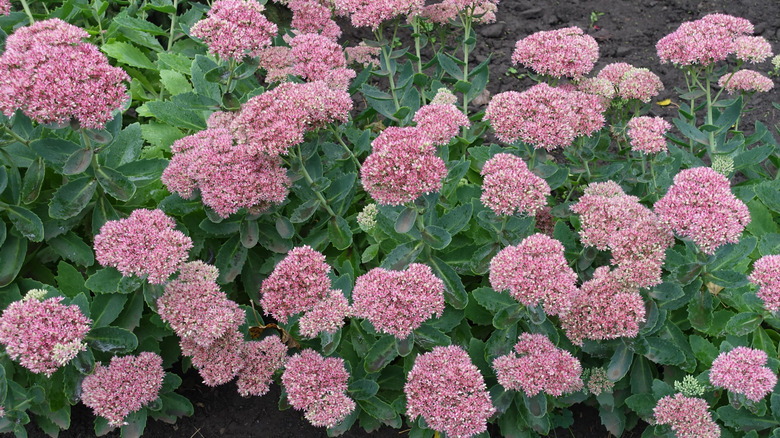
Of course, this list would hardly be complete without a plant whose various common names include "live-forever"! Stonecrop (Hylotelephium spp.) is a group of long-lived perennials, some species of which can live more than twenty years. You may also know or see these succulent-leaved flowering plants sold as sedum, though this is actually just a remnant of an older taxonomical classification: about a decade ago, the upright-growing sedums were distinguished from the lower-growing sedums (Sedum spp.) and assigned to the Hylotelphium genus. A bit confusing perhaps, but whether an upright 'Autumn Joy' cultivar is sold as Hylotelephium spectabile or Sedum spectabile, its incredible tolerance to drought and salt remains the same!
Stonecrops are typically hardy in zones 3 through 9, and most prefer to be planted in a sunny spot. Soil that drains well is a must if you want to avoid root rot from soggy feet, though it's best if the soil is average to poor or even gravelly — if the soil is too rich, the flowers may be too heavy for the resultant leggy stems. While stonecrops require very little maintenance, they will need to be divided every few years so they don't completely deplete the nutrients around them.