

The Retro Houseplant That Will Stir Up Emotion In Every Boomer
Houseplant trends come and go. After all, who could forget the 2020 variegated monstera craze? But even when excitement for some of these plants cools, they still hold a special place in the hearts (and living rooms) of many. That's certainly the case with African violets (Saintpaulia ionantha).
African violets (which aren't closely related to violets at all) were first grown as houseplants starting in the late 1800s. By the 1950s, they were ubiquitous in homes across North America, and African violet clubs and organizations sprang up across the country. The number of varieties and bloom colors available also expanded exponentially. Nowadays, you can find African violets in colors ranging from pinks and purples to whites and even yellows. What's not to like about these sweet little plants? Between their fuzzy leaves and dainty blooms, they're perfect additions to almost any decor. Whether you're growing them for the first time or coming back to an old favorite, these vintage beauties are sure to put a smile on your face. They're a great way to help you bring the nostalgic garden trend indoors.
How to care for your old fashioned African violet plant
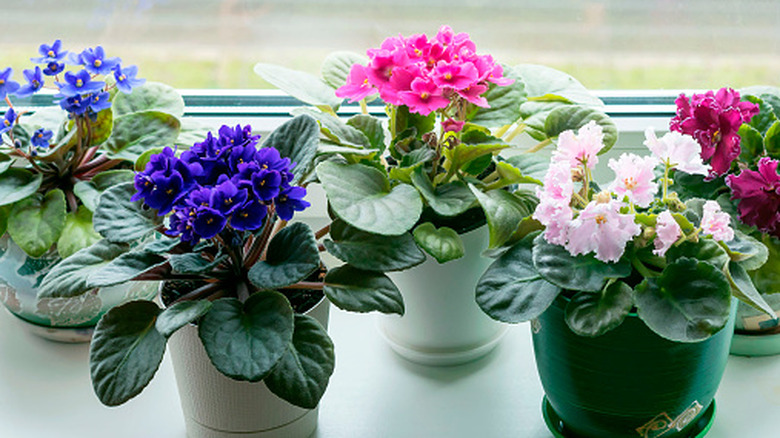
If you're hoping to bring this nostalgic classic back into your home, you can find a wide range of African violet cultivars available at garden centers and online nurseries. If you have a friend or family member with an African violet collection, they may also be able to give you a cutting since African violets are easy to propagate from a single leaf. While African violets sometimes have a reputation for being difficult to grow, they don't have to be as long as they are given bright but indirect sunlight or are grown under artificial lights. Their growing medium also needs to be kept moist but not water-logged, so a self-watering pot can be useful, especially since overhead watering can lead to African violet leaf problems.
Don't forget to fertilize your African violets with a balanced, specialized fertilizer every six weeks or so during the spring and summer months. Don't let your plants get too cold either, as African violets like temperatures of 55 degrees Fahrenheit or higher. If you want to keep the retro aesthetic going, consider growing your plant in a repurposed vintage doily planter.