

5 Beautiful Flowers That Are Almost Impossible To Kill
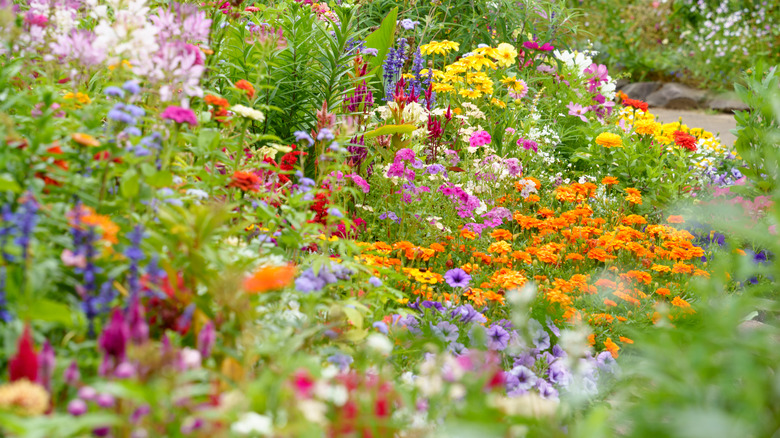
Not everyone who loves growing flowers has the greenest thumb, and that's okay. Whether you're just starting out with gardening, don't have a lot of free time, or simply want some low-maintenance color for your landscape, there are plenty of gorgeous flowers that thrive with minimal care or effort on your part. From hardy perennial flowers to colorful and elegant annuals, these flowers are a perfect way to add beauty without all the work.
The right flowers can do more than just beautify your landscape, too; they can also attract pollinators to your space. These essential birds and insects help your fruits and veggies to grow and make your entire garden more vibrant. So, throwing in a few low-maintenance blooms, such as sunflowers and daffodils, can be a great option, even for people who are more interested in gardening for food production and cutting grocery costs than for beauty. Of course, you still have to provide your plants with the basics by meeting their lighting, soil, and water needs, but as long as you do that, these plants are sure to put on a show with little fuss or effort.
Sunflowers provide bold blooms with minimal watering or fertilizing needed
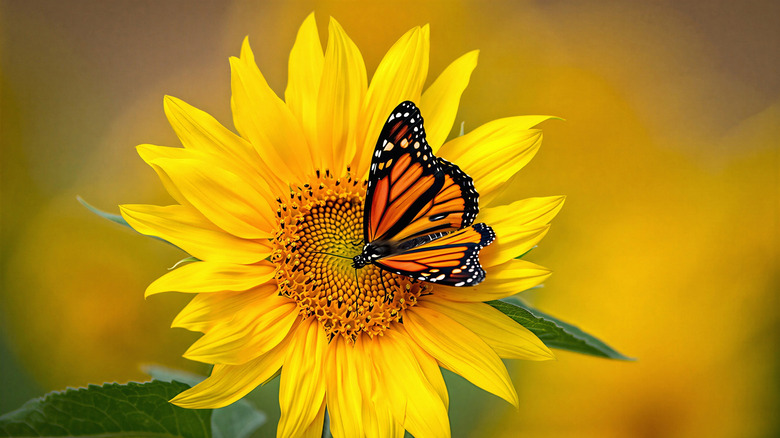
Few blooms are as iconic as the sunflower (Helianthus spp.). These North American natives aren't just pretty; they also attract a range of pollinators and songbirds, and their seeds are a great snack for people, too. You may have assumed they're challenging to grow and maintain because of their size, but that's not the case. While you can buy sunflower plants from garden centers, they're also easy to grow from seed. Simply direct-sow them after the last frost and your soil has warmed. They will need regular watering and a little fertilizer during planting, but after that, more often than not, they won't need fertilization and will tolerate dry conditions. They can go as long as 10 days on just an inch of water, in fact. Another thing that makes sunflowers so hard to kill is their light and heat tolerance. They actually do their best in full sun and warm temperatures.
There are a few different species of sunflowers and many different cultivars, so finding one (or more) that's perfect for your space should be a snap. Annual sunflowers (Helianthus annuus) are perhaps the best-known species. They thrive in well-draining soil and can range from tall single-stemmed cultivars like 'ProCut White Lite' to branching varieties like 'Strawberry Blonde'. This is far from the only species, though. You can also opt for swamp sunflowers (Helianthus angustifolius), which thrive in moister soil and are perennial in zones 5 through 9.
Marigolds are classic companion plants that are tough and a snap to grow
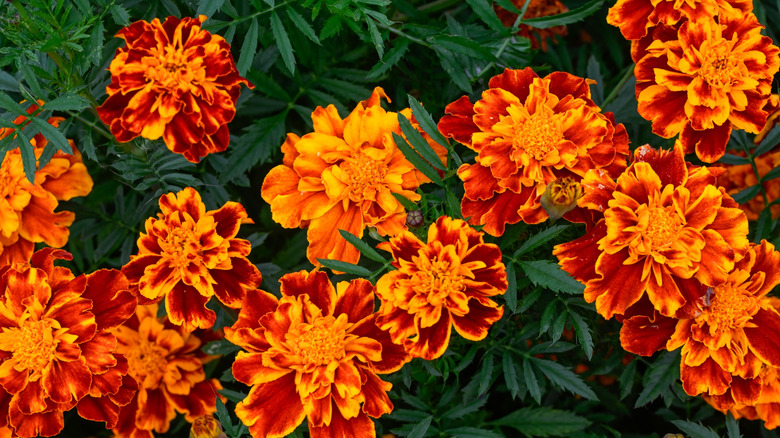
Few flowers have more nostalgic appeal than marigolds (Tagetes spp.). Between their unique smell and their ability to look at home everywhere, from a flower border to a vegetable garden, you can't go wrong with them. Marigolds are easy to grow from seed, but can also be found as starts in garden centers and nurseries. Make sure to plant them in well-draining soil. They also do well in containers. Depending on the species of marigold you opt for, they can range in size from just 6 inches for tiny signet marigolds (Tagetes tenuifolia) all the way to 4 feet for massive African marigolds (Tagetes erecta). As far as durability, marigolds are fairly insect- and disease-resistant and need only periodic watering when the soil becomes too dry. They don't need fertilizer after planting, so that's a worry off your plate, as well. When it comes to sun and heat, marigolds actually appreciate full sun and high temperatures. As long as they're getting about an inch of water each week, they can withstand the summer weather.
Marigolds aren't just pretty, easy to grow, and tough; they can also be invaluable for pest control. French marigolds in particular can be planted as a cover crop to help deal with damaging root-knot nematodes. While popping a few in around your tomatoes isn't likely to provide the same benefit, they can still add plenty of beauty and interest alongside your veggies.
Love-in-a-mist adds easy whimsy and elegance to gardens
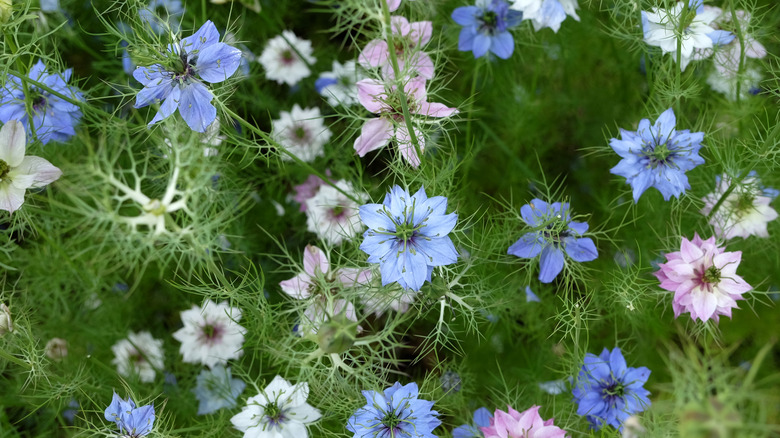
Few flowers are as charming in a cottage garden as love-in-a-mist (Nigella damascena). With its stunning blooms and fern-like foliage, love-in-a-mist lets you fill your garden with colorful blooms with very little work. Just direct-sow the seeds into a flower bed in a sunny spot, and make sure they have well-draining soil. They should start providing you with blooms in less than three months. You don't have to worry about fertilizing your love-in-a-mist flowers, as fertilizer can do more harm than good with them. These flowers thrive when left to just the sunshine and occasional watering, making them a good choice if your garden tends to be prone to flower death.
While love-in-a-mist is a cool-season annual, it reseeds itself easily. So if you plant it once, you should have beautiful blooms for years to come. Since it only grows to about 2 feet, it's a perfect addition to the middle of borders, with smaller blooms in front of it and larger plants providing a backdrop. It makes a great cut flower, as well, and can be a fantastic filler in bouquets and other arrangements. Depending on your preference, you can get love-in-a-mist in shades of pinks, purples, whites, and even blues.
Ironweed is perfect for perennial pollinator gardens
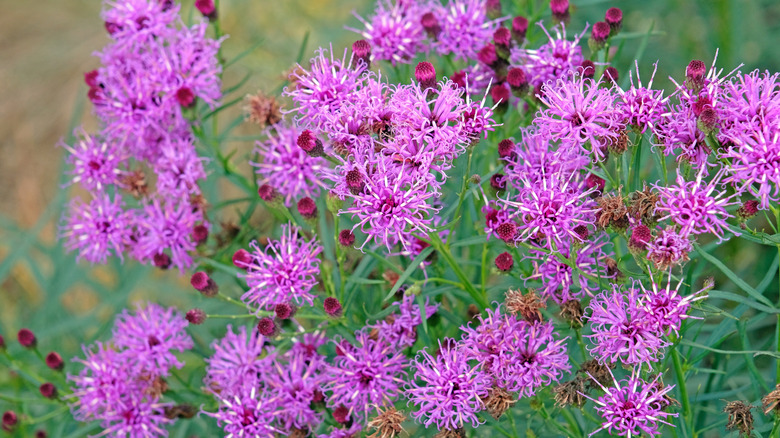
Ironweed (Vernonia spp.), as its name suggests, grows like a weed. It easily reseeds and is hardy in zones 4 through 10, depending on the species. It's a North American native plant as well, so consider growing a species that naturally occurs in your region. Ironweed thrives in full sun and moist soil but can also handle part shade spots. Though wild ironweed is generally found in damp areas like marshes, it can do well in drier soil. If you have a spot in your yard with consistently moist soil or a rain garden, though, you may find ironweed to be the perfect hard-to-kill flower. Give it sun and damp earth, and there's not much else you need to do as far as care. It's pest-resistant, fine with a range of humidity levels, and doesn't require fertilization.
While giant ironweed (Vernonia gigantea) can grow as tall as 10 feet, other, more manageable-sized varieties like smooth ironweed (Vernonia fasciculata), which only reaches 5 feet, also exist. The beautiful cultivar 'Iron Butterfly' was even the Garden Club of America's pick for the 2026 plant of the year, and it reaches only about 3 feet tall. With its unique purple flowers and ability to attract bees and butterflies, ironweed is a great low-maintenance addition to gardens. There's no need to worry about deer damage with these beauties either, as they are quite deer-resistant.
Daffodils are a reliable source of cheery spring color
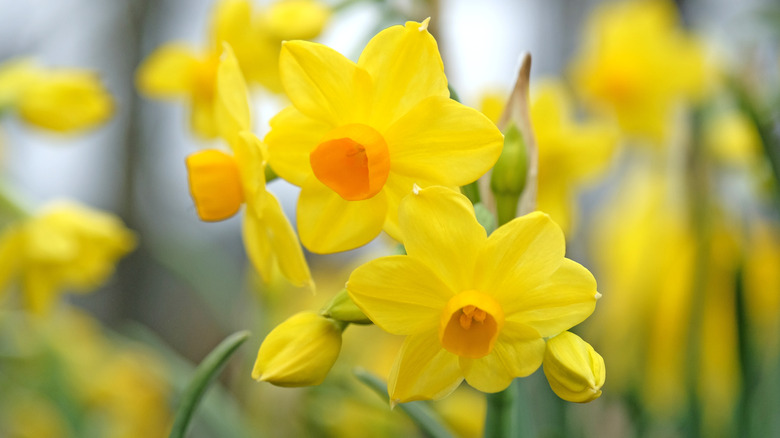
Having a garden full of gorgeous daffodils (Narcissus spp.) every spring is as easy as popping the bulbs in the ground and then forgetting about them. Plant them once in autumn, and daffodils will happily come back year after year with very little effort. Often, they will even spread and naturalize. Daffodils are hardy in zones 3 through 8 and should generally be planted around October. Grow your daffodils in soil with good drainage, and make sure they get at least part, if not full, sun. When it comes to resiliency, daffodils tolerate dry conditions well and don't need fertilization. They also don't need to be deadheaded or have any live foliage removed. Rodents and deer don't enjoy these flowers, so there's no need to worry about protecting them from predators either. They are both easy to grow and easy to keep alive!
While yellow daffodils are perhaps the best known, they also come in shades of white, orange, and even pink, so you're sure to find some that look perfect in your landscape. And since daffodils are only about 2 feet tall, they easily fit in front of shrubs and other plants. Don't bother cutting back your daffodils' foliage once they're done blooming, as they need those leaves to help get the energy to return the following year. Instead, wait until the foliage has shriveled and browned to cut it.