

The Edible Weed People Should Stop Ignoring (And Start Harvesting)
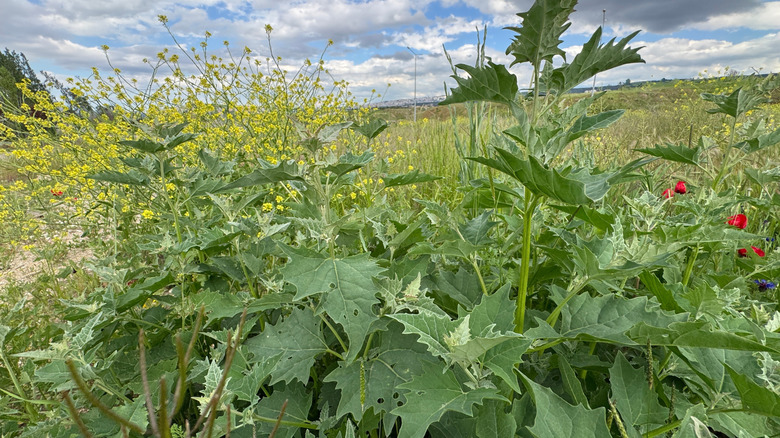
Have you ever heard the George Washington Carver saying, "A weed is a flower growing in the wrong place"? Indeed, sometimes the only difference between a wanted plant and a weed is context. In addition to being visually pleasing but out of place, some weeds are also edible and nutrient-rich, or may even have medicinal benefits. One common (perceived) garden pest, lambsquarters (Chenopodium album), admittedly an annoyingly enthusiastic spreader that can be slightly difficult to get rid of, also has a history of coming in clutch during times of famine. As part of the amaranth family, it's a relative of quinoa and spinach. Like its cousins, lambsquarters is a nutrient-dense food, with leaves that offer high levels of calcium, vitamins A and C, and more. Plus, this summer annual tastes like spinach when it's cooked or eaten raw.
That said, if you're planning to start foraging for lambsquarters and other nutritious weeds, for your own safety, it's absolutely necessary that you familiarize yourself with the edible plants in your area. Some edible plants may look poisonous; sometimes, only a part of a plant is edible, and the rest isn't. In other words, before you put anything from the outdoors in your mouth, you need to be certain beyond the shadow of a doubt that it belongs there! Try consulting a resource like the Old Farmer's Almanac to identify poisonous plants. Also, make sure you're only harvesting from soil that hasn't been contaminated with substances like pesticides and industrial runoff.
How to identify, use, and control lambsquarters
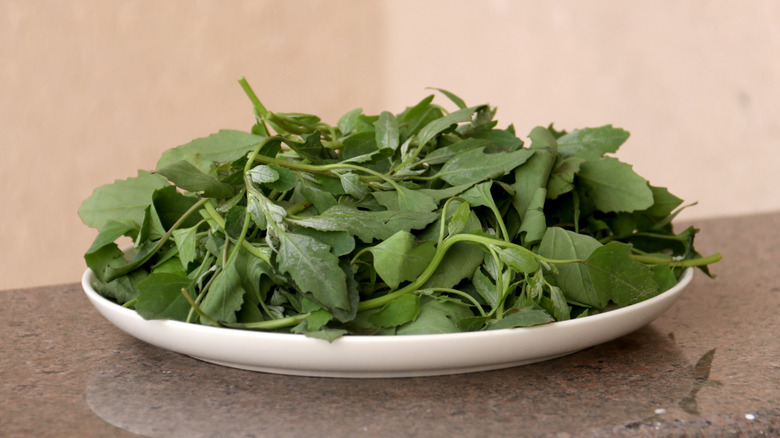
So how do you make sure that the weed you're planning to put in a salad is for sure lambsquarters? One of the best identifiers for lambsquarters is the fuzzy or dusty white coating on young leaves and the underside of other leaves. Other than that, it has alternating or staggered leaves in a shape that sort of looks like a goose's foot (hence one of its other common names, goosefoot). You'll generally find it growing in areas with disturbed soil, like in gardens, landscaped areas, roadsides, and farmland. It's best to harvest lambsquarters leaves when they're young, as older portions tend not to be as nice to eat.
As a rule, if you include spinach in any dish — raw or cooked — you can use the similar-tasting lambsquarters in the same way. Once the plant goes to seed, you can remove the chaff and use it in bread and other dishes. The seeds are also very nutritious for birds, so maybe try adding them to your bird feeder as well!
Though the seeds are useful, they are also the reason that lambsquarters can be a bit of a headache for gardeners. Because each plant can produce over 70,000 seeds, it can be an aggressive spreader. If you've already harvested and stored all the lambsquarters leaves you and your family can stomach, you can control what's still growing by mowing it down before it starts dropping seeds. You can also prevent these weeds by using mulch.