

5 Best Ways To Fill Bird Feeders Without Seed
We may receive a commission on purchases made from links.
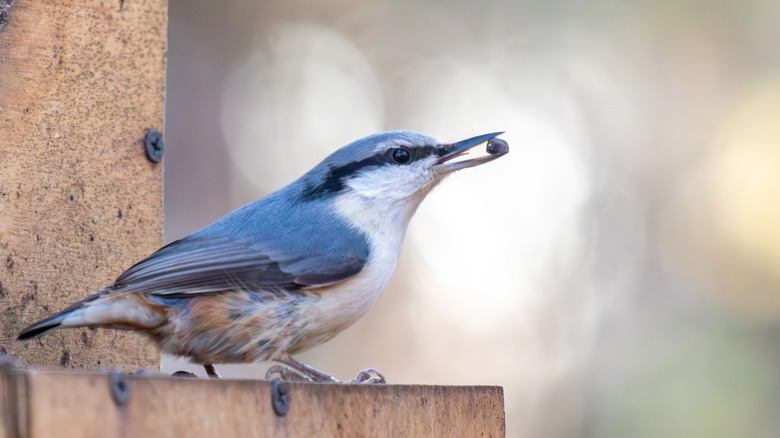
Wild birds are wonderful to watch in the garden. They don't just add beauty, either; their friendly visits can benefit your yard as they snack on pesky bugs and sometimes even help with weed control. And there are more ways to attract them than you may have assumed. You often don't need to buy massive bags of mixed seeds specially labeled for birds to lure your avian friends to your yard. There is actually a wide range of foods they'll enjoy eating, depending on the specific species. Some of these great bird snacks may even already be in your pantry. Peanuts, corn, and oats are just a few examples.
If you want to skip the bird feeder entirely, you can simply grow sunflowers, berries, and other snacking plants that birds love. But if you prefer using a feeder to nourish your feathered friends, be sure to keep it clean, so it won't spread diseases through the local bird community.
Don't forget that it's not just food that makes your yard appealing to birds. You should also provide them with plenty of shrubs and grasses for shelter and water for drinking and bathing. By creating a garden that meets all these needs, you're sure to have plenty of birds to enjoy watching year-round.
Peanuts are easy to buy and attract a range of birds
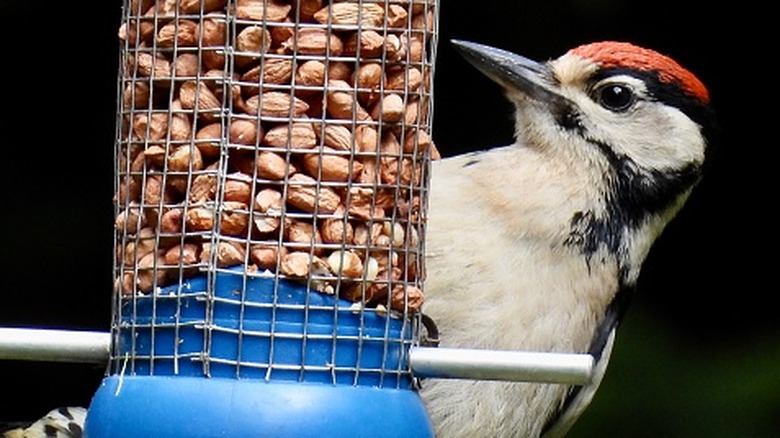
Peanuts are almost always a huge hit at bird feeders and attract a range of birds, including blue jays, chickadees, and woodpeckers. They're a perfect snack to use in wire mesh and wreath-style feeders like the Hugeleaf Hanging Wreath Feeder. Crows also enjoy peanuts, though you'll likely need to toss the nuts for them or use a platform-style feeder. Of course, peanuts are also magnets for squirrels, so try to place your feeder in a spot where only birds can access it. (Unless you also enjoy feeding your local squirrel population.)
Opt for unsalted and shelled peanuts for your avian friends, as not all birds are able to break through the peanut shells. You should also offer only unroasted nuts. The extra fat and protein in the legumes is especially beneficial during cold weather when birds need all the calories they can get.
Corn is sure to attract a variety of birds to your feeder
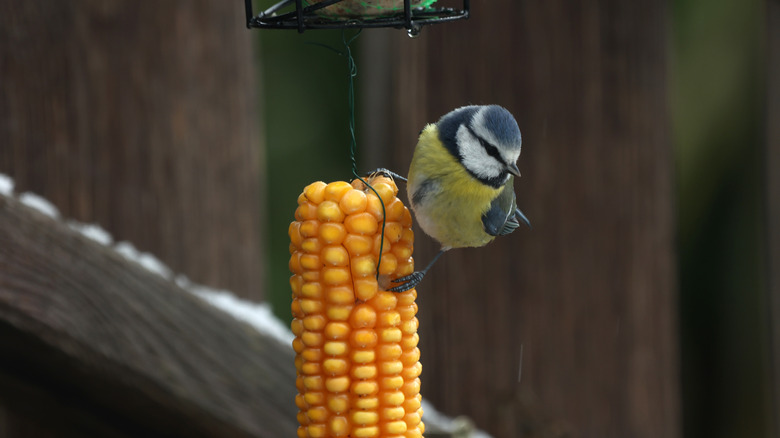
As anyone who has tried to grow their own corn may quickly realize, a wide variety of birds love eating the kernels. While this might be disappointing in the garden, it means corn is a great and affordable way to feed your local birds. You can try putting out whole ears of corn by hanging them up, or opt for a feeder stocked with cracked corn, which is dried and broken into small pieces. This should be a hit with birds ranging from juncos and black birds to doves and cardinals. If you put corn on a platform-style feeder, you may even get some crows to visit.
Just make sure to change out the corn regularly and don't let it get wet or grow mold, as this can lead to bacteria that can be extremely harmful to birds. But as long as you're empty and restocking the corn in the feeder every day or two, it can be a perfect snack for your feathered friends.
Oats appeal to doves and ducks and can be a good feeder addition
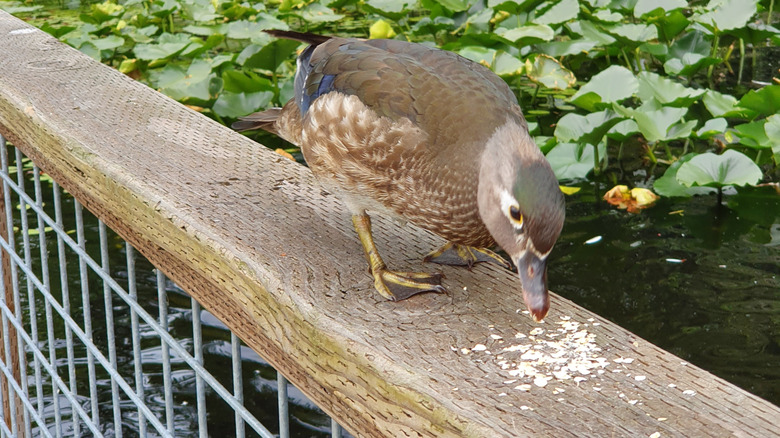
Uncooked oats are another tasty pantry staple many birds enjoy. Ducks and doves especially appreciate this simple treat. And while it may seem to lack nutritional value, oats are actually a useful source of protein, fiber, and carbohydrates. They are a bit lacking in fat, though, so they might not be the best wintertime snack unless you combine them with suet or other fattier bird foods.
Make sure the oats stay dry so they don't get gummy or attract mold. Wet or cooked oats could also potentially stick to the birds' beaks. A feeder with a roof can be helpful for keeping all your bird snacks dry, which should help to extend the food's life and limit mold growth. While you probably don't want to give your backyard birds exclusively oats, especially since not all birds like them, they can make a good addition when mixed with other foods. Make sure to keep an eye on what, if anything, in your bird feeder is just tossed to the ground instead of eaten, and limit using those ingredients.
Fruit is a beloved sweet treat for birds like orioles
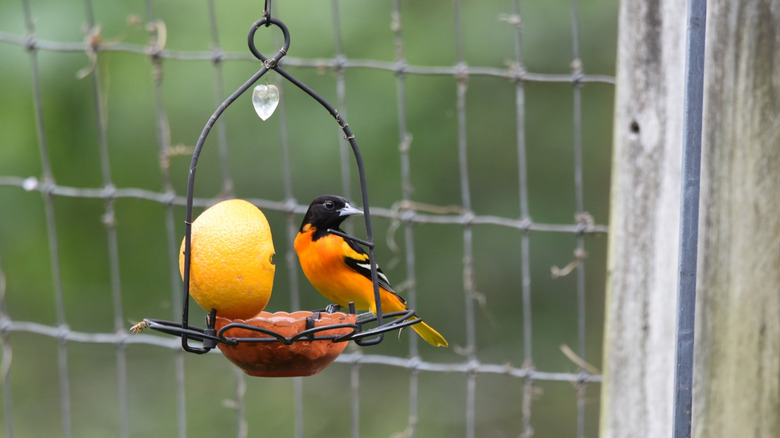
Fruit can be an amazing snack for many birds, and is a great way to attract orioles, tanagers, and robins. Of course, if you're feeding fresh fruit to your local avians, you can't use just any feeder. Instead, you'll want something like the OOWDN Oriole Feeder, which has hooks you can hang fruits on. The best fruit to use depends on the type of bird you're trying to attract. Orioles are known for loving oranges, while buntings and cardinals are especially fond of apples. Keep in mind that you'll need to change out the fruit and clean the feeder regularly to avoid spreading diseases or attracting ants and other bugs.
If you don't want to use fresh fruit, then dried fruit is also a good option for birds and can be more easily used in a range of feeder styles. Raisins and dried cranberries are both great additions that can be found in most grocery stores.
Meal worms are a protein rich treat for your local birds
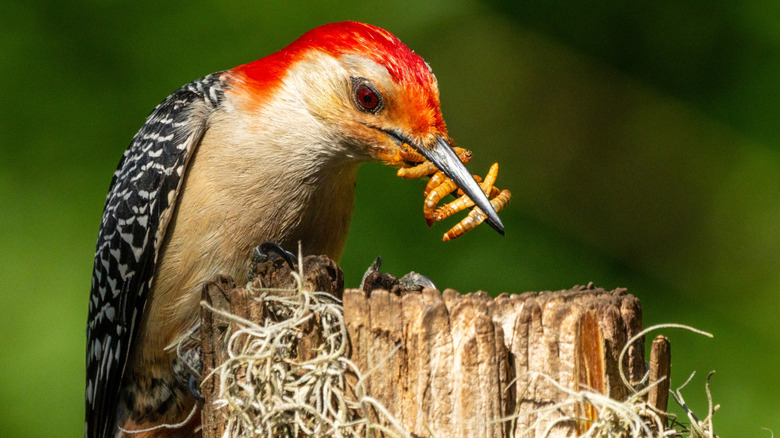
Mealworms are an amazing protein source for birds, so they can be great additions to feeders if you're interested in attracting more cardinals and other insect-loving birds like bluebirds to your yard. Unfortunately, not all birds like dried mealworms. Live mealworms also offer more fluids and nutrition when compared to their dried counterparts.
Both dried and fresh mealworms are often available at pet shops, but if you regularly feed them to your backyard birds, you may want to consider just raising your own. Mealworms are actually a type of beetle larva and can be easily bred in plastic tubs of wheat bran. To prevent the live worms from escaping, you may need to use a specialized feeder or plug any drainage holes on your standard feeder. As with any bird food, make sure the mealworms aren't moldy, and be sure to clean the feeder regularly.