

What It Means If You Find Foamy Bubbles On Your Lawn
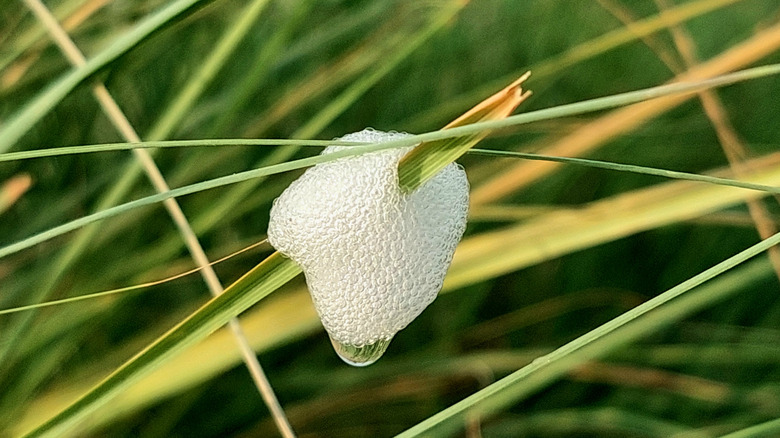
As the unpleasant young chocolate factory visitor Violet Beauregard said to Willy Wonka, "Spitting's a dirty habit" — so why does it look like somebody has been regularly leaving loogies all over your lawn and garden plants this spring? First, the good news: you probably don't have a clandestine spitter lurking around your yard. The less-good news: it's bugs. To be precise, the "spit" globs are a defensive strategy employed by spittlebug nymphs (you may know their adult form as "froghoppers"). Using their piercing mouths, spittlebugs both feed on the juices of plants and use them to construct their foamy dwellings. While spittlebugs aren't considered serious trouble for most garden plants, they can become a significant turfgrass pest that may make your lawn look shabby or even kill grass.
After the eggs overwinter hidden in hollow stems or beneath leaves, spittlebug nymphs hatch in the spring and begin making their way up plant stems, slurping plant sap as they go. The spittle isn't spit at all — it's from, well, the other end. As they feed, excess sap is excreted and mixed with air and a stabilizing secretion to create a foam that protects the nymphs from both predators and temperature and humidity extremes. There are around 30 known species of spittlebug in the U.S. One of the most common is the meadow spittlebug (Philaenus spumarius); another encountered as a turf pest is the twolined spittlebug (Prosapia bisincta). You may also find pine spittlebugs (Aphrophora parallella) in evergreens like pines, firs, and spruce.
When to be concerned about spittlebugs and what to do about them
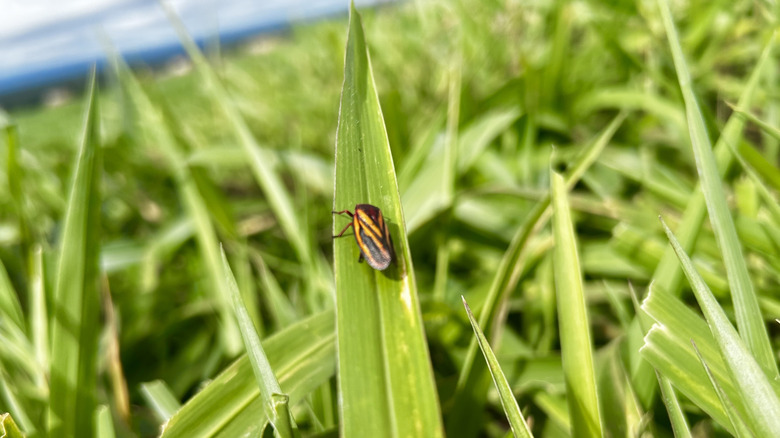
In general, you don't need to worry too much about spittlebugs beyond the "gross" factor, though you may see a bit of stippling on leaves where the nymphs have been feeding. They typically aren't found in large numbers, and they don't hang around for long; after the nymphs mature in five to eight weeks, the adult froghoppers frog-hop away to find grassy or weedy areas. If you've just had it with seeing (or touching) small white foam balls all over your oregano plants and berry bushes, you can easily blast them away with a hose or even remove them by hand, if you aren't squeamish about bug secretions.
There are certain instances when spittlebugs can cause a fair bit of damage and may need to be eradicated. In particular, the twolined spittlebug can infest and cause damage to turfgrass in some areas and is especially fond of centipedegrass and St. Augustinegrass. If you've been putting off figuring out how and when to dethatch your grass and you've started seeing spittlebug masses in your lawn, you may want to move that up on your to-do list: lawns with thatch buildup tend to see the most severe damage from spittlebug activity. The lawn may even "squish" underfoot due to all of the froth below. In the event of an infestation, make sure you mow and irrigate the lawn a few hours beforehand, then apply a pesticide specifically effective on spittlebugs.