

Grow Your Own: The Produce Item People Will Be Searching For This Summer

If you've suspected lately that constructing the perfect BLT sandwich or crafting your monthly batch of homemade spaghetti sauce has come with a somewhat heftier price tag than usual, you're absolutely on the money, as it were. According to the April 2026 Consumer Price Index recently released by the U.S. Bureau of Labor Statistics, the average price of fresh tomatoes has increased by over 15% since March 2026, putting prices nearly 40% higher than they were this time last year. If, as predicted by David Branch, sector manager of the Wells Fargo Agri-Food Institute, tomato prices are likely to take some time to ease, it might be worth trying to grow your own tomato plants. Maybe you could even grow some extra to share the, ahem, fruits of your labor with your neighbors.
But why are tomato prices skyrocketing right now? Broadly speaking, lower supply leads to higher prices. It's not so much that there's one outstanding issue contributing to this shortage and corresponding price increase; rather, it's a combination of several factors disrupting the supply chain. Inclement weather in tomato-producing regions, increased fuel and transportation costs, and recently imposed tariffs on tomatoes grown in Mexico (which constitute a whopping 70% of tomatoes consumed in the U.S.) all play a role in the price increases you're seeing at your local grocery store.
How to grow your own tomatoes (even if you don't have a yard)
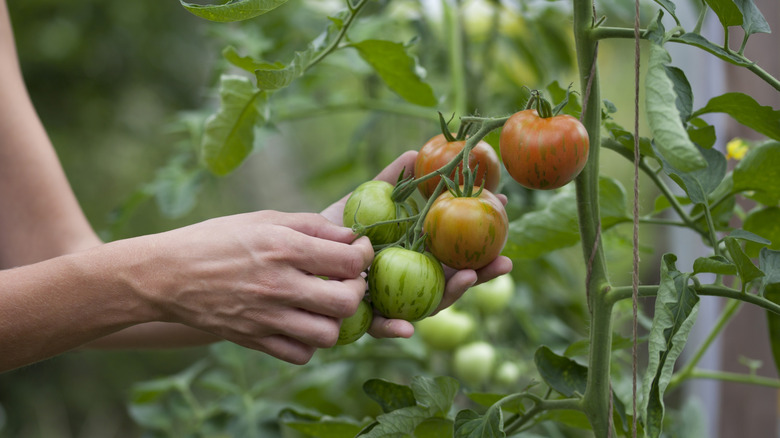
The good news is that tomatoes are fairly easy to grow, as long as you can provide them with a spot that receives full sun. Although these warmth-loving vegetables are technically perennials in regions that never see a frost, they're usually grown as annuals. You can start the seeds indoors before the weather warms up in spring to get a head start, then plant them once the risk of frost has passed. Some people do plant them super early and take steps to keep them warm through frost and at night, though. They favor moist soil with a well-draining structure. If the weight of the fruit is bending the branches to the point of snapping, it's best to use a cage or trellis to support the plant. Be sure to do a bit of research beforehand to select the best variety of tomato to grow for your climate.
"But what if I rent or don't have room for a vegetable garden?" you might ask. Here's some more good news: tomatoes are actually excellent candidates for container gardening. In fact, there are dwarf tomato varieties and sizes that are particularly well suited for growing in a container — not to mention adorable. Some cultivars worth trying in potted applications include 'Bush Early Girl,' 'Patio Princess,' and the cherry tomato variety 'Little Sun Yellow.' Just keep in mind that container-grown plants may need to be watered more frequently than those planted in a garden!