

Why Joanna Gaines Puts Weird Boxes Around Her Flowers
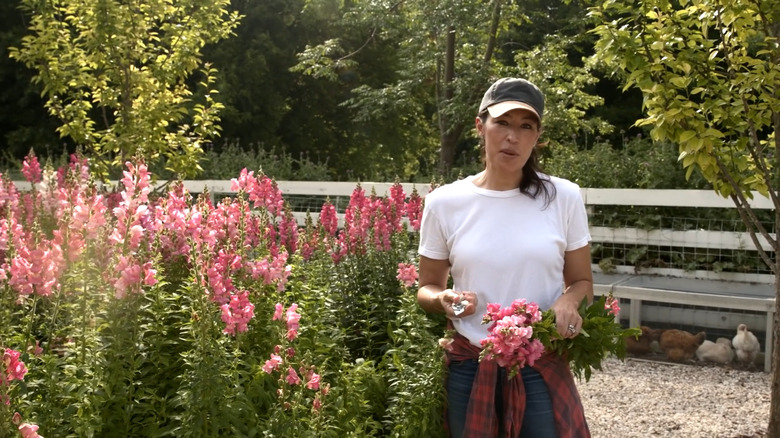
There's always a lot going on in Joanna Gaines's garden. Between the chickens that help keep unwanted bugs out, the various trellises and arbors, and, of course, the stunning plants, her yard is always abuzz with life. One of the more unusual features you may have noticed is the small, elevated boxes with flowers. While these may seem a bit "weird", they're actually part of her son Crew's adorable beeline.
Beelining is a technique for finding feral bees and following them back to their hive. In most cases, this is done by trapping honey bees that are out foraging and feeding them sugar water or honeycomb. You then release them, keeping track of which way they go and how long it takes for them to return with their hive mates to enjoy more of the honey. This can work well because bees will go straight back to their colony after they finish filling their honey crop.
If you have a few beelines in different spots, you can triangulate the location of the hive. Some bee enthusiasts wait until the honeybees swarm to capture them. Swarming is how the colony naturally divides and creates two independent bee colonies. While bee hunters used to take the honey directly from these feral hives, now that honey is readily available in stores, most just enjoy the thrill of the hunt.
How to make and use your own bee line
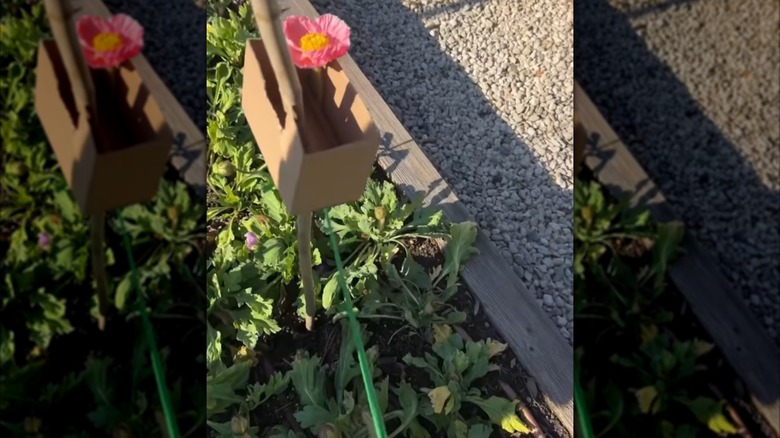
Making a bee box involves getting an empty light-proof container (like an empty snack box) and cutting out a door that opens and closes. The bee goes inside for a sweet snack, the door is closed, and then the bee is released when it's had its fill.
Another way to follow a beeline that doesn't require catching a bee in a box (more similar to Crew's bee line) is to use a bait station. To create your own bait station to find bees to follow, you can put a shallow dish of sugar syrup near your flowers. Placing it near flowers like bluestar, which will instantly attract bees, should work especially well. Watch for honeybees enjoying the drink and then, when they are full, note which direction they fly in. You can be confident that's where their colony will be. If you're able to, you can start walking in the direction the bees are traveling to see if you can find their hive. It will likely be inside a hollow tree. Don't disturb the bees or attempt to take the honey. And make sure you don't accidentally trespass on anyone else's property in your enthusiasm to follow the bees.
If you manage to track the feral bees to their colony and are lucky enough to catch them when they're swarming, you can contact a local beekeeping organization and see if they have a member who would like to assist with catching the swarm. Just be careful when beelining, as you could easily end up finding aggressive yellow jackets by mistake. And while honey bees don't tend to be aggressive, it's still important to be careful around them, as they will sting if they think it necessary to defend their colony.