

Don't Fill Your Planter With Soil, Put This In The Bottom So It's Easy To Move
We may receive a commission on purchases made from links.
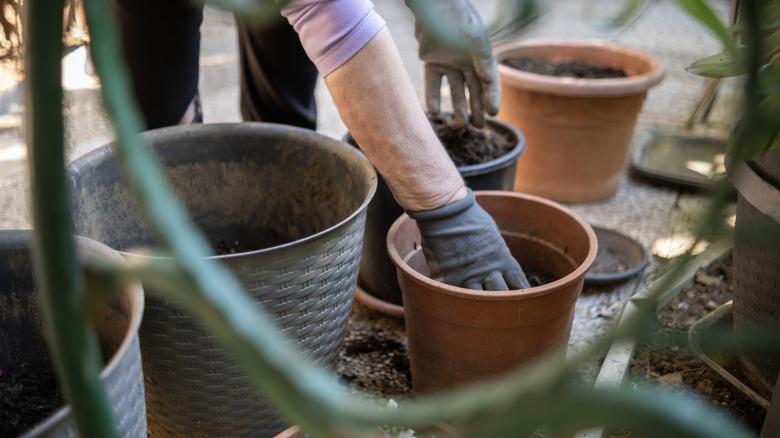
Planning and creating gorgeous container gardens is a skill that more than pays off when you get to see your flowers bloom and thrive. Whether you fill your planters with a mass of just one type of flower or create more complex arrangements by combining fillers, thrillers, and spillers using the gardening rule that Joanna Gaines lives by, container gardens tend to be gorgeous. One part of containers that's less of a joy, though, is trying to move them. Once large planters are filled with potting mix, they can be surprisingly challenging to lug to different spots in your yard or patio. One clever solution to this problem is the planter insert.
Since most annuals don't have particularly deep roots, they don't necessarily need a deep planter, even if that is the style that looks good and has the best visual weight. There are a lot of ways you can fill the unnecessary space in large planters, but if you don't have supplies to put something together yourself, planter inserts can be a brilliant solution. The popular Bloem Ups-A-Daisy brand of inserts is available on Amazon, as well as at a range of big box stores and garden centers. There are many other brands to choose from, as well. And since these inserts come in a range of shapes and sizes, you should be able to find ones that work for most tapered planters.
The way the inserts work is simple. They rest inside the planter partway up and create a false bottom that water can still drain through. You then just fill the area above the insert with your potting mix and add in your flowers or other shallow-rooted annuals.
Advantages to using planter inserts and when you may want to avoid them
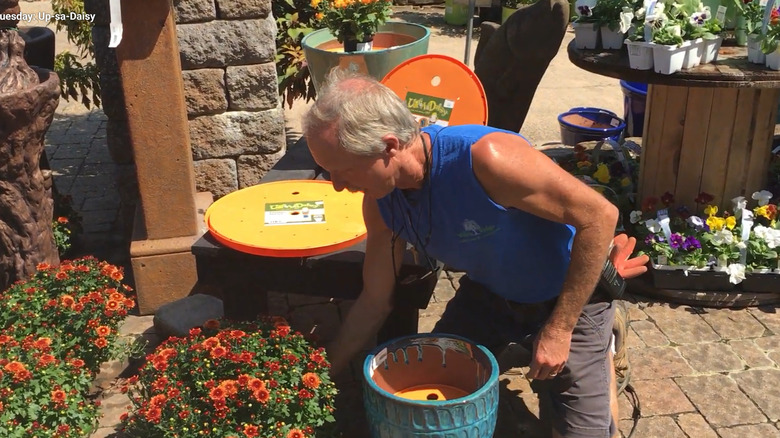
In addition to making your planters easier to move and arrange, planter inserts may offer other benefits. The inserts can also help to prevent root rot. This makes sense, as using an excessively large planter can result in the soil staying wet for too long. And prevention is always a good thing, as it can be a challenge to fix root rot. Additionally, you can use a planter insert to create a self-watering system by using one hole for a wick and another for a water fill tube.
As amazing as planter inserts can be in a container garden, there are some situations where they might not be the best option. This is especially the case if you enjoy growing perennials in your planters. Perennials tend to have deep roots, meaning they'll likely need a growing medium that goes all the way to the bottom of your planter. They also need to survive in planters through the winter, which means they benefit from more soil for insulation. You'll also want to avoid putting deep-rooted annuals in your planters with inserts. This can include veggies like tomatoes whose roots often reach down about 3 feet.