

Why You May Want To Avoid Planting The 2026 Vegetable Of The Year
Cabbage has been having a bit of a moment. Vogue proclaimed 2026 the "year of the cabbage", and chefs everywhere have been singing this humble but mighty vegetable's praises. There's a lot to love about cabbage in the kitchen, but in the garden, it can be a different story. All too often, this challenging crop is destroyed by insects, succumbs to disease, or just doesn't form a proper head. And considering cabbage can take between 60 and 100 days to mature, that's a lot of time to waste on a crop that often fails.
There is, unfortunately, a long list of insects that enjoy nibbling your cabbage leaves and hiding inside the head, ruining your harvest. These common garden pests include aphids, cabbage worms, and flea beetles. While you can use Bacillus thuringiensis (B.t.) to help get cabbage worms off your vegetables, these bugs are still a challenge to deal with.
Diseases are also a major issue with cabbage. These can include fungal infections like club root and root rot, as well as purple blotch and cabbage yellows. Using proper watering techniques, like avoiding overhead irrigation and ensuring proper airflow, can mitigate these problems somewhat. As can growing in well-draining soil that isn't too clay-heavy. But if your cabbage is unlucky enough to get club root, you'll need to avoid growing not just cabbage, but all brassicas in that spot for around seven years.
Why cabbages don't form good heads, and vegetables to grow instead
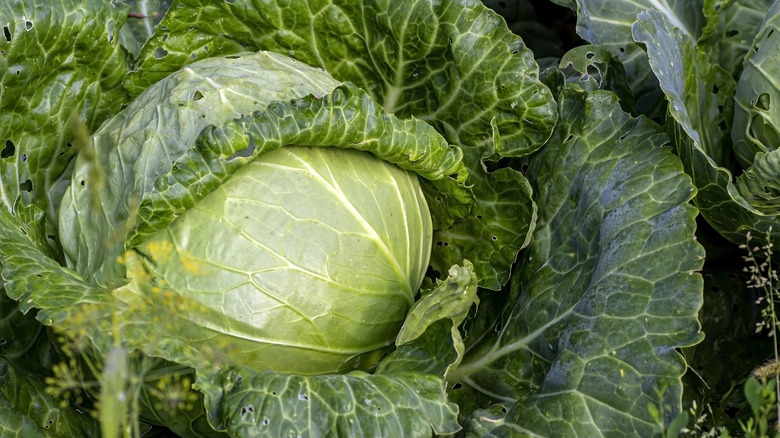
Even after all your work protecting your plant from pests and disease, it still may not form a proper cabbage head. In some cases, the heads can split as a result of inconsistent watering, or they may not form at all, especially if your cabbages are overcrowded. Sometimes, factors outside your control, like extreme heat, can also result in poorly formed heads.
With all the challenges cabbages bring, you may want to consider other, equally delicious options for growing in your home garden. Some good alternatives include kale and Swiss chard. Because these crops don't form tight heads, you don't have to worry about the head splitting or being full of insects. Swiss chard, in particular, has relatively few insect problems. Both of these amazing cool season vegetables can also be harvested at any point and used in many of the same ways as cabbage in the kitchen.