

Here's What To Do When You Find An Ants' Nest
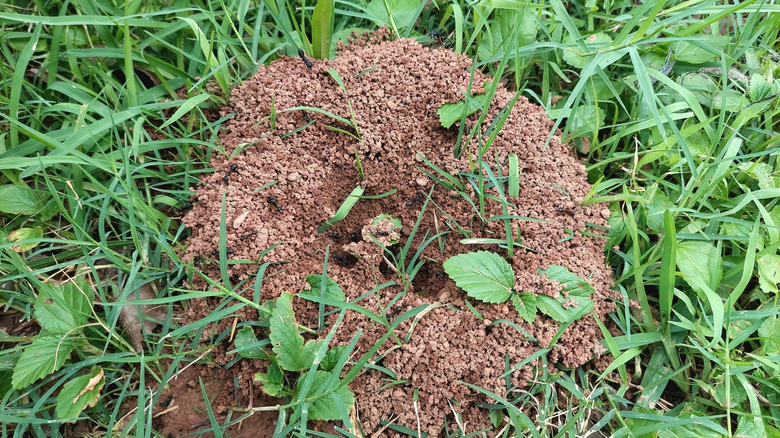
You've probably seen cartoon representations of invading ant armies pillaging picnics, but in truth, an ant colony in your yard is usually just an aesthetic annoyance at worst and can even be beneficial in some ways. Not only can they keep pest insect populations in check, but they're also soil movers nearly on par with earthworms, enhancing air and water circulation around your garden's roots. Although it's generally best to tolerate ants for the benefits they bring, they can be pests: in addition to potentially intruding on your home, they can cause minor damage to your lawn turf or provide mob-style protection to aphids and other honeydew-producing plant pests. The simplest way to deal with pesky anthills is by regularly raking or spraying them away with a garden hose. In prolific cases, you can use chemical treatments on the nests.
However, it's important to "know thy enemy" and figure out exactly what you're dealing with before you settle on a strategy to get rid of ants in your garden. Some, including various species of fire ant, velvety tree ant, or harvester ant, are capable of inflicting painful bites or stings. In particular, red imported fire ants need to be handled with care. Carpenter ants, meanwhile, build their nests a little differently than the average mound-building ants, so you'll need to approach these infestations strategically. In the event of a substantial infestation, it's often best to consult a licensed professional.
Red imported fire ants
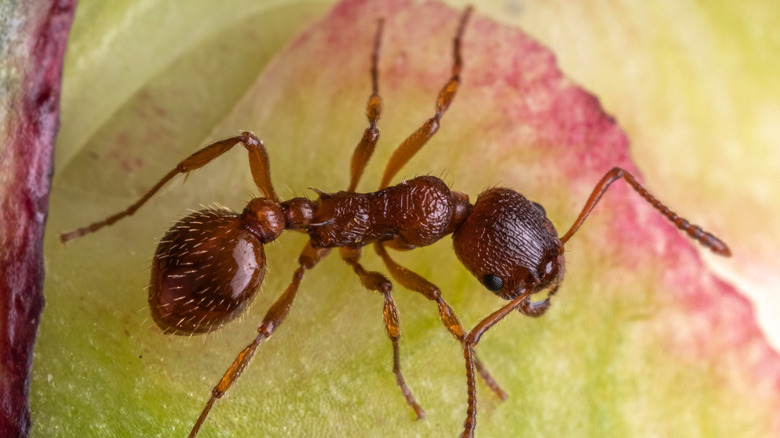
More than just an undesirable yard invader, the red imported fire ant is an invasive species in the U.S., native to South America originally, but now a major issue in the southeastern states. Their venomous stings are painful and cause blisters; to make matters worse, they are quite aggressive, more than their native and only mildly annoying counterparts. If you accidentally disturb their mound, you may find yourself swarmed by angry ants. This could result in a lot of stings, and if you're severely allergic to bee stings and ant bites, you may end up needing your EpiPen. So, whereas most ants are only an issue when they get into your house, you'll probably want to evict red imported fire ants from your property altogether.
Unless you've seen their aggressive swarming behavior, it can be difficult to distinguish red imported fire ants from other native species. Luckily, the imported variety is greedy: more than other kinds of ants, red imported fire ants love oil-based foods, which means they will most likely muscle out native competitors for greasy baits. Look for toxic baits aimed specifically at fire ants, and make sure to put out fresh new bait every couple of weeks. You can also drench the entire mound in insecticide for immediate results, but this can be less effective in hot weather, as you may not kill all the ants that are hiding underground from the heat.
Carpenter ants
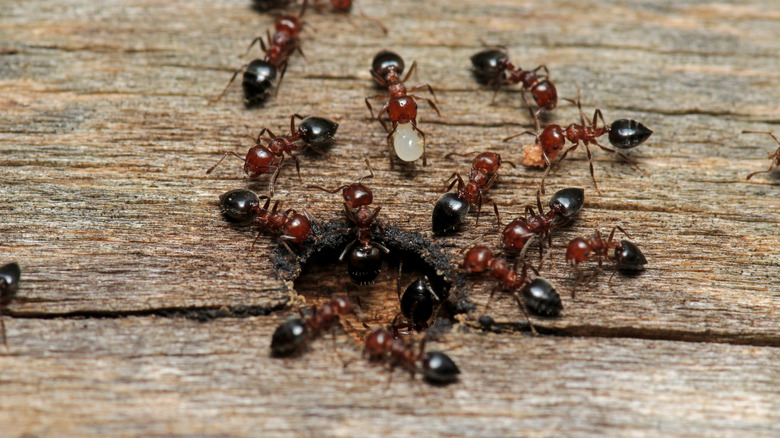
Up to a half-inch long, depending on the species, carpenter ants are some of the biggest in North America. As you can probably deduce from their common name, they're the woodworkers of the ant kingdom, chewing through wood to create nesting space for their colonies (this sets them apart from termites, which actually eat the wood). They favor wood that's rotting or soft, which may be fine and unobtrusive when it occurs outdoors in dead tree stumps or rotting logs, but it can become a major destructive issue when they start eyeballing real estate in your wood fence, shed, deck, or even your house. Plus, even though they don't sting like red ants, they have very strong jaws capable of a painful bite and can spray formic acid into the wound.
One telltale sign of a carpenter ant invasion is the presence of fibrous sawdust; you can differentiate this from termites, which leave pellet-shaped wood bits. If you suspect a carpenter ant problem but aren't sure of the nest's location, set out some sweet, sugary bait to attract workers, then observe them to figure out where they're taking the bait. Frequently, there is a main, or parent, nest in addition to smaller satellite nests. Then, you'll need to drill into the wood and apply a chemical control agent. Prevention can be your best control strategy, though: keep tree branches and shrubs trimmed away from your structures, reduce garden bed mulch to no more than 3 inches deep, and store firewood off the ground.