

Exactly What To Do When There's A Ground Wasp Nest In Your Yard
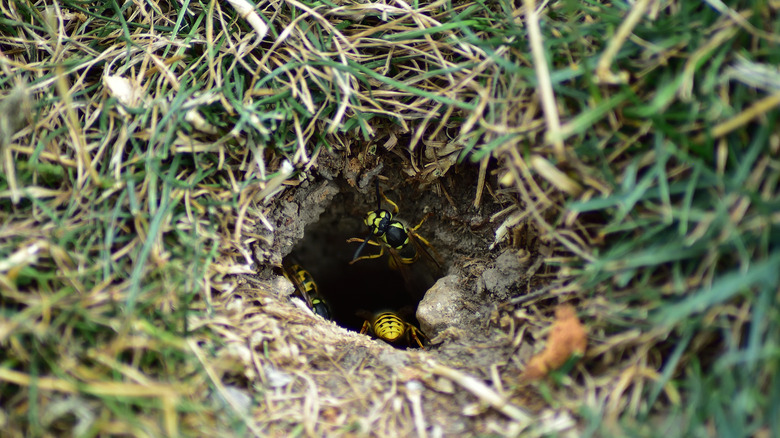
While wasps are important pollinators and can be beneficial in the garden, few people are thrilled to find a ground wasp nest in their yard. This is especially the case if the wasps in question are aggressive ones like yellow jackets. If you find a ground wasp nest, begin by determining what kind of wasps or other flying insect that burrows in the ground they are and deciding if it's actually necessary to destroy the nest for the sake of your and your family's safety.
If the nest is in a rarely traveled section of your yard and is being used by a non-aggressive solitary wasp, you may find that simply using a stake to mark the location and leaving it alone is the best course of action. Wasps don't reuse nests, so you'll only need to deal with them for one summer. Of course, if it is full of yellow-jackets and is close to where your children play, you may have no choice but to destroy the nest.
If you decide that the nest does have to be eliminated, you'll have to choose between dealing with it yourself or hiring a professional exterminator to handle it. If you feel confident that you can manage the nest yourself, insecticidal dust is often the best product to use for ground wasp control. Be sure to wear protective clothing to protect from both stings and the pesticide. Read all directions on the pesticide label before using and follow them precisely. In addition to gloves and eye protection, you should also use a respirator to avoid breathing in anything harmful.
How to destroy a ground wasp nest in your yard
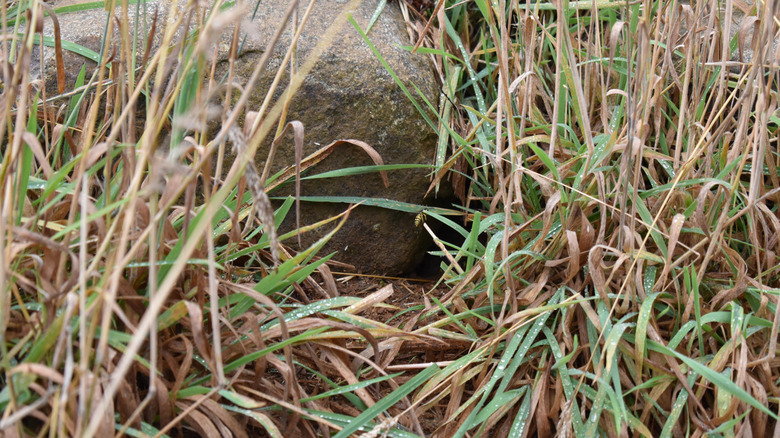
If you're going to use an insecticidal dust to eliminate a ground wasp nest, it's often best to do so early in the morning, unless your product's label instead advises using it in the evening. Either way, you don't want to work near the nest during the middle of the day when the wasps are most active. Make sure to wait until the wind is calm so the dust goes only where you want it. Following the instructions on the label, dump or shake the recommended amount of the dust into the nest opening. If done correctly, the dust should kill the wasps within just a day or two. You may need to reapply it a few times if existing eggs hatch after your first application.
Keeping your grass lush and well irrigated and your gardens densely planted or mulched can make a huge difference in limiting ground wasp nests in the future. This is especially important in spring when the wasps are in the process of finding locations for building nests. You'll also want to be sure you aren't accidentally growing plants that attract unwanted wasps to your garden.