

Why Your Potted Herbs Keep Dying (And How To Fix It)
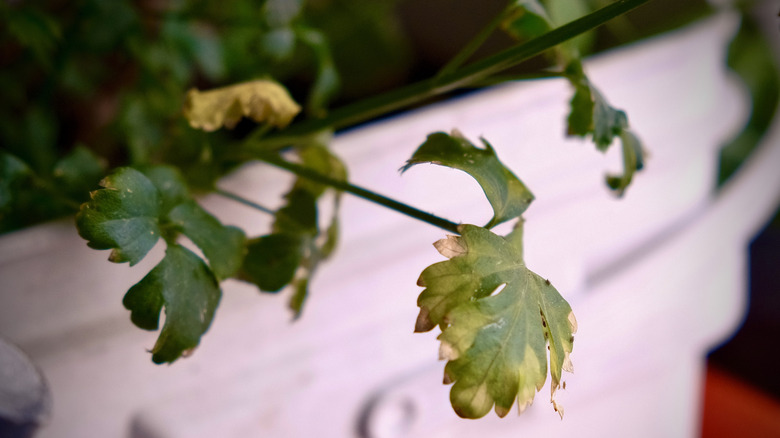
"Maybe this time, it'll be different," you think to yourself as you put the cilantro in its cute little terracotta pot — the latest in a succession of ill-fated potted herbs — on the grocery store checkout belt. In the days that follow, you water it diligently and put it in the sunniest window you can find. And yet, despite all your best efforts and intentions, your cilantro has problems again. It just seems to give up after a while, yellowing and wilting, and your dreams of a patio or kitchen container herb garden are dashed. But why? Unfortunately, you may have been trying a little too hard to be a good plant parent: perhaps the number one killer of otherwise coddled potted herbs is overwatering. Although the limp, yellow leaves may have seemed like a plea for water, they were likely a sign that soggy soil was causing root damage.
There are other care requirements for container-grown herbs that can impact their success, though overwatering is one of the most likely culprits behind your herbs' failure to thrive. Most herbs — especially those from Mediterranean regions — require at least six hours of sunlight. Not all herbs have the same needs, however. Those with tender stems can handle more frequent watering than those with woody stems.
Also, keep an eye on the calendar: while some herbs commonly grown in pots are perennials, others, like basil, are annuals that have a limited productive lifespan. In other words, while you may be able to keep your perennial herbs alive for years to come, you will most likely have to replace your annual herbs, well, annually.
How to avoid overwatering herbs (and other errors)
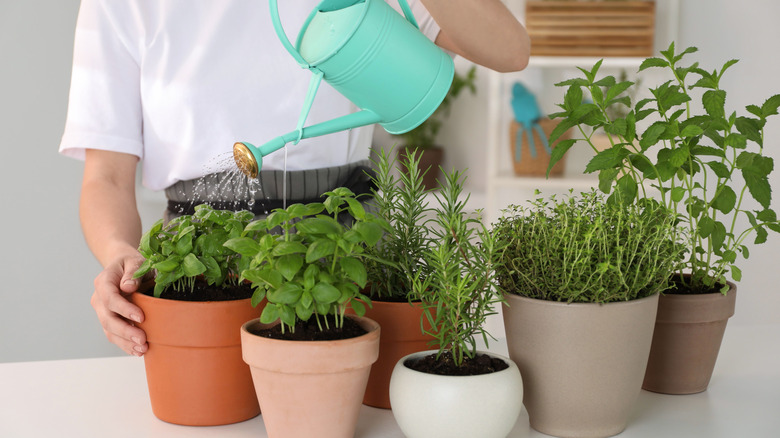
Because herbs grown in containers can't draw water from the surrounding soil, they need to be watered regularly to prevent them from drying out. So how do you walk the delicate line between under- and overwatering? Before you water your herbs, stop and feel the soil with your fingers, and not just the very top. Does the soil feel dry to the touch at least an inch below the surface? If so, you can go ahead and give the plant a drink: thoroughly water it with room-temperature water. Ideally, excess water should escape the pots through the drainage holes. When watering, you should continue pouring until it starts to drip from those holes. If there's a saucer beneath the pot that collects the runoff, make sure you empty it promptly.
Beyond that, many herbs favor additional humidity in their growing environments. If the air in your home tends to be dry (especially in winter), you might try giving them frequent spritzes with a spray bottle, putting a humidifier nearby, or placing the pots on top of pebbles in a shallow tray of water (just make sure the bottom of the pot stays above the water, not touching it). If getting enough sunlight is also an issue for your plants, you can supplement what they're getting through the window with a grow light.