

How To Know If A Spider Plant Needs Repotting
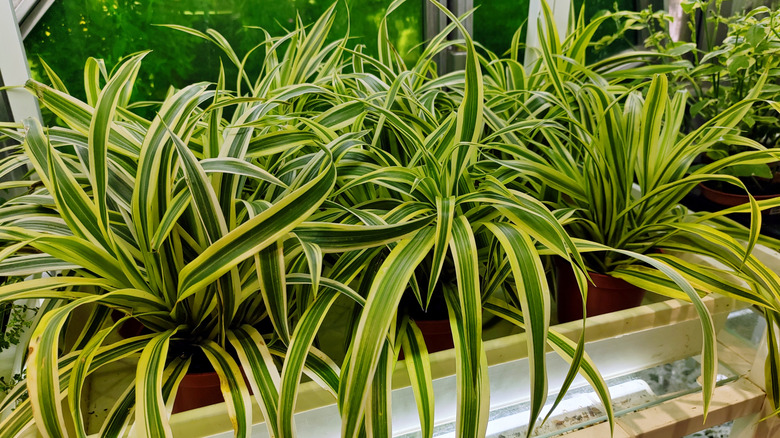
Who doesn't love spider plants? The charming houseplants bring color and vibrance to your home with minimal effort on your part. While spider plants (Chlorophytum comosum) are known for being easy to care for, they're not entirely maintenance-free. You still have to fertilize occasionally for thriving spider plants, and, of course, water them when necessary. On occasion, you'll also need to repot them. In general, you can expect to repot your plants about once a year. You'll know they need a bigger home when their roots begin to push up through the potting soil. You may also notice that they dry out too quickly and require water more often.
Spider plants have large tuberous roots, and they'll let you know when they need a larger pot. If you don't repot when the roots start to push up the potting medium or begin working their way out of the drainage holes in their container, they may crack your planter or pot entirely. To avoid a mess — and a broken pot — it's best to keep an eye out for signs that the roots are outgrowing their container. Conveniently, spider plants can be repotted any time of year, so if you start to see roots escaping from drainage holes or emerging from the top of the container, don't delay in selecting a larger house for your foliage friend.
How to repot your spider plant
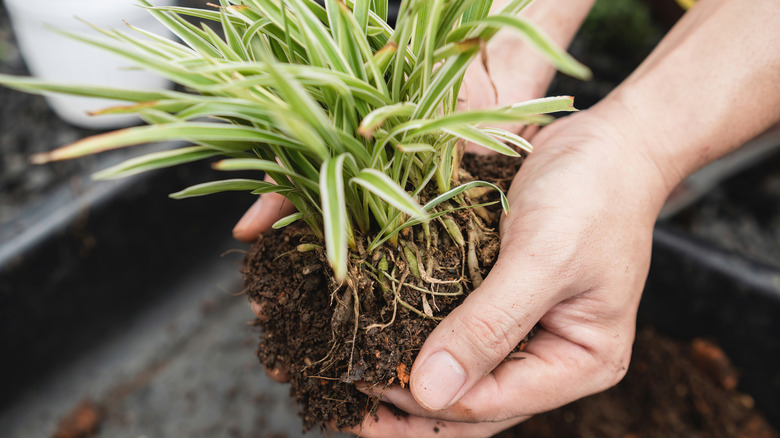
When your spider plant is ready to be repotted, find a new container for it to move into. Generally speaking, you should use a pot that's the next size up from the one your plant is currently in. Moving it to a too-big container can increase watering challenges and make it more likely to struggle with root rot. Make sure the new container has plenty of holes at the bottom for drainage. You'll also need to add some potting mix to the bottom of the pot, so your plant is at the same distance from the top of the container that it was in its previous one. Take advantage of your plant being out of the pot to carefully examine its roots and confirm that they are healthy. If necessary, remove any unhealthy or mushy roots to help fix any root rot.
Then, place your spider plant into the new container. Its root ball should be about an inch below the top of the container. Fill in around your plant with more potting mix and water it well. Remember that the water you choose for your spider plants matters. Make sure to pack the soil in firmly but not too hard when repotting. Once your spider plant is repotted, you shouldn't need to fertilize it for around 6 months.