

If You Only Plant One Flower In April, It Should Be This One
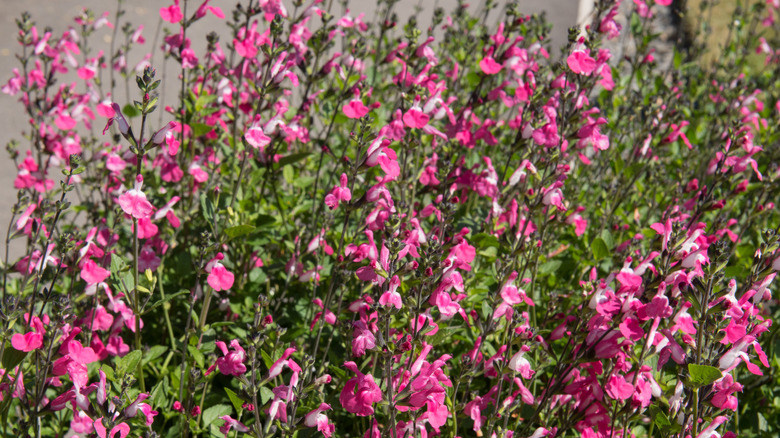
Although the spring equinox for the Northern Hemisphere actually occurs in March, depending on their location, many gardeners probably don't really feel it until April. Once the threat of late cold snaps and frosts has finally passed, it's time to get out into the yard and work the soil to plant warmth-loving annuals and flowering perennials for a lush and colorful garden. In particular, April is a great time to plant salvias; if you're planning your flower beds with an eye toward brilliant color, ease of care, and pollinator appeal, one North American-native variety, Salvia x jamensis, might just be your new garden MVP. Plus, deer and rabbits tend to leave it alone.
S. x jamensis is a natural hybrid of two other salvia plants. It was first discovered in a village called Jame in Mexico, hence its name (you may also see it sold as Jame Sage). Winter-hardy in USDA Zones 6 through 10, this sage is evergreen in frost-free areas. In colder areas, it will also survive hard freezes, dying to the ground but returning in spring. A variety of cultivars of this hybrid are available in a rainbow of colors, from the self-explanatory 'Salmon' to the bicolored 'Sierra San Antonio' (yellow and pink). You can also find S. x jamensis varieties in shades of crimson, orange, purple, and white.
How to care for Salvia x jamensis
You'll want to wait to plant salvias until there's no more threat of frost. Although its parent plants, autumn and little leaf sage, favor full sun, S. x jamensis actually likes a bit of a respite from the high heat of the afternoon and might perform best in a site with dappled sunlight. Like most salvias, S. x jamensis is tolerant of drought, especially when protected by some shade. Well-draining soil is an absolute must, though rocky soils aren't a problem. Make sure not to water it too much, or it may start to look a little leggy: just a couple times a month should be adequate, though you may want to switch to weekly if it's located in a sunnier area.
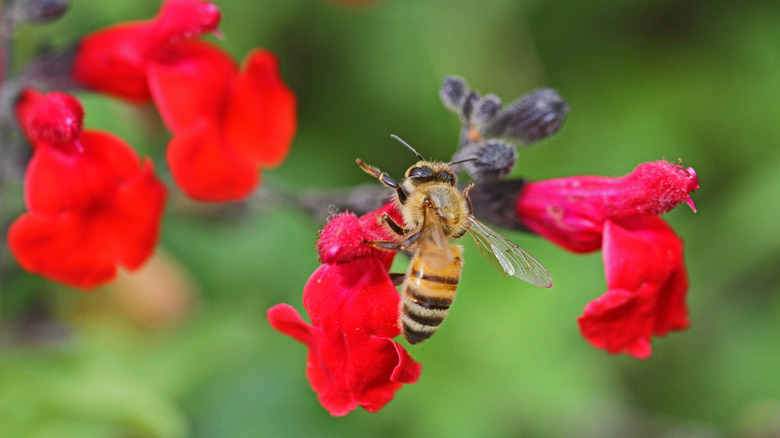
Throughout summer and fall, S. x jamensis will deliver a colorful show of tubular, two-lipped blossoms that will draw pollinators like butterflies, hummingbirds, and bees to your garden. One nice aspect of this hybrid is that it takes traits from both its parent sage plants: flexible stems from little leaf sage and more blooms throughout the summer from autumn sage. If you love the way your existing S. x jamensis plants perform in your garden, you can easily propagate them by rooting stem cuttings (you can also try seed, but keep in mind that whatever sprouts probably will not be true to the parent plant!).