

How To Prevent Aphids From Destroying Your Roses
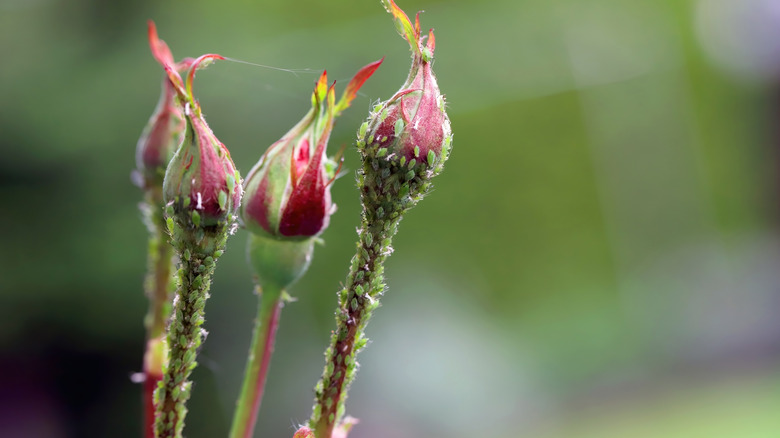
Is there anything more classically romantic than a thriving, well-manicured rose garden? Unfortunately, as many rose gardeners are well aware, these fragrant beauties can be just as attractive to insect pests as they are to human admirers. One of the best ways to stay ahead of marauding bugs is to perform frequent, careful inspections of your roses. If it's early in the spring growing season and you start to notice the presence of a sticky liquid and black fungus, possibly accompanied by curling leaves or weird-looking flower buds, it's probable you have a rose aphid infestation. Luckily, some simple pest control techniques, such as spraying them away with water and applying insecticidal soap, can help you get rid of aphids on roses.
Although not the only species of aphid that feed on roses, rose aphids (Macrosiphum rosae) are the most likely culprits. They are tiny insects, typically ⅛ inch long, with soft, pear-shaped bodies that range from green to red. Using their piercing-sucking mouths, they feed on plant sap and are especially fond of new growth. The sticky residue you see on the leaves is honeydew — excreted (ew) undigested sugar — which can attract ants and encourage the growth of sooty mold. A small accumulation is not necessarily that harmful to roses; much of the damage is cosmetic, and if you're unfussy about aesthetics, it may not bother you. However, aphids multiply extremely quickly, and a hungry crowd can cause your roses real harm.
How to eliminate aphids (and prevent them in the first place)
One of the easiest methods of removing a lot of aphids quickly is to just spray them off with a strong jet from your hose, focusing on the newest growth and leaves. You'll probably kill most of the ones you spray off, but some will survive and come back, so you should hose the plant down again every four to six days. Another way to combat aphids is to spray them directly with insecticidal soap on three separate occasions, letting five to seven days elapse between treatments. If the situation is getting out of hand, you can also kill aphids using insecticides containing chemicals such as neem oil, bifenthrin, and pyrethrin, among others, or a systemic insecticide in a soil drench or granular form.
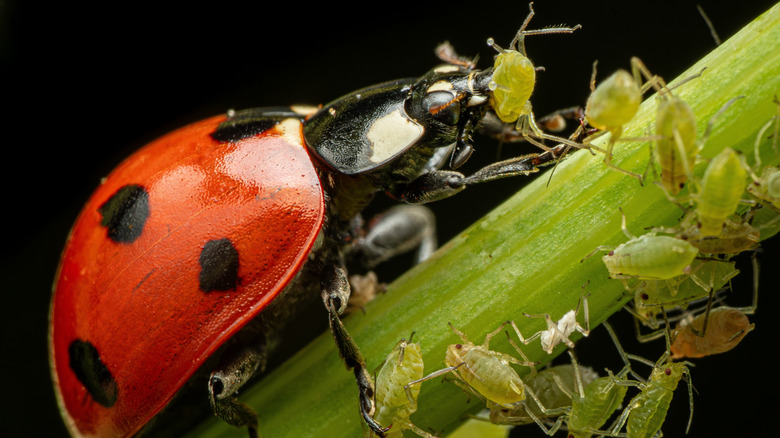
Due to how quickly they reproduce, aphid infestations can be kind of tricky to get under control (females can actually give live birth to clones of themselves instead of laying eggs!). If you'd like to prevent them from getting comfortable on your roses to begin with, you're in luck: you have many allies in this endeavor. Myriad insect predators, from ladybugs to parasitic wasps, help keep the aphid population at a tolerable level. To encourage these predators to patrol your rose bushes, avoid the use of broad-spectrum pesticides and do your best to eliminate ants, which tend to defend the honeydew-producing nuisances from predators. Adding native plants to your landscaping can also attract helpful predators.