

Here's When You Should Plant Marigolds
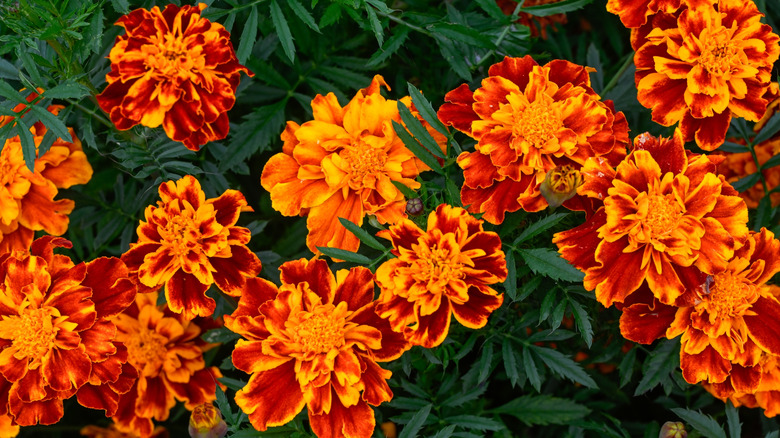
Marigolds (Tagetes spp.) are garden classics thanks to their ease of growing, charming blooms, and benefits as companion plants. They can be either started indoors and transplanted out or direct-sown into the garden, depending on your preference. Both strategies will provide you with lush plants and stunning orange, red, or even cream colored flowers in no time. Just make sure to wait until your soil is at least 65 degrees Fahrenheit before sowing your seeds outdoors. For indoor seeds, plan to start them around a month and a half before your last frost date.
They only take between 50 and 95 days to reach maturity, depending on the types of marigold flowers you're growing. So there's no reason to rush getting them in the ground. If you really want blooms as soon as possible, though, indoor seed starting is the way to go. For starting marigold seeds indoors, you'll need seed-starting mix, small pots to sow the seeds in, and either a southern-facing window where the seedlings will get plenty of light or a grow light. Marigolds don't need heat mats to grow or germinate as long as your home's temperature is in the mid-60s Fahrenheit. You'll also need to be sure to harden off the seedlings once you're ready to transplant them to your outdoor garden after your last frost date. This means spending about a week letting them slowly get accustomed to outdoor conditions before putting them in their permanent home. If indoor seed starting is impractical for you, though, marigolds also grow well when direct-sown.
When and how to direct sow marigold seeds
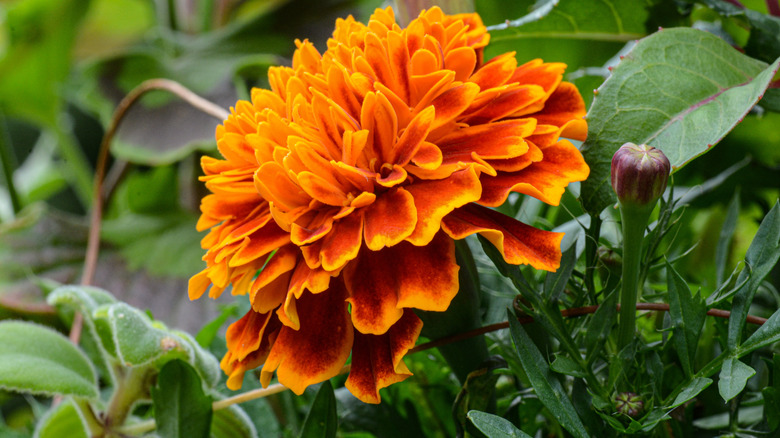
To get these flowers in your garden as soon as possible without starting your plants indoors, consider growing French marigolds (Tagetes patula), which tend to be the marigolds that grow and mature the fastest, often taking only around 50 days to flower. Unlike some seeds that can be planted outdoors as soon as your last frost date passes or even earlier, marigolds don't germinate well at low temperatures. So wait until your soil reaches at least 65 degrees Fahrenheit for outdoor seed sowing. Meat thermometers are great for checking your soil temperature. Once the soil is warm enough, you can finally sow your marigold seeds. Plant them about ¼ of an inch deep.
Regardless of whether you start your marigolds outside or indoors, make sure to have a good spot in the garden picked out. Luckily, marigolds aren't overly picky about soil, as they are tolerant of a variety of pH levels and soil textures. They do, however, need good drainage and full sun to thrive. So find them a spot where they'll get at least six hours of direct sunshine. While you'll need to water your marigolds regularly when they are young, they're quite drought-resistant once established.
Marigolds are beautiful in flower beds, but they're also classic additions to vegetable and herb gardens, where they're often planted alongside tomatoes and basil. Since tomatoes need soil temperatures to be in the 60s Fahrenheit before they can be transplanted outside, you can conveniently direct-sow your marigolds at the same time you plant out your tomato starts.