

Here's Exactly When To Plant Sunflowers
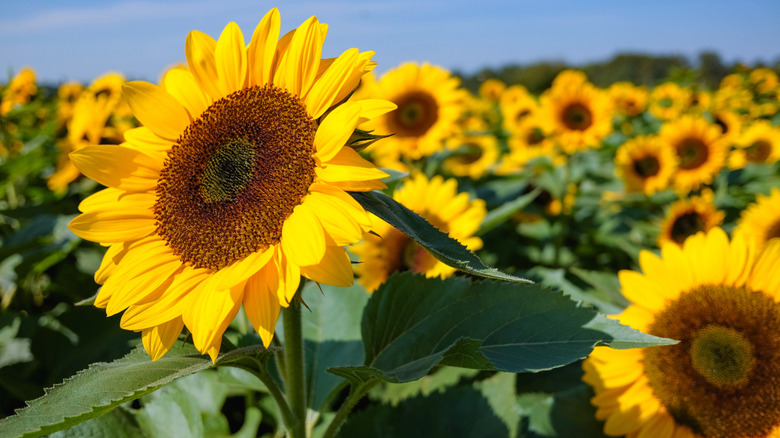
Growing sunflowers is a fun and easy way to fill your garden with beautiful blooms. They're a snap to grow from seed and generally mature in less than 100 days, with some cultivars even blooming about 50 days after planting. While cheery yellow sunflowers are classic, these beauties come in a range of shades, including reds, oranges, and even creams. They're also a great way to grow your own snacks or even birdseed. Sunflowers come in a variety of sizes, too, with some cultivars like 'Henry Wilde' reaching as tall as 10 feet, while others like 'Sunray Yellow' stay under 2 feet. You can direct sow their seeds after your last spring frost, or start your sunflower seeds indoors about three weeks before your last frost.
While sunflowers are often direct-sown in gardens, starting them indoors and transplanting them gives you the advantage of starting a bit earlier, likely leading to earlier blooms. It also helps protect the seeds from birds and other hungry wildlife. Just be very careful with your sunflowers' roots if you opt to transplant, since they can be prone to transplant shock. If you're growing single-stem sunflowers, you can plant a new succession every few weeks to ensure blooms all season long. Or, if you prefer, simply grow branching sunflowers so you have plants with multiple flowers.
How to plant sunflower seeds in your yard for a season of blooms
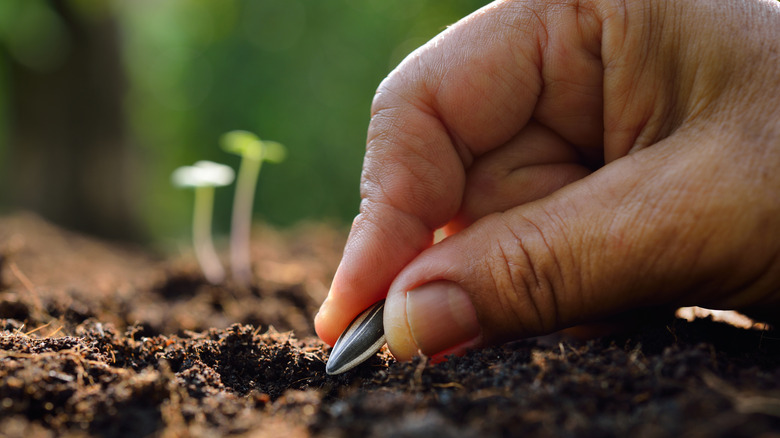
While you can direct sow your first round of sunflower seeds as soon as your last frost date has passed, they enjoy soil temperatures of at least the mid-50s Fahrenheit. So don't be too surprised if your first succession of direct-sown seeds is a bit slow to germinate and start growing. For sunflowers, you start indoors and transplant, you will need to harden them off over the course of a week or so to help them adjust to outdoor conditions and minimize transplant shock. You can keep planting more seeds up until about 60 days before your first fall frost, depending on how quickly the cultivars you're growing can mature. Don't forget to harvest some of the sunflower seeds to save and plant next season.
When planting or transplanting sunflowers, make sure you find a good spot for them in your garden. They need full sun, which means at least six hours of direct sunshine. Sunflowers also need well-draining soil to thrive. Consider amending with compost to improve drainage if needed. Be aware that sunflowers are known to be allelopathic, meaning they can harm the growth of nearby plants. So be sure to only grow them alongside plants that can thrive among sunflowers, like coneflowers.