

This Might Be The Easiest Flower To Grow For Beginner Gardeners
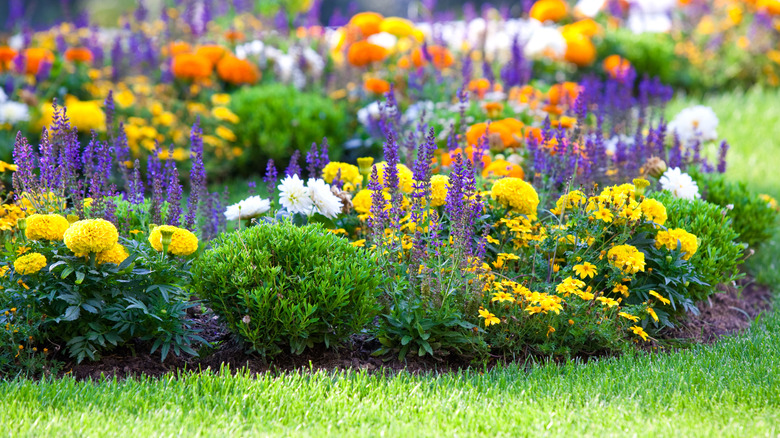
As fun and beautiful as flower gardens can be, starting one can be intimidating. If you have little or no gardening experience, growing and caring for a wide range of flowering plants can be overwhelming. Luckily, there are plenty of gorgeous and easy-to-grow flowers. One of the best to try, whether you're an experienced gardener or just starting out, is the lovely marigold (Tagetes spp.).
Marigolds are perfect for all gardeners, including beginners, because not only do they thrive in a range of soil conditions, but marigolds also grow fast and provide you with blooms all season long. And even better, they rarely struggle with diseases or pests, are affordable, and easily available to buy as seeds or as young plants. You can also save the seeds from your existing marigold plants to grow again next season, making next year's planting even easier.
While you might assume that a garden or container full of just marigolds would look a little boring, there are actually many different types of marigolds, including various cultivars and even species, that you can grow together to create a stunning flower garden. In addition to the classic orange and red shades, marigold flowers can also be creamy white, butter yellow, and even peachy pink. They come in a range of heights as well. African marigold plants (Tagetes erecta) often reach up to 4 feet, while tiny signet marigolds (Tagetes tenuifolia) stay under 6 inches.
How to care for your easy growing marigold flowers
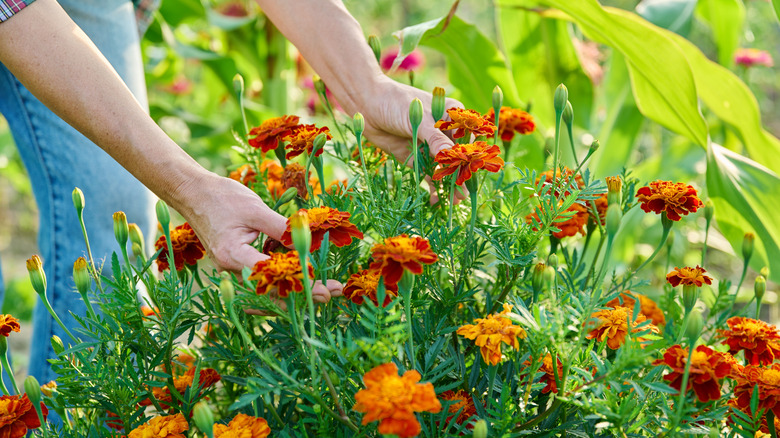
If you want to grow marigolds from seed, you can start them indoors about two and a half months before your last frost date. Or, if you don't have the space or tools for indoor seed starting, simply sow your marigolds directly in your garden bed once the soil temperature has reached the mid-60s. You can check this using a meat thermometer.
You can also purchase marigold starts from nurseries or garden centers, though you may not have as large a variety to choose from as you would if you grew them from seed. Regardless of how you start your marigolds, make sure to find a good spot for them in your garden. In addition to full sun, marigolds also like well-draining soil. They can, however, handle everything from dry to moist conditions. Additionally, they aren't heavy feeders, meaning they don't require large amounts of fertilizer to bloom and thrive. This is great news for anyone concerned about fertilizer getting more expensive. Make sure to deadhead the spent flowers to help your marigolds bloom all season.
You can certainly make a garden bed of just marigolds, using their differing sizes and colors to create contrast, but marigolds are also classic companion plants. They thrive alongside tomatoes in vegetable gardens and also grow well next to other easy-to-grow flowers, such as zinnias and nasturtiums. There is even evidence that, when planted in sufficient quantities, marigolds can help improve soil by reducing the number of harmful nematodes.