

The One Vegetable You Probably Shouldn't Grow In A Pot
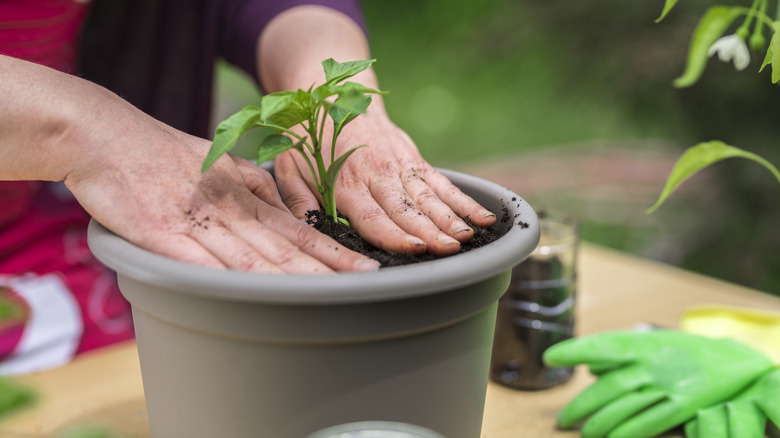
If your dreams of fresh-harvested vegetables aren't aligning with the reality of your backyard square footage, or if you're living in a multi-unit building with no yard, a container garden can be an excellent solution. Many plants are suitable for small containers, but due to issues like larger space needs, some vegetables are less reliable for container gardening. One particularly iffy selection is sweet corn. To understand why a patio corn garden isn't a great idea, you have to know a bit about how the plants produce the ears you harvest and eat.
On different parts of a corn plant, there are both pollen-producing male flowers (the tassels at the top) and pollen-receiving female flowers (the silk strands in each ear). While most vegetables are pollinated by bees and other helpful creatures, corn is pollinated by the wind. When a grain of pollen lands on a strand of silk, it produces one kernel of corn. If pollination is poor, you'll end up with empty spaces where the kernels should be. This means that in order to make sure fully-formed ears are produced, you need to ensure adequate wind distribution of pollen by arranging at least 16 plants in the optimal formation, 4 foot-by-4 foot blocks. Unfortunately, if you want to harvest edible vegetables and not empty ears, corn just isn't super practical for container gardening due to its pollination and space needs.
One potential exception to the corn in containers rule
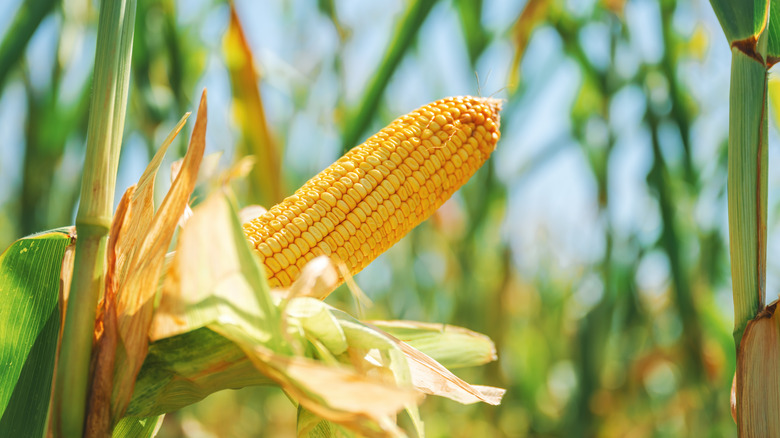
If you're up for an experiment, there is one way you might try to care for corn plants on your patio. Burpee Seeds offers a hybrid variety called 'On Deck', which the company touts as, "The first-ever sweet corn you can grow in a container." Bred to only grow up to 4 to 5 feet tall and produce two or three ears per stalk, Burpee advises that 18 'On Deck' seeds can be planted in a 24-inch container. Some gardeners have claimed to have luck growing them in half whiskey barrels — cute and functional! Other gardeners have had difficulty with some plants thriving more than others, so your mileage may vary.
While you're probably better off just buying corn from the grocery store or your local farmer's market, there are still many tasty options for your potted vegetable garden. Most leafy greens do quite well in pots, as do many varieties of herbs. Other good choices include peppers, eggplants, tomatoes, and radishes. Make sure you do a bit of research on the ideal growing conditions of these veggies and select plants that will grow well in the light available where your pots will be located. While some plants can tolerate shade, others need full sun. When light is at a minimum, err on the side of leafy greens. Of course, because containers can be moved, if you don't mind a bit of legwork throughout your day you can help your sun-loving veggies migrate to follow the light.