

The Best Time Of Day To Water Your Garden
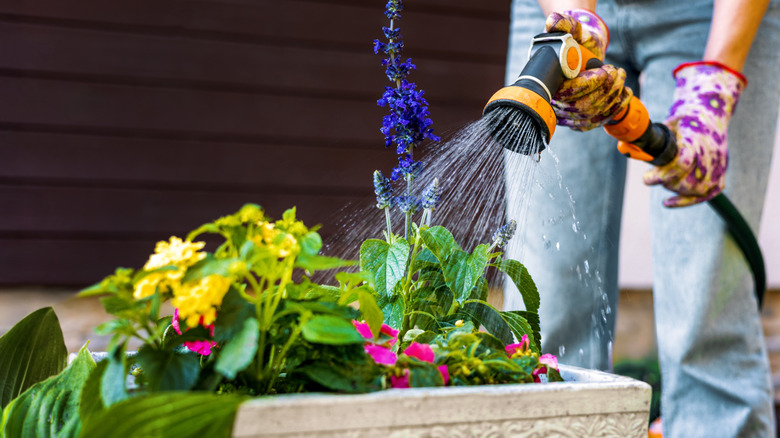
Even if you start your garden with the best and healthiest plants, it likely won't thrive without regular care, such as watering. After all, even drought-tolerant plants often require irrigation when they're young and still getting established. In addition to keeping track of how often you should water your garden, you also need to consider the best time of day to do it. When possible, your best course of action is generally to water your garden first thing in the morning to prevent disease and conserve water.
Just as early mornings are the best time of day to water your lawn, they are also perfect for watering gardens. This is because the sun hasn't yet started beating down on your plants, so evaporation isn't an issue yet. That means more of the water should get absorbed by the soil and be available for your plants to enjoy. And because the sun will start shining soon after watering, doing this task in the morning reduces the risk of your plants contracting fungal diseases from prolonged exposure to wet foliage. This is especially a concern if you are overhead watering or if the mud splashes onto plant leaves.
Before watering, confirm that your garden needs irrigation. You can do this by using your finger to check if the soil 2 inches down is dry. If it is, water the garden thoroughly.
Why afternoon and evening aren't ideal for watering gardens
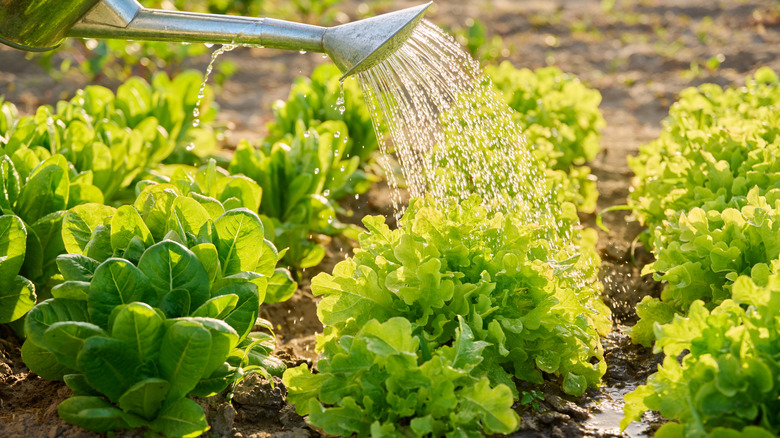
While you may have heard that watering your plants mid-afternoon on sunny days can burn their leaves, this isn't actually a concern. Instead, the major downside to watering when the sun is beating down is evaporation. Midday watering isn't a direct danger to your plants, but it does tend to waste water because so much is lost due to the sun speeding up evaporation. If you notice midday that your soil is dry and your plants are drooping, you shouldn't wait until the next morning to water just because it's the "best time", though.
Watering in the evening, on the other hand, can harm your plants, especially if you are overhead watering. The leaves will likely stay wet for an extended period of time, increasing their vulnerability to disease. If you have to water in the evening, make sure not to wet your plants' leaves.
No matter when you water, make sure your garden is mulched. Mulch benefits your garden by making your watering more efficient and can even counteract some of the negatives of irrigating during less-than-ideal times of day. It limits how much water is lost to runoff and evaporation, allowing you to water less often, and it is also excellent at preventing leaves from becoming contaminated with splashes of mud and soil, decreasing disease.