

How To Identify Root Rot, According To The Old Farmer's Almanac
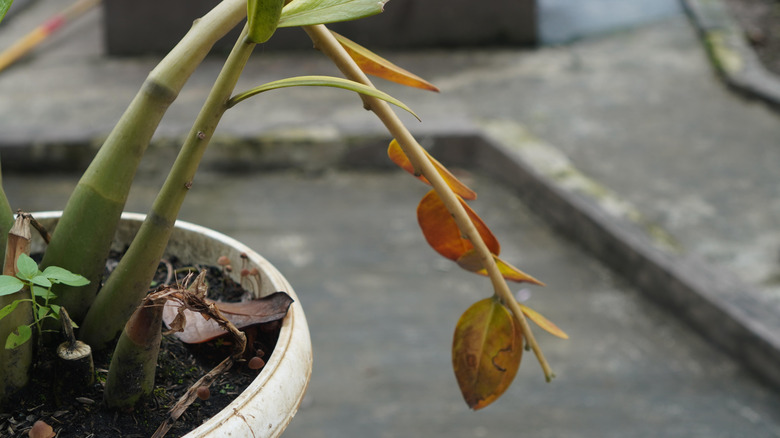
Is there anything more frustrating than an ungrateful plant? You've situated it in a spot where it can get the ideal amount of light for its species, dutifully fertilized it, watered it once a week like clockwork, and nothing seems to bring your houseplant back to life. According to The Old Farmer's Almanac, if the reason for your listless, yellowing, dehydrated-looking (though well-watered) plant's malaise isn't evident above the soil, the, ahem, root of the problem may be exactly that.
Gently lift the plant from its bed or pot and clear away some soil so you can take a look at the roots below. Are they firm and creamy white? Or are they mushy, brown or black, and smelly like a vegetable you forgot in the crisper for too long — maybe even sloughing off their outer layer? If the latter is an accurate description, it's likely that your plant is experiencing root rot.
Unfortunately, root rot can result from loving your plant a little too hard. Plants need oxygen to live, and when overwatered plants sit in saturated soil for too long, their roots essentially "suffocate." As a result, the roots begin to die and decay, which means that the plant isn't receiving nutrients or water (ironically). The stressed plant then becomes extremely susceptible to infections, especially those caused by certain organisms that are right at home in soggy soils. Fungus-like water molds and actual fungi are two of the usual suspects.
Can plants with root rot be saved?
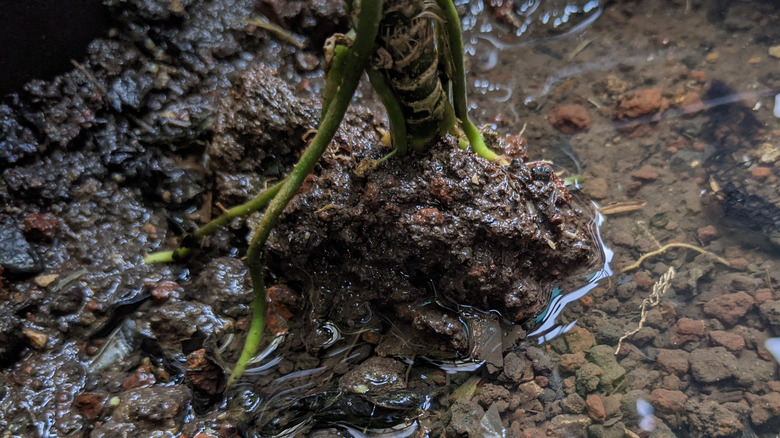
While the Almanac says there may be some hope, you'll have to work promptly to fix root rot. Somewhere away from your other plants to avoid cross-contamination, take the infected plant out of its pot and remove as much soil as you can from the roots by rinsing or gently shaking the plant. Prune away roots that look damaged, dark, or mushy, leaving pale, healthy roots. Repot it in a sanitized pot with ample drainage and fresh soil. In the weeks that follow, you'll want to be stingy with the water, only watering the plant when the top inch of soil is dry; wet soil can lead to a rebound infection. Unfortunately, in many cases, the root system has suffered too much damage to be saved by the time the issue becomes apparent, and the best course of action is to say goodbye to the afflicted plant.
Prevention is really your best defense against root rot. One key way to combat the growth of pathogens that can cause this condition is to avoid overwatering, and to this end it's important to know your plants. The optimal amount of moisture is often species-dependent. Only water your plants when they actually need it. Also, focus on watering deeply instead of watering frequently, as soaking the soil deeper can persuade the plant's roots to follow. If your soil smells funky or sour, it's generally a good indicator that it's been without oxygen for too long.