

The One Thing To Do In March 2026 For A Thriving Spider Plant
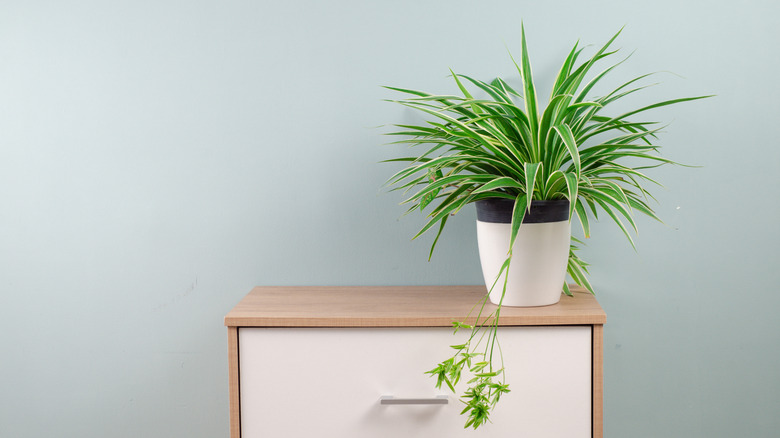
Spider plants are known for being low maintenance and easy to care for. They can easily liven up a room and add interest to formerly drab shelves and bookcases. Your spider plant doesn't ask much in return other than occasional watering and bright lighting. During March though, you should also take the step of fertilizing your plant to set it up for a healthy and productive spring and summer.
Spider plants (Chlorophytum comosum) don't require a lot of fertilizer to thrive, and during winter months, when they aren't actively growing, they don't need any fertilizer at all. March, however, marks the end of winter and the time when your plant should be beginning to grow again. While you may have kept the popular houseplant thriving through winter by rarely watering and skipping fertilizer, spring means not only more regular waterings, but also the time to provide your spider plant with the nutrients it needs for its summer growth. You can accomplish this with either slow release fertilizer or a faster acting water soluble option, but it's important not to go overboard. Not only will too much fertilizer prevent your spider plant from forming cute baby plantlets that spider plants use for reproduction, but it could even cause burns or damage to the plant.
How to fertilize your spider plant in spring for healthy growth

There are a few different types of fertilizer you could use in March. If you opt to use a slow release fertilizer, you'll likely only need to fertilize your plant every 3 months or so during its active growing season. So applying fertilizer in March should mean your spider plant won't need more fertilizer until early summer. A faster acting water soluble fertilizer, on the other hand, will likely require monthly applications during this time. Read the instructions on your fertilizer carefully. Use the correct amount, and properly dilute it if necessary. Whichever style of fertilizer you decide to use, make sure it is balanced and provides your plants with nitrogen, potassium, and phosphorus.
If you start to notice dry brown tips on your spider plant's leaves, this could be a sign that you have overfertilized it. Other potential signs of overfertilizing include a lack of plantlets and your plant lifting out of its pot due to excessive growth of its tuberous roots. You should also make sure your fertilizer does not contain fluoride, as spider plants are quite sensitive to this.