

The Gorgeous Trellis Joanna Gaines Had Custom Built For Hyacinth Vines

There's a good reason HGTV star and host of Fixer Upper, Joanna Gaines, has a garden that serves as inspiration for so many. Not only does it boast stunning plants, but Gaines has also designed the most beautiful methods of showing them off. Unsurprisingly, this is also true for her hyacinth bean (Lablab purpureus) vines which she showed off in season 5 episode 12 of Fixer Upper, "Chip and Jo's Family Garden Project." For these, Joanna Gaines built a simple but elegant teepee trellis for the vines to cover, showing off their lush leaves and lovely purple blooms and stems. Thanks to being fast-growing climbing plants, they can easily cover and completely obscure this framework, despite being annuals in USDA Hardiness Zones 9 and lower. (She lives and gardens in Waco, Texas, which is zone 8b.)
To create a similar trellis of your own for vining plants, start with four sturdy wooden posts. Gaines opted to use cedar, which is known for its beauty and longevity, but you can use more affordable options like Douglas fir as well. You could even use branches you've pruned from nearby trees if they're long enough. Don't use pressure treated wood if you're planning to grow edible plants on your trellis though. Then, angle the posts against each other into a teepee shape and lash them together at the top. If necessary, you can also wrap twine around the posts the whole way down to create a frame for the plants to climb. When the vines begin to grow, you can gradually train them around the trellis.
How to grow hyacinth beans in your own yard
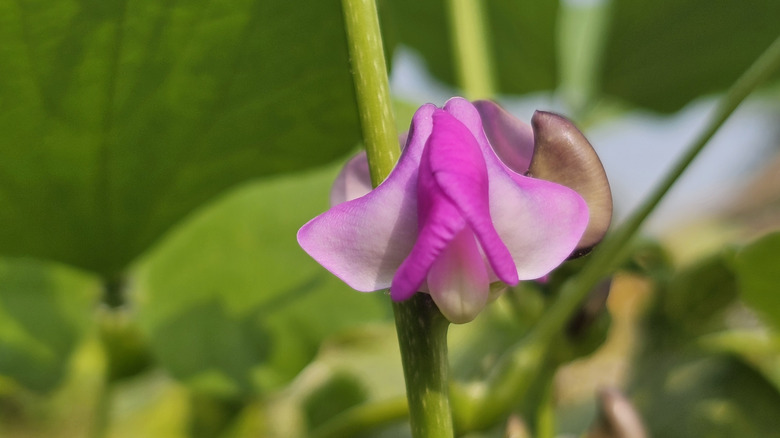
In addition to a trellis, lattice, or other climbing structure, there are a few things you'll need if you want to grow hyacinth beans. They require well-draining soil to thrive, so be sure to amend their growing space with compost if your yard tends to have soggy or waterlogged soil. They also need a full-sun location where they'll get a minimum of six hours a day of direct sunlight. Hyacinth beans, like other legumes, are nitrogen fixers, and require less fertilizer than most crops.
Make sure to wait until after your last frost of the spring before planting your hyacinth beans. You can then direct sow, planting them about ½ inch deep. You'll find that you aren't the only one delighted by the beautiful flowers of hyacinth beans. They're also a hit with butterflies and hummingbirds. A word of warning though, they're also quite popular with deer. So they may need to be grown inside a double fence that can keep deer out of your garden. Once the vines are fully grown and in bloom, you won't even see the trellis you have them trained onto.