

Why Snakes Are Actually Good For Your Garden
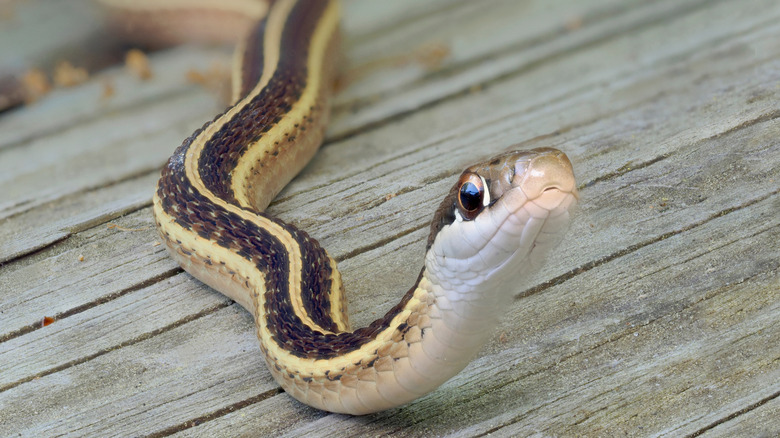
From Queen Cleopatra's (alleged) fatal snakebite to Indiana Jones lamenting, "Why'd it have to be snakes?" in "Raiders of the Lost Ark," snakes have long-occupied a distinctly sinister position in much of humanity's collective consciousness. In fact, according to a study by anthropologist Thomas Headland at Southern Methodist University, it's possible that an aversion to them is inscribed in our genetic makeup, an echo of ancient times when giant snakes may have preyed upon humans. Whatever the reason, if any animal has paid the price for bad P.R., it's slithering serpents, as humans have often harmed or killed them out of misguided fear. But if you're a gardener, snakes may actually be some of your greatest (and most under-appreciated) allies — yes, the venomous ones, too. They are a crucial part of the food chain, and in particular, they're pest-control superstars.
Different species favor different prey items; some specialize in hunting rodents, while others prefer insects, birds, or even other snakes. Whatever their favorite prey, they play a crucial part in keeping that animal's population from exploding beyond what the ecosystem can handle. If you see snakes in your garden, just know that they're potentially helping to keep rats, voles, rabbits, slugs, or other garden-munching pests from taking over your yard. They can even help you to stay healthy while you're out doing yard work: The venomous timber rattlesnake, for example, eats rodents that are often hosts to Lyme disease-carrying ticks. So maybe think twice before looking up ways to keep snakes out of your flower beds.
How to make your yard a home for snakes
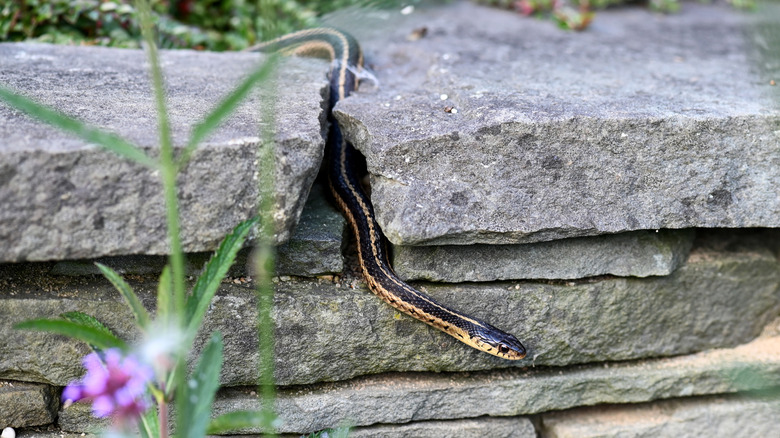
There are plenty of ways to entice snakes to consider your yard a favorite hangout. In general, they are drawn to real estate with plenty of hiding places, food, drinking water, and ideally somewhere to soak up some rays. Here's a vocab word for you: Snakes are ectotherms, or "cold blooded" animals that need external heat sources to regulate their body temperature. Piles of rocks and logs can provide both hiding spots and basking sites, so you might try making a flower bed into a rock garden. Adding native plants to your garden can create a healthy food web right in your backyard. If you have the space, adding a small water feature or pond to your landscaping can provide thirsty snakes with a drink.
Making your garden friendly for them also means being a considerate neighbor. After all, even if you add features to attract snakes to your yard, it's not a safe habitat if they run the risk of being injured or sickened by human activity, even accidentally. Limit your use of herbicides and pesticides as much as possible, especially where such substances may leach into water sources. Before you mow the lawn, walk around your yard first; snakes hear by feeling vibrations, so it's a good way to signal to them that they need to move out of the way. Finally, your dog or cat might harass or even eat snakes, so make sure to supervise pets' outdoor time.