

The Best Time To Plant This Popular Vegetable, According To The Old Farmer's Almanac
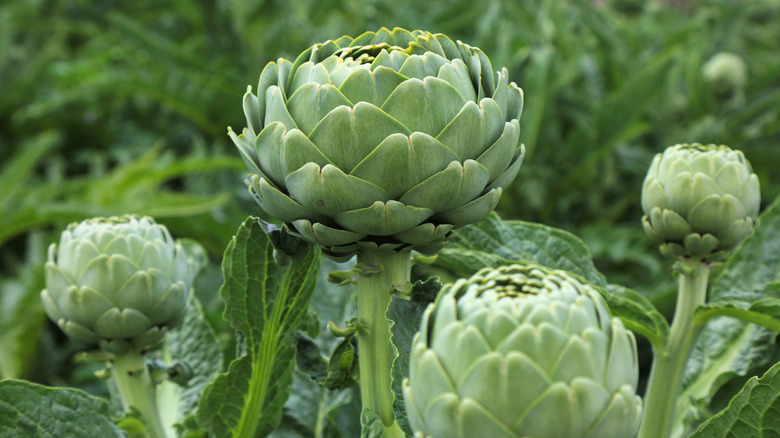
Low-calorie but high in fiber, artichokes are delicious as part of an indulgent dip, in a salad, as part of a pasta dish, and in many other applications. They're also rich in vitamins and antioxidants, too, containing the highest antioxidant levels of any vegetable! For the curious gardener, The Old Farmer's Almanac touts these vegetables as "surprisingly easy to grow," noting that they can be propagated from rooted shoots and dormant roots, or grown from seeds started indoors. With multiple ways to start them, the main question is when you do it.
The part of the artichoke that you can eat is really the plant's unopened flower bud. If you let it flower instead of harvesting it, you'll see a purple flower that resembles a thistle. In fact, these perennial plants in the daisy family are thistles. Originally hailing from the Mediterranean, where they have been grown as far back as the days of the Roman empire, the globe artichoke was introduced to the U.S. in the 1600s by Spanish settlers in California. Artichokes grow especially well in the cool, well-draining soil of coastal California, but you can also grow them elsewhere in USDA Hardiness Zones 7 through 10 — though they require a cool spring for the flower stalk to grow.
When you plant artichokes will depend on what form your planting and the current climate. Seedlings and shoots can be planted in the spring once the last frost has passed, but when to plant dormant roots varies depending on your location. In areas with no frost, you can plant them as early as fall or winter. If there are frosts in your region, wait until they've passed in spring.
How to plant and care for artichokes
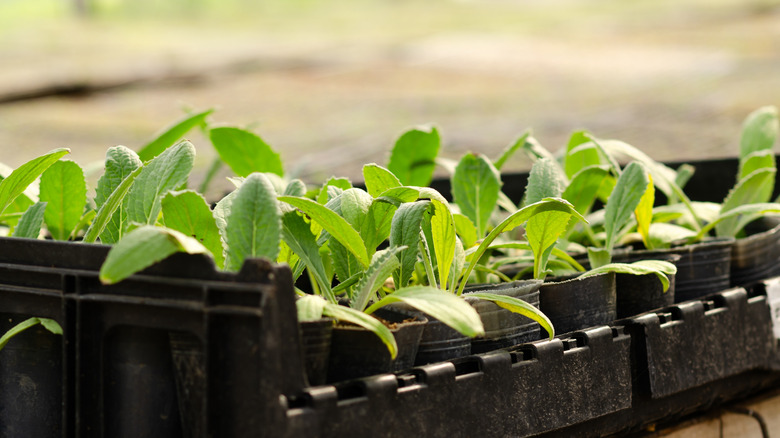
If you're planning to sprout seeds indoors, you'll want to start them about 8-10 weeks before you transplant the seedlings into your garden. The Almanac advises you give them a good soak in warm water before you plant them. Then, put your containers in a warm area where they'll receive bright light. Keep the soil moist while the seedlings are growing.
When you already have an artichoke plant and you'd like to propagate it from shoots, uproot them in spring when they're about 8 inches tall. Make sure that you carefully separate the shoot you want from the parent plant's root ball below the soil. This includes cutting the shoot off from the parent while disentangling its roots from the main root ball for a complete plant to transplant. Regardless of method, space your new plants about three to four feet apart and give them a deep soak.
As far as care goes, artichokes are thirsty plants, so you'll need to make sure the soil stays consistently moist if you want them to form buds. During the growing season, apply a balanced fertilizer once a month. Before the buds form, a thick layer of mulch can help conserve moisture, but you'll want to remove and replace it with compost once buds start to appear. You can harvest the buds once they're swollen but still tightly closed. To do this, use a sharp knife, and cut about two inches below the bud. Or you can let them flower and enjoy the unique blooms!