

This Butterfly-Attracting Flower Is So Easy To Grow It Basically Cares For Itself
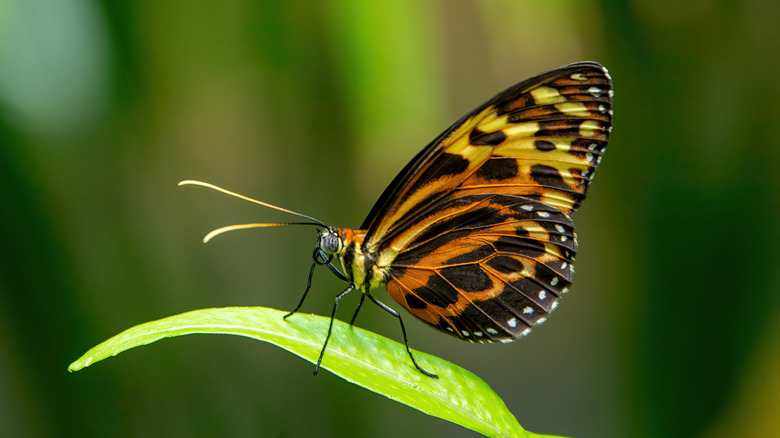
Butterflies add whimsy and beauty to your garden, but they're also important pollinators. Sadly, their numbers have been rapidly declining in The United States. In addition to avoiding the use of harmful pesticides, you can also help them out by planting some of their favorite food sources. Creating beneficial butterfly gardens doesn't have to be difficult, and some of their favorite flowers are quite easy to grow. One of the best to grow is the lovely and low-maintenance blazing star (Liatris spp).
Depending on the specific species, blazing stars can be hardy in USDA Hardiness Zones 3 through 9. And once they are established and fully settled in your landscape, they require little to no care thanks to their drought tolerance and minimal need for fertilizer. In addition to butterflies, their blooms will also help to attract hummingbirds, bees, and moths to your garden and landscape. And unlike some perennials, they don't require division to continue thriving. They're deer resistant too!
If you want to add these North American native plants to your own garden, they can be grown from seeds, corms, or live plants. Some of the most popular types of blazing stars to grow include dense blazing star (Liatris spicata), rough blazing star (Liatris aspera), and prairie blazing star (Liatris pycnostachya). Dense blazing star is an especially good option if you want to attract monarch butterflies. Depending on the species and cultivar, blazing stars' blooms can be purple, pink, or even white. Blazing stars are also great for adding to floral arrangements.
How to grow blazing star in your own garden and landscape
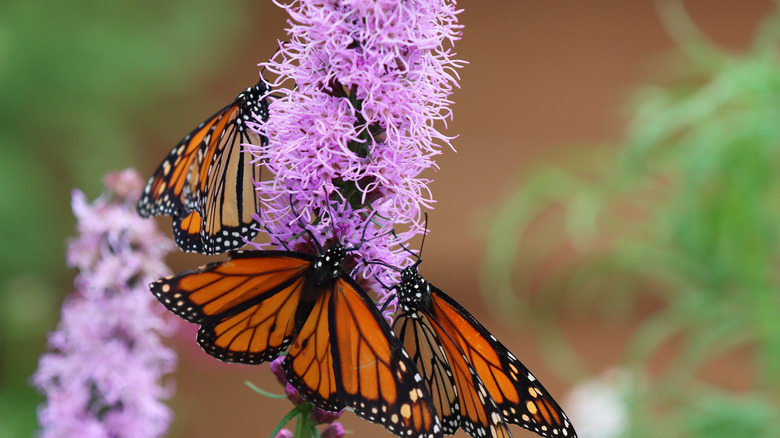
When you're ready to add blazing stars to your own garden, try to find a spot for them in full sun where they can get at least 6 hours of direct sunlight. They can also handle part shade if necessary, but the plants are prone to becoming leggy in too much shade. They also need well-draining soil. If your soil tends to get soggy and hold onto water, you can amend it with some compost to improve the drainage. Make sure to space your blazing star plants around a foot apart, as this will improve airflow and help prevent disease. While your blazing stars should be drought tolerant once they get established, you'll need to water them regularly the first year you plant them.
Blazing stars are stunning additions to landscapes and have amazing curb appeal. With a height that can range from 1 to 5 feet, they're perfect for the middle of borders and garden beds, and they can add a unique vertical element thanks to their flower spikes. They pair well with other North American flowers like coreopsis and coneflowers, which are also drought-tolerant and sun-loving plants loved by butterflies and other pollinators.