

Why Your Snake Plant Has Brown And Yellow Tips (And How To Fix It)
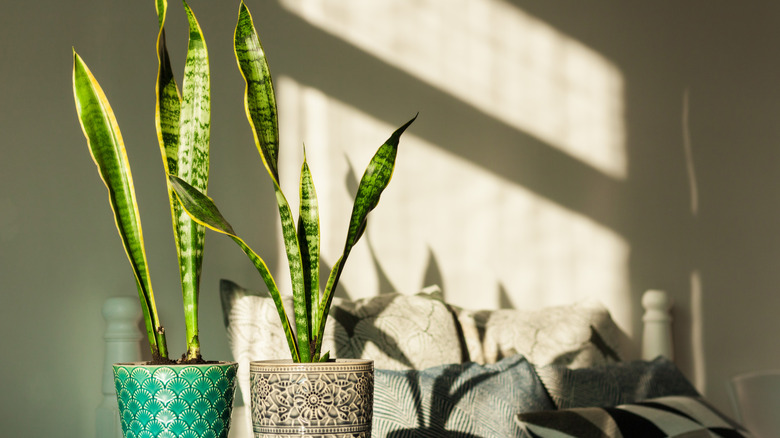
Snake plants are famously easy going and low-maintenance, but that doesn't mean that they're necessarily entirely problem free. One of the more common issues snake plants have is browning or yellowing on the tips of their leaves. While there can be a few causes of this, such as leaf scorch, discoloration is generally caused by watering problems.
While some snake plants (Dracaena spp.) naturally have yellow variegation, it's cause for concern if yellow or brown tips start forming on previously green leaves. Make sure that your snake plant isn't suffering burns from being in direct sun first. If that is the issue, move it to a shadier spot. But once sun scald is ruled out, you'll need to look more carefully at your watering. Specifically, look at whether you've been over watering and what type of water you're using.
As snake plants are quite drought tolerant, they only need to be watered once their growing medium is dry. Watering more than that can result in your plant potentially rotting — that is to say, your snake plant dying. Snake plants are also sensitive to salts, chlorine, and fluoride, which can result in yellowing or browning on the leaf tips. So, it's important to only give them rainwater, filtered, or distilled water. It is also possible for them to be exposed to excess salts from fertilizers.
How to help your snake plant if it has yellow or brown tips
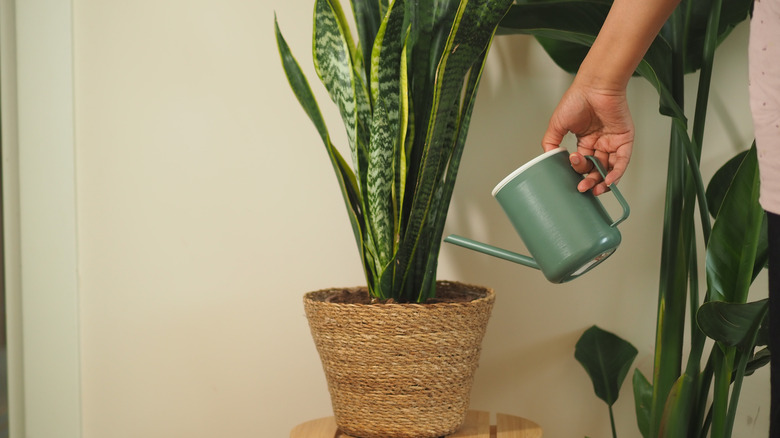
Avoiding overwatering is the best way to keep your snake plant healthy. If you suspect that your snake plant's yellowing leaves are from being a little too generous, it's best to repot your plant and check for other signs of root rot. A rotting smell or roots that are brown and mushy are signs that you've likely discovered the culprit in your snake plant's problems. When the problem isn't too severe, you may be able to fix the root rot and repot your snake plant with fresh growing media. Be sure to use a well draining mix designed for cacti and succulents. Going forward, only water your plant when the potting mix is completely dry.
For problems that aren't caused by overwatering, but instead by a build up of salts due to tap water or fertilizer, it's best to try leaching to remove the excess salts. To do this, simply put your snake plant (in its pot) in a sink or tub and water it normally. Then water it again a few minutes later and make sure water runs out the drainage holes. This should help flush out excess salts. Then, be sure to only water with filtered or distilled water or rain water going forward.