

Skip The Seedling: The Popular Vegetable You Can Grow From Kitchen Leftovers
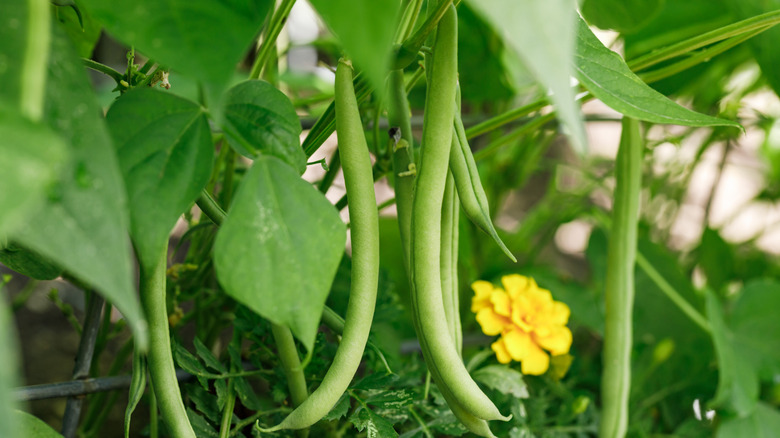
Whether you like them steamed, baked, raw, or in a casserole, green beans are undeniably delicious and nutritious. They're light on calories but heavy hitters when it comes to fiber and antioxidants. Interestingly, "green bean" (or "snap beans") doesn't necessarily refer to a certain variety of bean. Rather, it's sort of a catch-all term for the edible pods of several common bean plant varieties harvested while young and tender. If you've been contemplating growing your own green beans, skip perusing your local garden center for seedlings. Beans aren't very amenable to transplanting, so they're best grown from seeds planted directly in the ground.
You can buy many bean varieties to grow, or you may even be able to sprout them from something in your kitchen — though it may not be what you expect. It might be tempting to just cut open a store-bought green bean and try planting the bean seeds that you see inside. Unfortunately, because these pods are so young and soft, they'll probably just rot instead of germinating. Instead, check your cabinets. See that dusty bag of dried beans?
Dried beans, especially organic ones (non-organic beans may be irradiated and it's possible they won't sprout), are quite likely to sprout given the right care. Try soaking some overnight in water. Then drain them and leave them in an open container on your kitchen counter, rinsing a couple times a day to keep them moist. If the seeds are viable, you should see signs of life within a week.
How to plant and grow beans
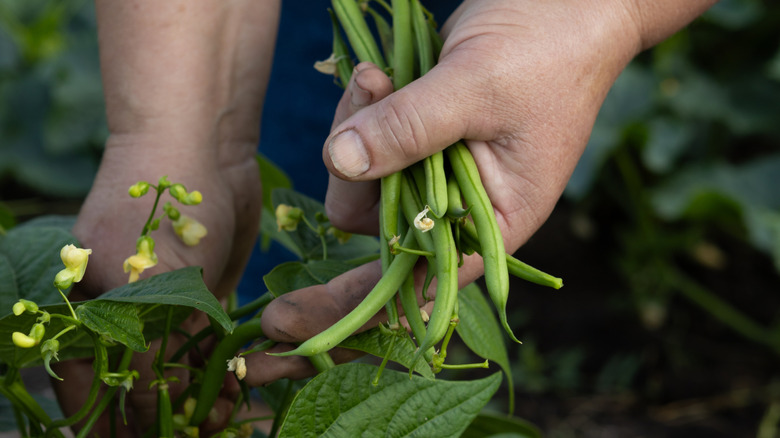
There are two categories of bean plant — bush beans and pole beans — and some of their care depends on which they fall into. Bush beans are those that grow in a compact bush, while pole beans grow as climbing vines and need some sort of support. If you're planting mystery grocery store beans, it's possible you won't know which type you're dealing with right away. But commercially-grown, mass-produced dry beans are most often trained as bush types in order to facilitate harvesting with a combine.
Once your plant starts to produce bean pods, make sure you harvest them young and often, as the plant will be less productive if you leave mature pods on it. Look for firm pods that are about the width of a pencil; they should snap easily. Make sure you harvest them before the seeds inside start to visibly bulge, as they are past their prime at that point.
Not all bean varieties are well suited to being harvested and eaten as green beans. Because dry beans have been bred with a focus on how good the seed tastes, you'll probably be rolling the dice on the taste and texture of the pod. In fall, if you enjoyed the beans your experiment produced, let the remaining pods mature fully on the plant. Wait until they look brown, shriveled, and very dry, with as little moisture as possible. Harvest the beans and shell them before saving them in a cool place. You've now saved seeds for next year!