

Don't Toss Garden Scraps When You Could Be Using Them To DIY A Bird Feeder
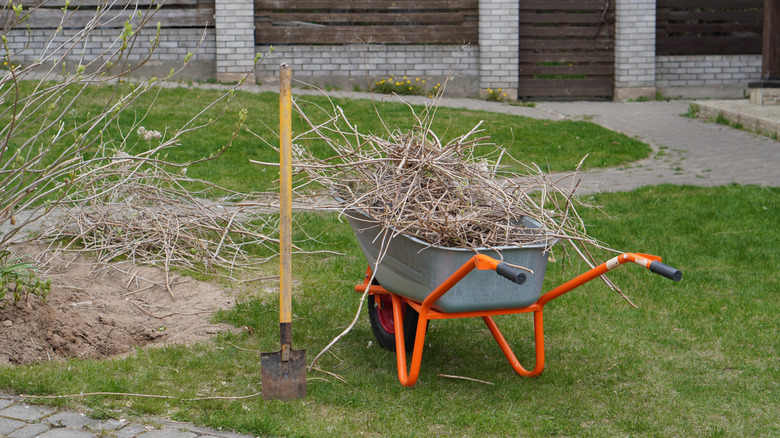
Cutting back herbaceous perennials and pruning shrubs and trees are essential parts of spring and late winter garden care. But what can you do with all the branches and stems you've removed? While they can always be turned into wood chips or left in a pile for wildlife to enjoy, you can also try your hand at crafting with them. Some of the longer and more supple branches and dried grasses can be used in weaving. Your only limit on what you can create is your imagination, but one great project to try is weaving your own DIY bird feeder. In addition to bird feeders, bird houses can also be woven.
The best branches for weaving are those that can bend without breaking. This could include willows and young hazelnut branches, as well as vines like grape and wisteria. And if you're dealing with an invasive wisteria vine you want to get rid of, what a perfect project for making use of it! For woods like hazelnut, it's often easiest to remove the bark before you start weaving.
You'll also want to make a base to hold your branches in place while you work. This can be as simple as a block of wood with a circle of eight or nine holes drilled into it that match the thickness of the widest part of your branches. Make sure to wear gloves while working on this project to protect your hands, and, of course, don't use plants like poison oak that can cause skin irritation.
How to weave and set up your charming DIY bird feeder

There are a few ways to do the actual weaving, but many begin by inserting long branches of similar thickness and length into each of the holes on your base. The tips of the branches should be pointing up and towards the center of the circle. Then you'll take one or two thin, flexible pieces and hold them parallel to each other and perpendicular to the sticks in the base. Begin using your other branches or grasses to weave in and out of those vertical branches.
If your branches are breaking instead of bending, you can spray them with water to make them softer and more pliable. Don't worry if the ends of the branches are sticking out; you can cut them once you finish weaving. Keep weaving your grasses and branches until you have the height you want. Then, either use a string or another branch to tie the vertical branches together. This tied section will be the bottom of your feeder. Remove your feeder from the base, and create a loop that is woven or tied securely on both sides of the top so you can hang your feeder on a tree.
Once you're done creating your bird feeder, you're ready to hang it, and fill it with seeds for your feathered friends. The best type of bird seed depends on what type of birds you're trying to attract, but generally a mix with plenty of sunflower and Nyjer seeds as well as millet works well. Make sure you hang your feeder in a spot where squirrels won't be able to get it too easily and keep it safely out of reach of predators like cats.