

Transform An Old Tree Stump From Trash To Treasure With A Garden Glow Up
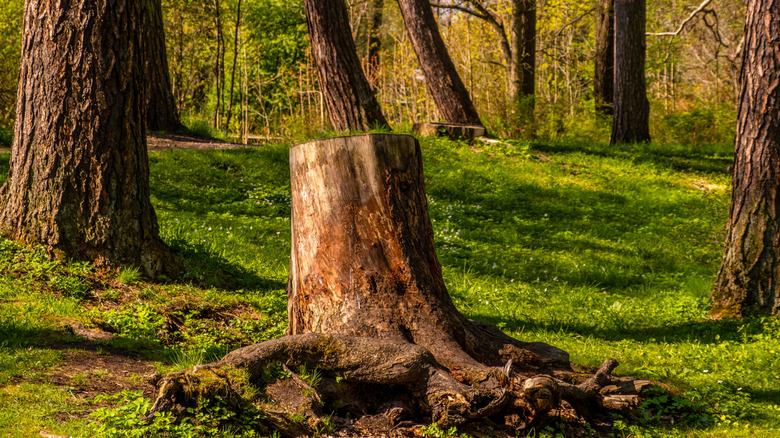
For people who aren't keen to leave their stump to rot in place, there are plenty of roads to take. You can still turn it into something fun and whimsical — and take down its height a bit — if you transform it into a rustic wooden path. While there are all kinds of creative things you can do with a tree stump, a garden path might not be the first thing that pops into mind, given the solid, immobile nature of the stump. But it can be a rewarding DIY project.
You've probably seen garden paths made of round pavers, and round pieces of wood can offer a similar natural aesthetic. Granted, wood won't last as long as stone, as it'll eventually decompose, but that could take years. You can enjoy the path during that time, and when nature reclaims the wood in the future, it'll add nutrients to the soil that will eventually help your plants.
Another benefit of using wood reclaimed from a stump is that it'll likely stay cooler during hot summer days than stone. If you've ever walked barefoot on stone before, especially darker stone, you know that it can really heat up in the sun. So to go the wood route, all you need to create your own little pathway is a log or stump, a shovel, and a chainsaw. Remember, if you're going to use a chainsaw to cut your stump, always double-check the safety instructions in your user manual first.
Here's how to make your garden path
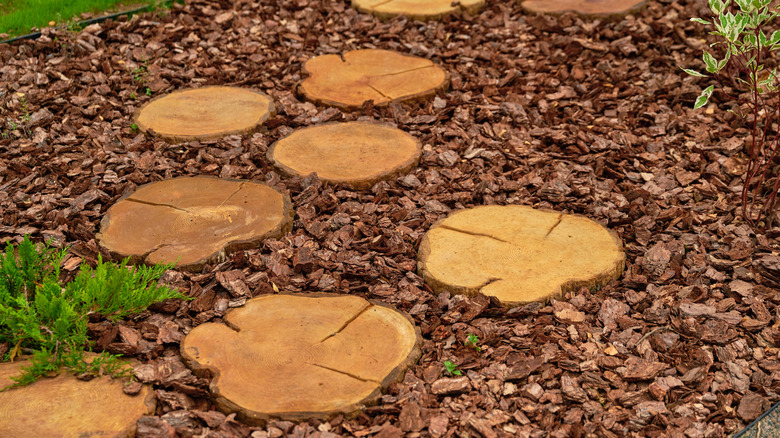
Before you start cutting up your stump to make the garden path, first figure out how much path you can realistically make. Each round should be at least thick enough that they don't break underfoot, so you'll have to determine if you have enough material to even make a path. If not, you can try a different DIY, like transforming an ugly tree stump into a garden showstopper by turning it into a planter.
Cutting the stump is the hard part, and will take some critical thinking on your part. Do you have to remove the stump entirely before you can cut it into pieces? Since you want most of the stump intact, try using the old-fashioned way and dig it out in that case. But if the whole point for you was to avoid digging out the stump, try cutting it as close to the ground as you safely can. It's easier to cut the stump into slices when it isn't attached to the ground. Safety always comes first, so don't forget the protective gloves and goggles.
Once you've got your sliced rounds, you'll need to grab a shovel and create the borders of your path. The idea is that you'll plop down the rounds in a pattern or a single line. After you've got the pathway dug a couple of inches deep, then lay your rounds out in the pattern you prefer. Then, take excess dirt and shovel it back between the rounds. How much dirt you use to fill in sections between the rounds is really a matter of personal preference.