

The Tall Flower That Will Instantly Attract Bees, Hummingbirds, And Butterflies
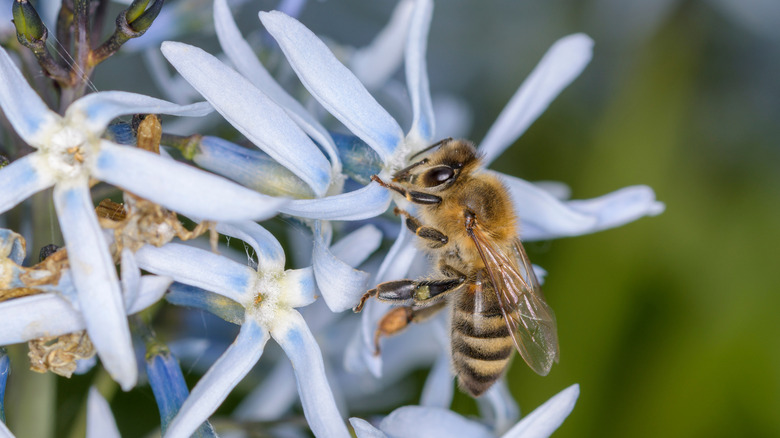
Choosing the right flowers for your garden doesn't just ensure you'll have colorful blooms to look at. It can also make your yard a hit with pollinators. From butterflies to bees, and even hummingbirds, they'll all flock to visit when you're growing some of their favorite blooms. Not only that, but they add a unique color flower to your garden. This mystery flower is the stunning bluestar (Amsonia spp.)!
Bluestars are ideal for adding height and vertical interest to pollinator gardens, with most varieties reaching sizes of about 3 or 4 feet tall and wide. This can also make them perfect for providing a backdrop for lower-growing plants like annual violas. With clusters of tiny but numerous blue-gray blooms that can last from mid- to late-spring and a golden fall foliage color, bluestars offer multi-season beauty. Those benefits don't stop at providing pollen and color either; they are also host plants for the caterpillars of different butterfly species, and their dead stems can provide winter homes for bees. With the majority of bluestar species being native to the Eastern United States, they make excellent additions to native plant gardens for growers in those regions as well.
How to grow bluestars to attract pollinators to your garden
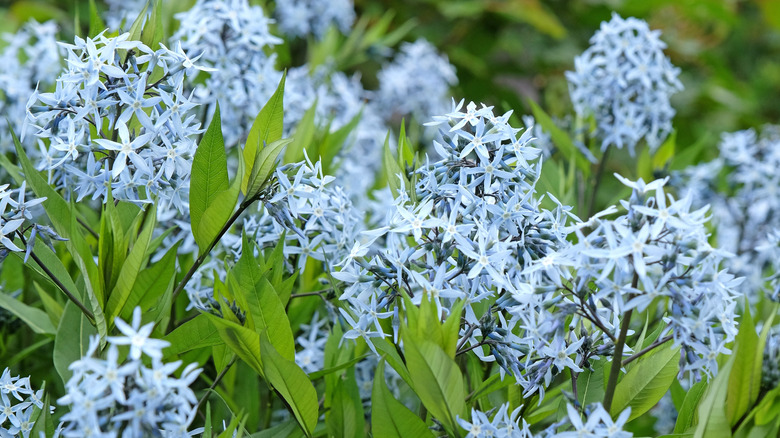
There are multiple species of bluestars, each with their own hardiness range. Eastern bluestar (Amsonia tabernaemontana) is hardy all the way from USDA Hardiness Zones 3 through 9, while most other bluestar species are hardy down to zone 5 or 6. Once you've decided on the species that works best for your climate, you can either purchase them from seeds or buy young plants from local nurseries or reputable online sellers. While seeds are generally less expensive, it will likely take a few years before they'll produce flowers. Yet, bluestars self-seed readily, so if you don't want more plants, consider cutting them back after flowering or removing the seed pods.
Plant your bluestars in a spot where they'll get plenty of sun and rich soil that's moist but well draining. Once they're established, they should also be somewhat drought tolerant. Don't worry when your bluestars die back during winter months. You can trim the stems at that point and then enjoy new growth in spring. If possible leave around a foot of the dried stem for bees to use as a winter home. They work much like a pollinator friendly bee hotel.
Bluestars are perfect if you've been struggling with deer devouring your plants before pollinators get a chance to enjoy them. Due to the latex sap the leaves and stems contain, they're generally left alone by deer. Just make sure to wear gloves while working with the plants as the sap can also cause skin irritation.