

The One Thing Your Cottage Garden Is Missing (And How To Get The Look)
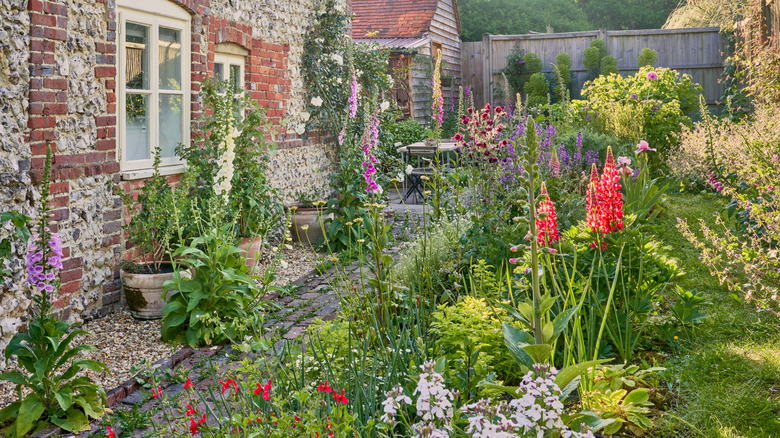
The cottage garden aesthetic can seem so effortless and casual, but if you've tried to recreate the look in your own garden you may have realized it isn't as easy as it appears. It turns out there's more to this aesthetic than meets the eye. In addition to picking the right plants and arranging them in an appropriately informal style, you also have to consider how best to use elements like stones and gravel. While the use of rocks and hardscapes can easily be overlooked at first glance thanks to all the stunning blooms cottage gardens have, these non-living features are often what brings the whole look together.
Cottage gardens evolved from practical kitchen gardens, so using paths or stepping stones for a walkway to reach different parts of the garden was essential. These features remain important parts of getting the cottage garden look today. Using a mix of materials like gravel, larger flagstones, or even weathered bricks can also help to emphasize the more informal aspects of the garden. It's not just through walkways that you can introduce these stone elements into your garden. Planters are also iconic aspects of cottage gardens, and opting for containers made of concrete or terracotta is perfect for capturing the aesthetic.
How to create the cottage garden aesthetic using stone elements
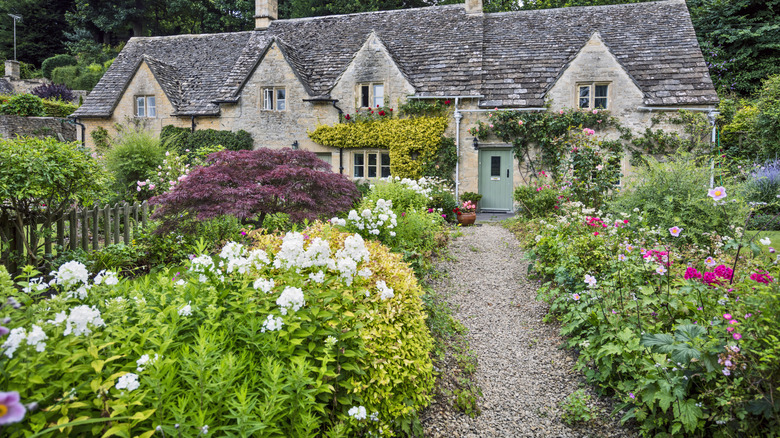
When creating the borders between your gardens and your paths or lawn, remember, gently curved lines often work best with the informal cottage garden look. There doesn't need to be a hard line between your garden and your path, either. Instead, consider using plants like soft and low-growing Irish moss (Sagina subulata) in between stones on the path. You can also grow edimental (a portmanteau of edible and ornamental) climbing plants like scarlet runner beans (Phaseolus coccineus) on an arch that goes over the path. This doesn't just look beautiful; it's also practical.
It's not just when creating hardscapes that you should look to the practical origins of cottage gardens, though. Practicality can also be a factor when deciding what plants to grow. Herbs like lavender and sage are ideal additions thanks to their mix of beauty and usefulness. Their fragrance also helps to make walking the garden paths a more sensory experience. Even better, their blooms are a hit with pollinators.
Despite the informal nature of cottage gardens, you'll still generally want to follow some basic design principles. Putting shorter plants towards the front of borders and creating clusters of three or five plants of the same species, for example. You can also use the classic gardening rule of mixing spiller, filler, and thriller plants when deciding what plants to put in your stone pots and terracotta containers.