

The Best Time Of Year To Propagate And Graft Fruit Trees
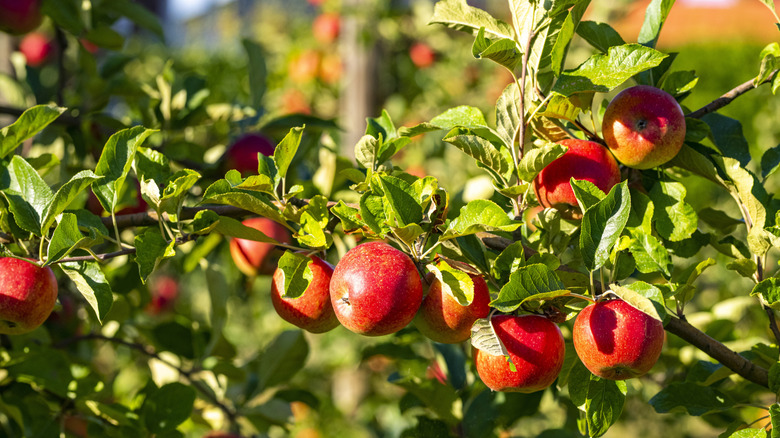
If your yard has a fruit tree growing in it already, maybe you've been eyeballing it and wondering if you ought to try on Johnny Appleseed's tin pan hat for yourself. While propagating most fruit trees isn't as simple as dropping a seed and hoping for the best, it is possible to multiply your fruit trees. Many favorites, like apples, plums, pears, and cherries, are propagated by grafting. You can take cuttings to graft (called scions) for this method in late winter or early spring, preferably in February or March. Keep your scions packed and refrigerated until it's time to actually perform the graft. Generally, this happens in spring, in mid to late April — if in doubt, err on the side of being late rather than early.
But why can't you just plant seeds? You can certainly try, but it's likely that if something sprouts, it won't grow into what you thought you planted. Fruit trees like apples are typically the result of carefully controlled hybridization and are propagated using vegetative methods like grafting, which results in genetic clones of the parent tree. You can sprout an apple seed, sure, but it will be a bit of a crapshoot as to what sort of fruit it might eventually produce. Plus, because hybrids are grafted onto another tree, called rootstock, your sprouted tree may have weaker roots.
How to propagate fruit trees by grafting
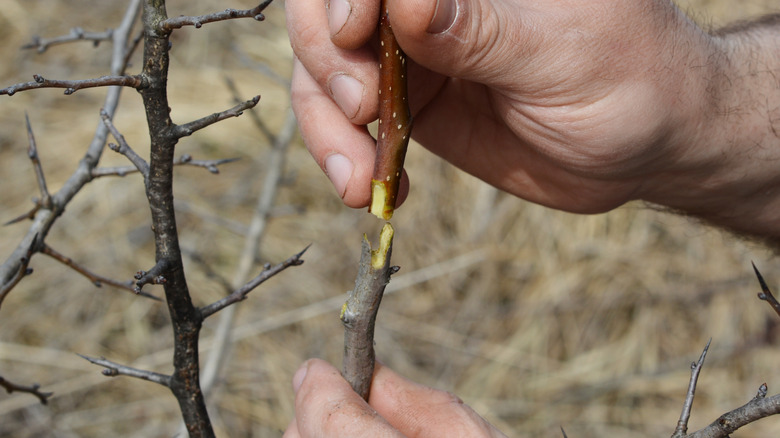
To take plant cuttings for scions, look for straight, approximately pencil-width branches that you can cut to 12 to 18 inches. Pack them in sealed plastic bags with sphagnum moss or damp paper towels to retain moisture. Do a bit of research on which rootstock might suit your grafting needs best. In addition to which species might be compatible, you can select rootstock based on what traits you're hoping it will bring to your new tree, including disease resistance and cold hardiness. Also, you can select dwarf rootstock, which may suit small spaces better and produce fruit a bit earlier! You may be able to find a selection of rootstocks at a nursery or online.
To perform the graft, use a very sharp knife to make a single cut a few inches above the highest root on the rootstock. It should come to a sharp point. From there, you can make the second cut about a third of an inch down from the tip, right down into the center with the grain of the wood. Prepare the scion cuts in exactly the same way. Carefully and firmly join them together, then wrap the union with tape (grafting tape is available, but you can also use masking tape). The art of grafting fruit trees can be difficult, so you might want to practice on other sticks. One final note: Newer varieties of fruits may be subject to patents, so if you propagate these, you'll actually need to pay a royalty fee to the patent holder.