

Say Goodbye To Hydrangeas: Here's A Gorgeous, Low-Maintenance Alternative
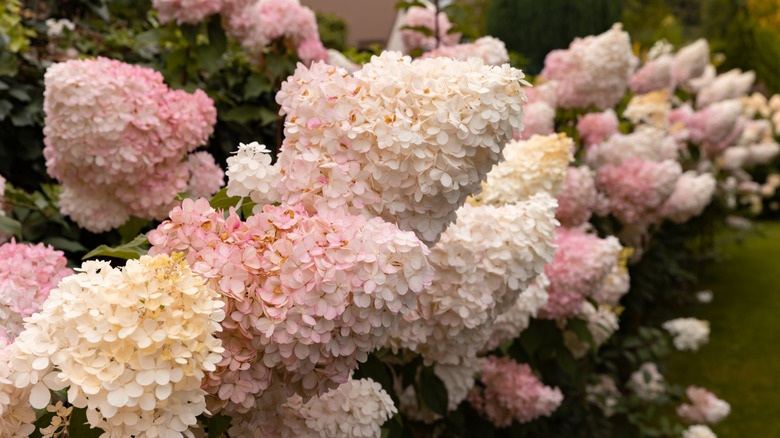
Hydrangeas' huge blooms are stunning additions to gardens and landscapes. The shrubs aren't always the simplest to care for, though, especially if you don't have many shady spots in your garden. In fact, some homeowners have been searching for replacement shrubs that are easier to grow than hydrangeas. One of the best plants to consider, especially if you're after flowers similar to hydrangeas, is the stunning snowball viburnum.
There is a wide variety of species in the viburnum genus, and a few that are referred to as snowball viburnums. These include the Japanese snowball viburnum (Viburnum plicatum), the Chinese snowball viburnum (Viburnum macrocephalum), the fragrant snowball (Viburnum x carlcephalum), and the European snowball viburnum (Viburnum opulus var. opulus 'Roseum'). Some viburnum varieties can be invasive in North America, but that isn't an issue with these, as long as you make sure your Japanese snowball isn't the doublefile variety (Viburnum plicatum f. tomentosum), which has fertile flowers. All four species boast massive white or whitish-pink blooms during spring, making them ideal for adding beauty to your landscape. The shrubs also make excellent backdrops for spring-flowering bulbs and other lower-growing plants.
Choosing the right snowball viburnum for your space
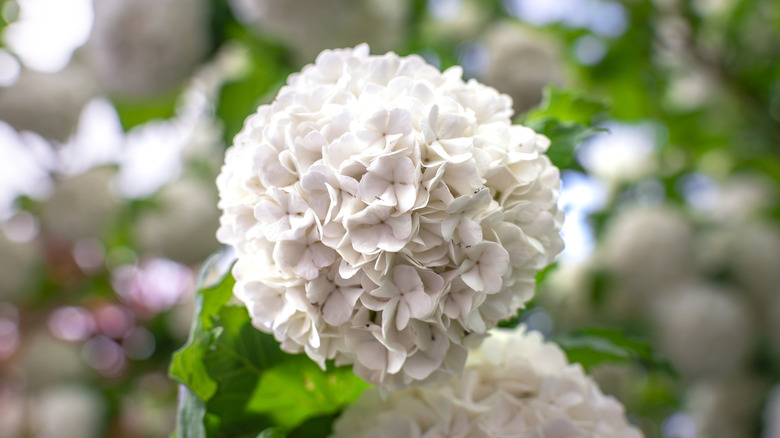
All types of snowball viburnums thrive in full sun, though European, Chinese, and Japanese varieties can also grow well in shadier spots. Make sure to find your viburnum a location with amended soil and keep it well watered. A layer of mulch should also help to ensure your viburnum's soil doesn't dry out. If you need to prune your snowball viburnum, it's best to do so right after it finishes flowering, as they bloom on old wood.
Which type of snowball viburnum is the best option for you can depend on both the amount of space you have available for your shrub and what USDA Hardiness Zone you live in. While Japanese snowball viburnums can reach sizes of 15 feet or more tall and wide and are hardy in zones 5 through 8, Chinese snowballs tend to stay closer to around 8 feet and are hardy in zones 6 through 9. European snowball viburnums generally fall somewhere in the middle with a height and spread of around 12 feet and are the most cold-hardy, with a range that spans from zones 3 through 8. Fragrant snowballs, which reach sizes of 10 feet or less tall and wide, are only hardy in zones 6 through 8.