

The Coffee Tree You Can Grow Indoors (Even In Winter)
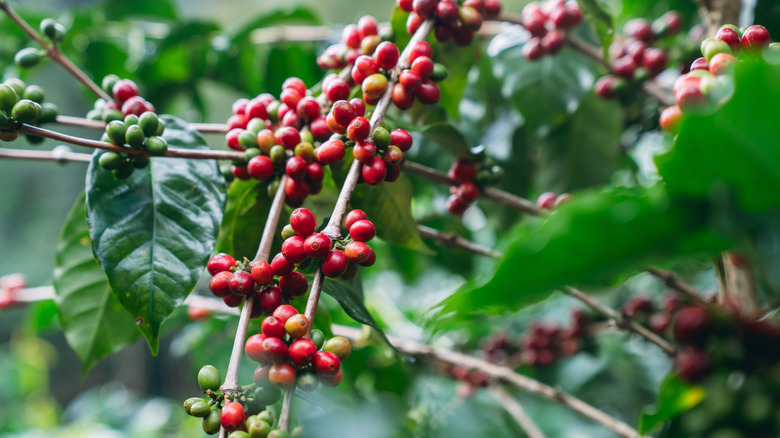
Have you ever wondered where your morning cup of Joe came from? The process of growing, harvesting, and making coffee is super interesting. While you may not be able to get the full production going in your apartment or backyard, you can at least get to know the plant that gives your steaming cup of coffee in the mornings. You can grow your own arabica (Coffea arabica) plant indoors as a houseplant. You'll need lots of sun, humid air, a flower pot with a few drainage holes, and a little bit of patience.
Yes, that's right. You don't have to live in Colombia, Nigeria, or other countries known for coffee production. Arabica is a tropical plant native to Africa that thrives in USDA Plant Hardiness Zones 10 through 12. In the wild, it can grow six feet tall. If you want a smaller variety for inside, try the 'Nana' cultivar, a dwarf type that only reaches heights of about a foot tall.
If you're lucky, you might get the chance to pick coffee berries when they're bright red. To get an idea of how coffee is made, dig out the bean from the center of the berry and let it dry out on a sunny windowsill. The next step in the process would typically be to roast them to perfection and grind them up, so you can do your own mini version at home. You can always add this experiment to your other grounds to brew a full cup with a little splash of pizazz. Always save the coffee grounds after brewing, though, so you can use them as houseplant food.
Here's how to make sure your coffee plant thrives indoors
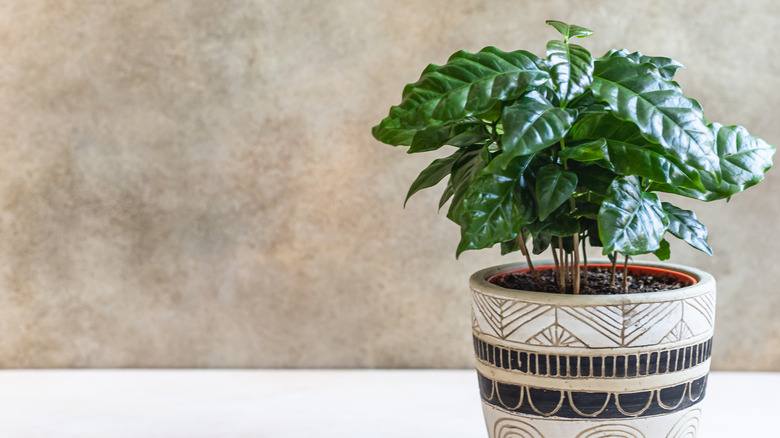
To ensure your coffee plant is healthy, make sure to plant it in neutral to acidic soil. While it can get by with dappled sunlight or some shade outside, it prefers bright light indoors. Your coffee plant will need regular doses of water. It doesn't want to stay soaked, but it does like moist dirt. You should never let the soil entirely dry out, as it won't like that. If you're worried about the plant getting too dry, try cutting up pieces of sponge at the bottom of the pot to keep potted plants from drying out with a budget-friendly solution you can DIY.
Keep in mind that coffee plants can be a little fussy about the temperature and humidity of their environment. They prefer daytime temperatures around the mid-70s and nighttime temperatures in the mid-60s. They also like high humidity. You'll know the air is too dry if you see the leaves of the plant start to brown or shrivel. Turn on a humidifier or add a pebble tray with water to see if the leaves improve.
Even if everything aligns and your coffee plant thrives, you could be waiting a long time for coffee beans to appear. Indoor plants take a long time to flower, usually 3 to 5 years. Also, this plant relies on the wind outside to pollinate itself, so you may have to shake the stems a little so the flowers pollinate each other and grow berries. And even then, it could be the case that you don't get enough coffee beans to make coffee. But you might!